Interactive multiple-choice quiz: Proving Lines are Parallel Worksheet
هذا الاختبار التعليمي يركز على مبادئ الهندسة المتعلقة بإثبات توازي المستقيمات. يغطي الاختبار علاقات الزوايا الناتجة عن قاطع لمستقيمين، بما في ذلك الزوايا المتناظرة، والمتبادلة داخلياً وخارجياً، والزوايا المتحالفة. كما يقيّم فهم النظريات العكسية والمسلمات الضرورية لإثبات التوازي في البراهين الهندسية.
🏆 انضم إلى التحدي واحصل على ترتيبك
اختبار شهادة تدريبي مؤقت للصف والمادة والفصل نفسه.
اختر إجابة واحدة لكل سؤال. عند الاختيار ستظهر النتيجة فورًا: الأخضر صحيح، والأحمر خطأ، وسيظهر تفسير الإجابة مباشرة إن كان متوفرًا. وبعد آخر سؤال ستظهر الدرجة النهائية تلقائيًا.
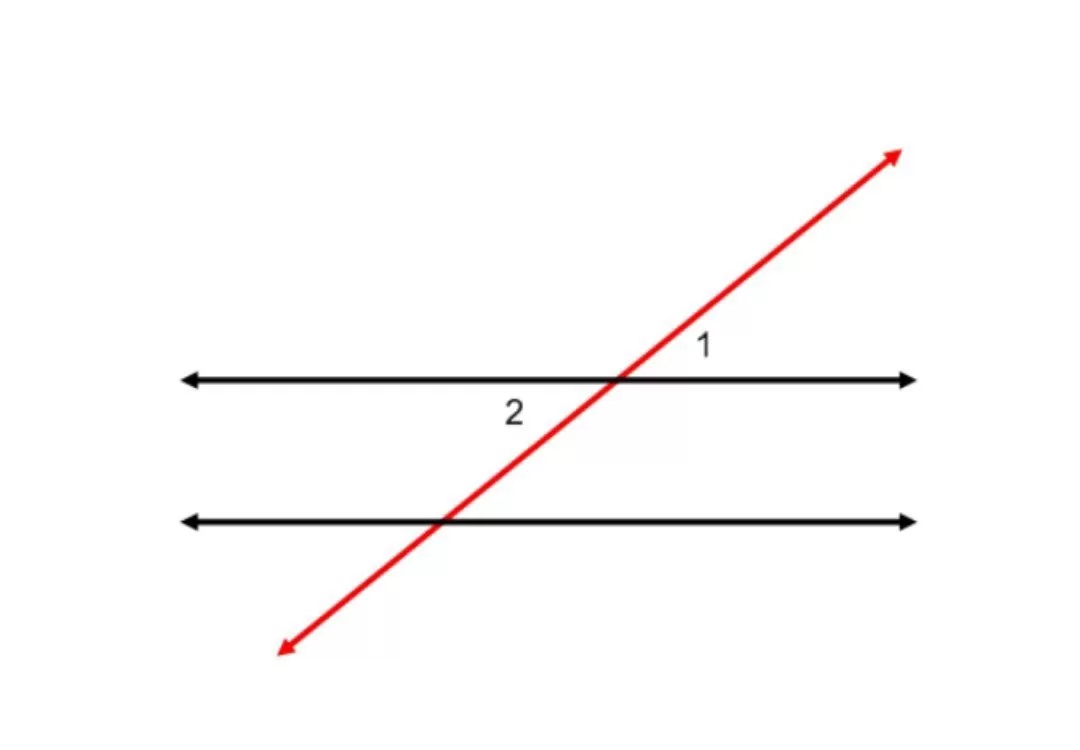
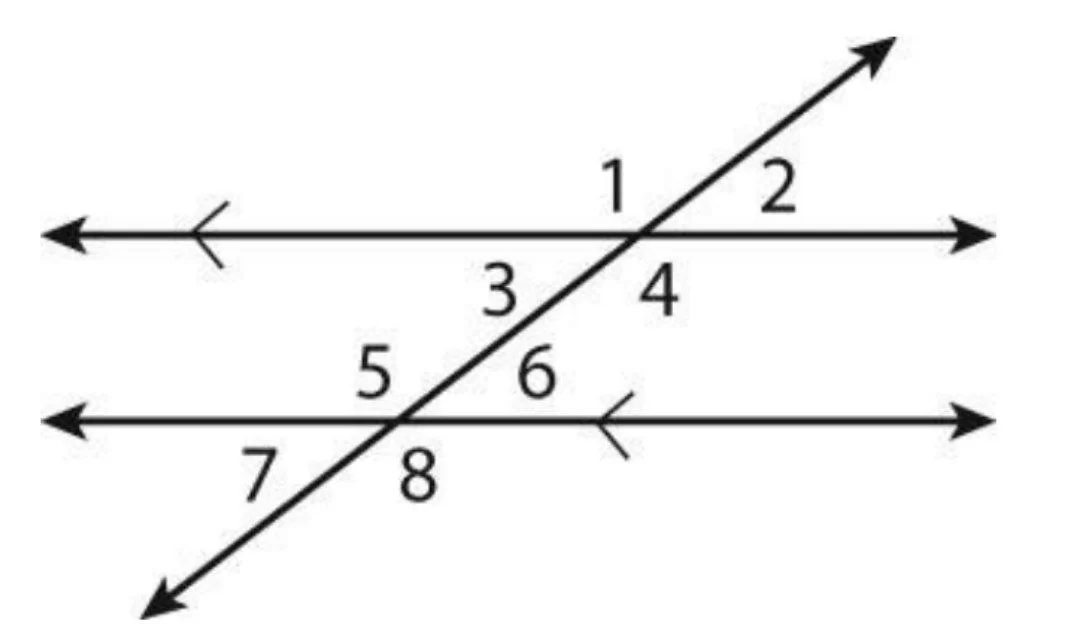
Angle 1 and Angle 2 are in the same relative position at each intersection where the transversal crosses the lines, which defines them as corresponding angles.
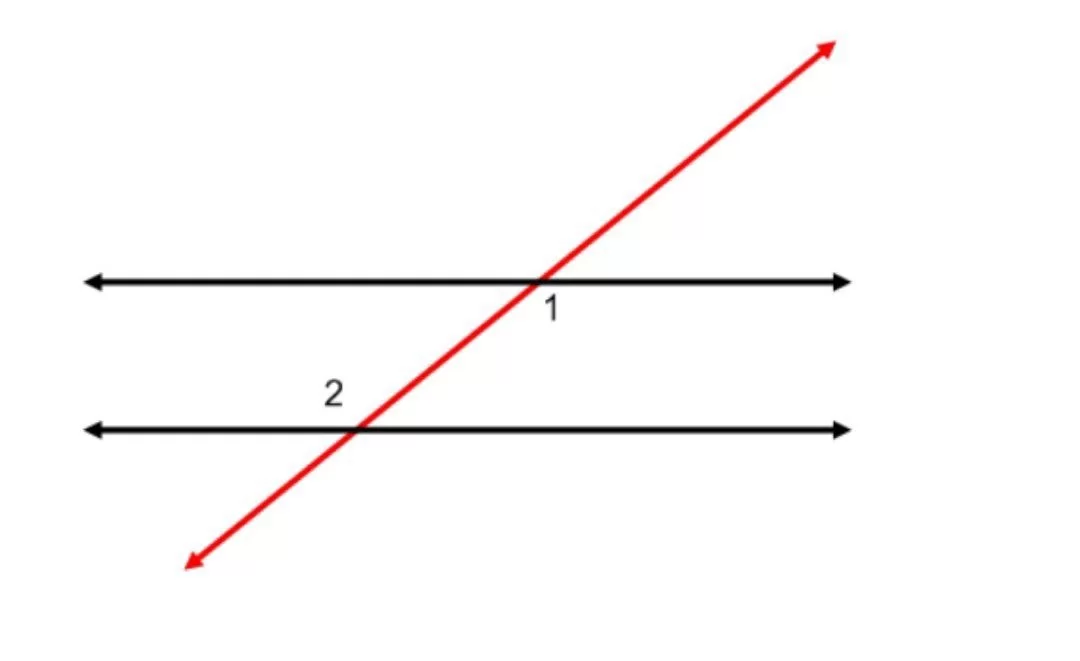
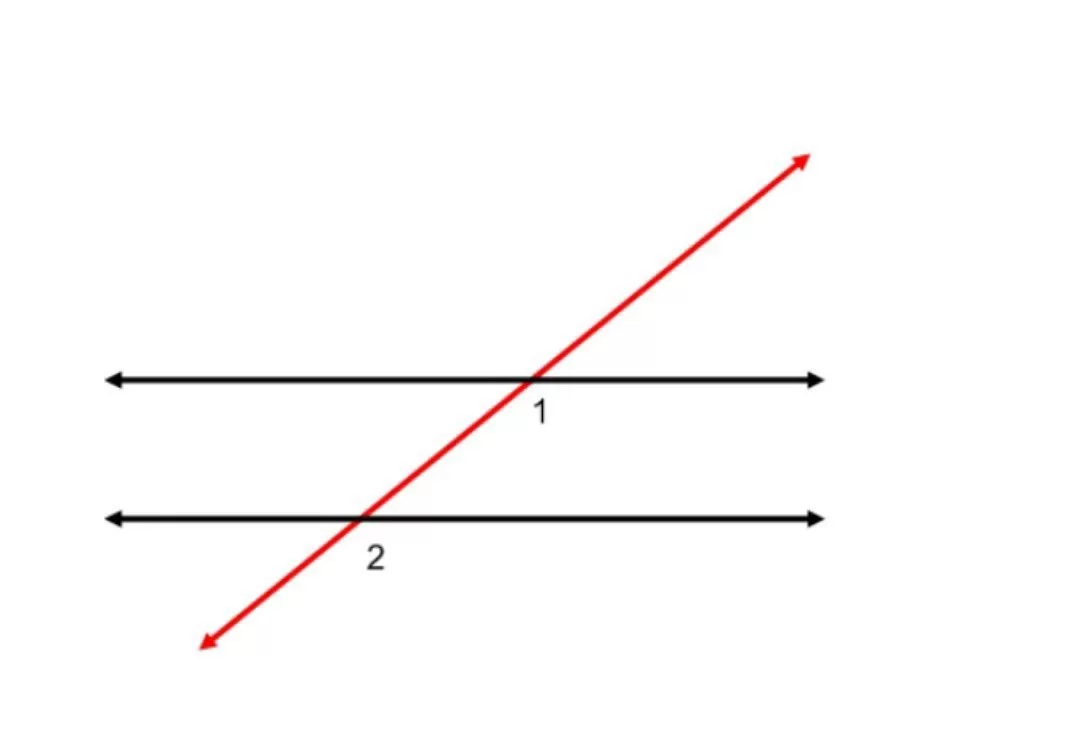
The angles are located between the two lines (interior) and on opposite sides of the transversal line (alternate), making them alternate interior angles.
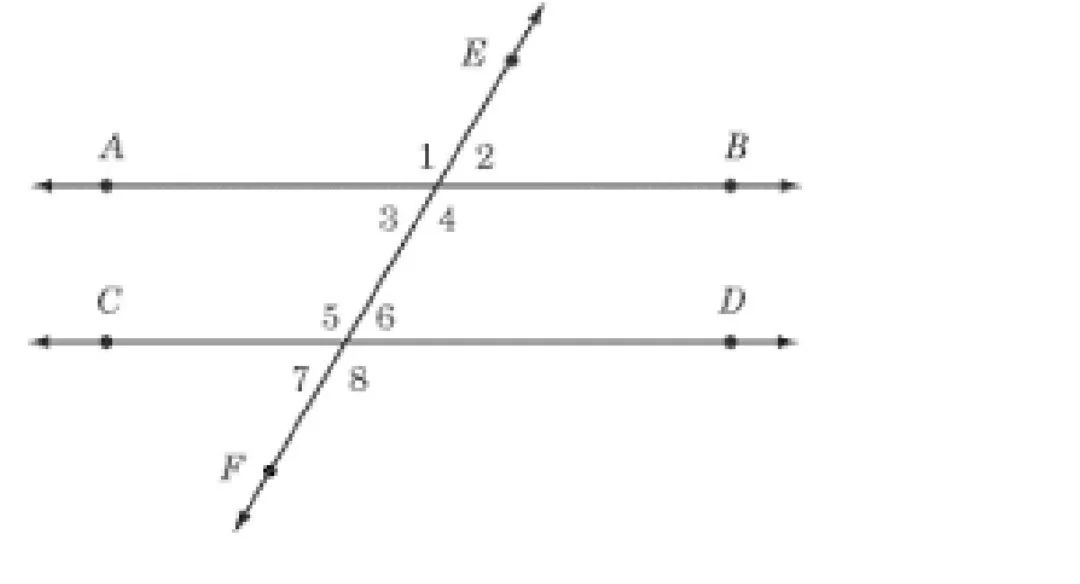
Which pair of angles are alternate exterior angles?
Explanation
Alternate exterior angles are those on opposite sides of the transversal and outside the two lines being intersected. Angles 2 and 8 satisfy these conditions.
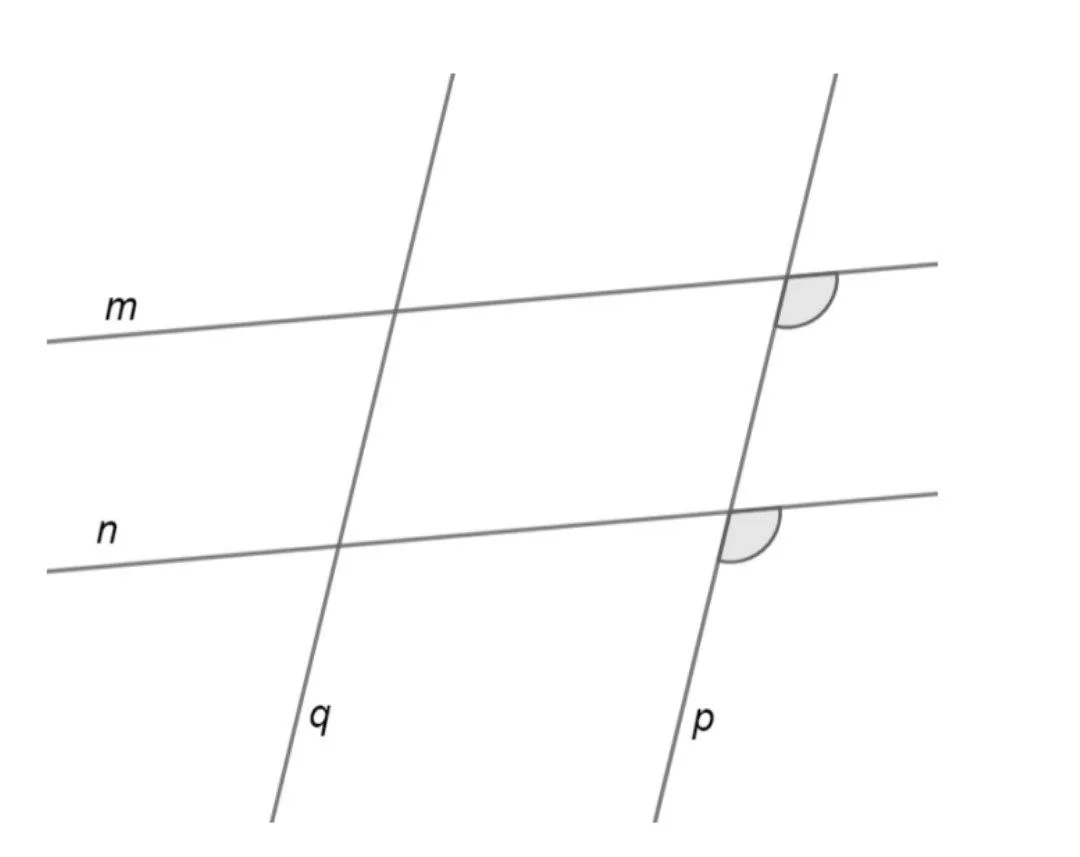
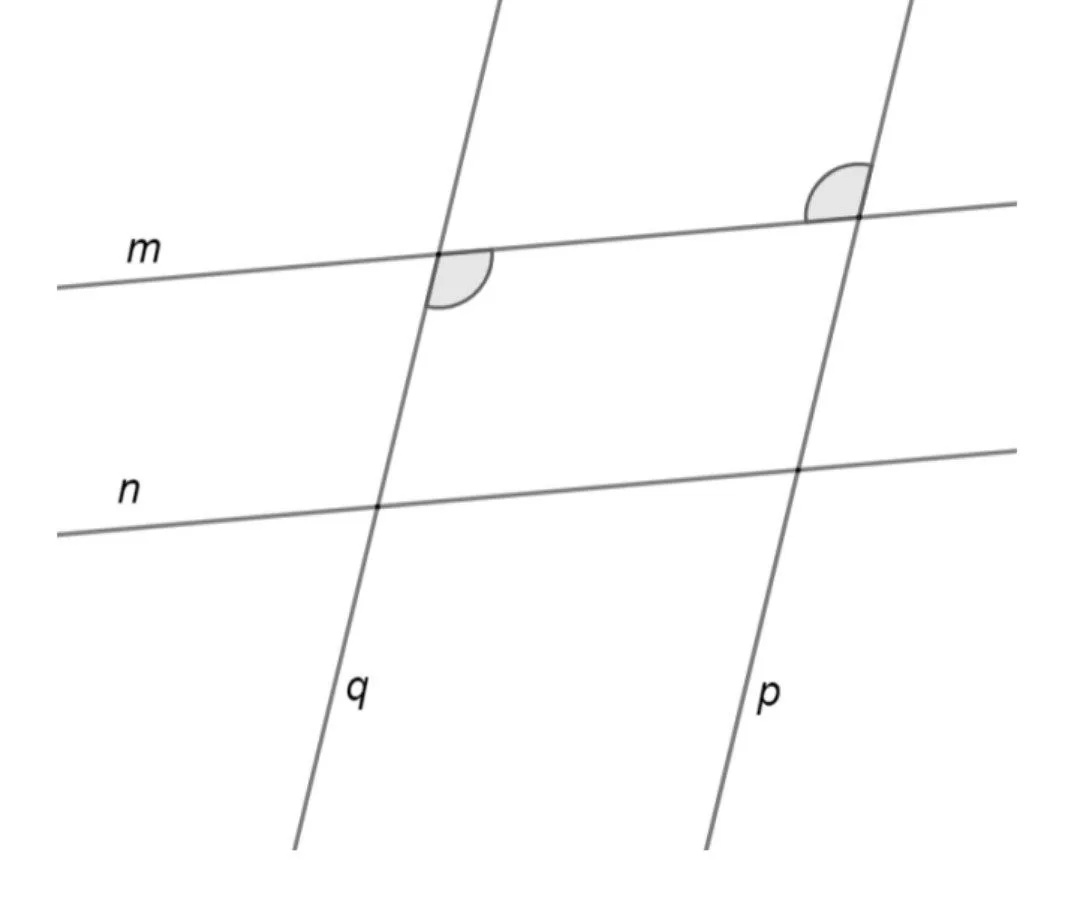
The marked angles are in corresponding positions relative to lines p and q. Since they are shown as congruent, the lines p and q must be parallel according to the Converse of the Corresponding Angles Postulate.
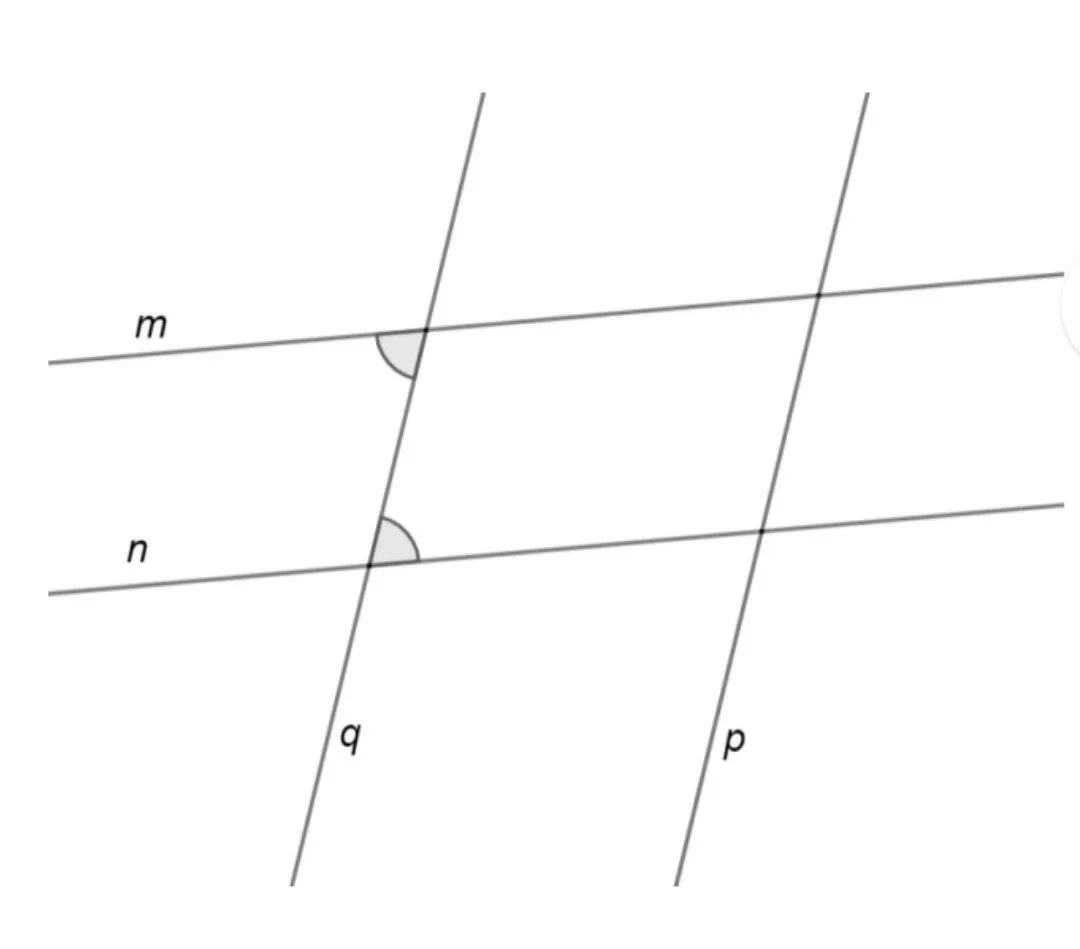
The congruent angles shown are alternate interior angles between lines m and n. By the Converse of the Alternate Interior Angles Theorem, lines m and n are parallel.
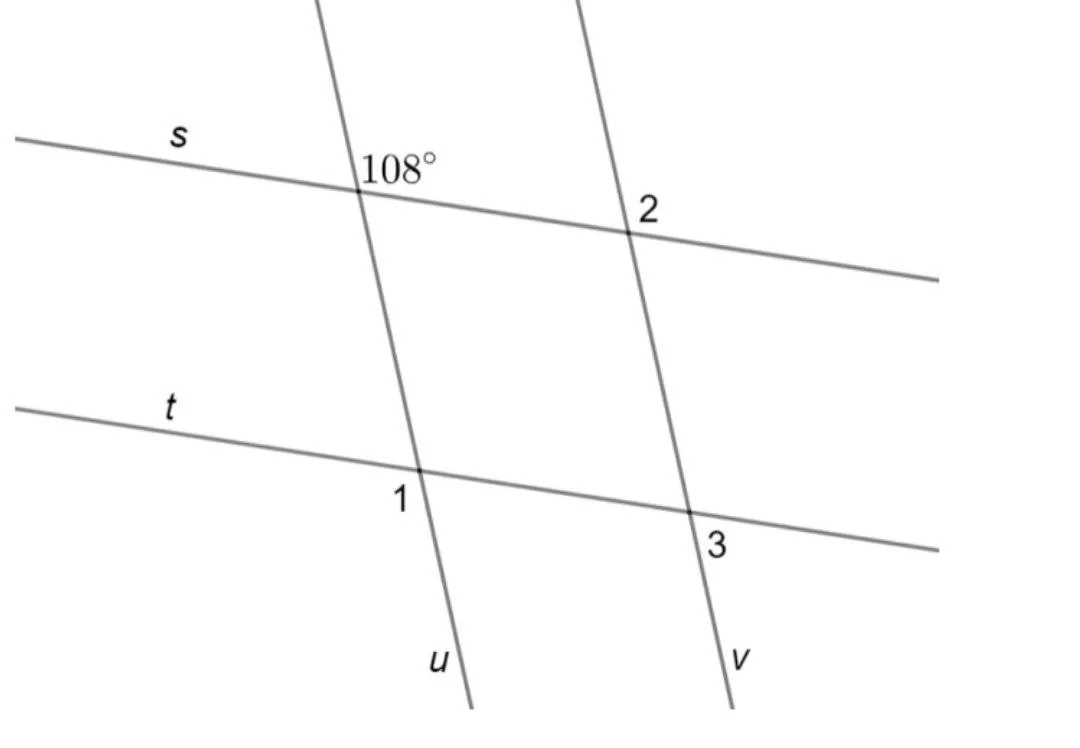
Angle 1 and the angle labeled 108 degrees are corresponding angles. If they are equal, then the lines s and t are parallel by the Converse of the Corresponding Angles Postulate.
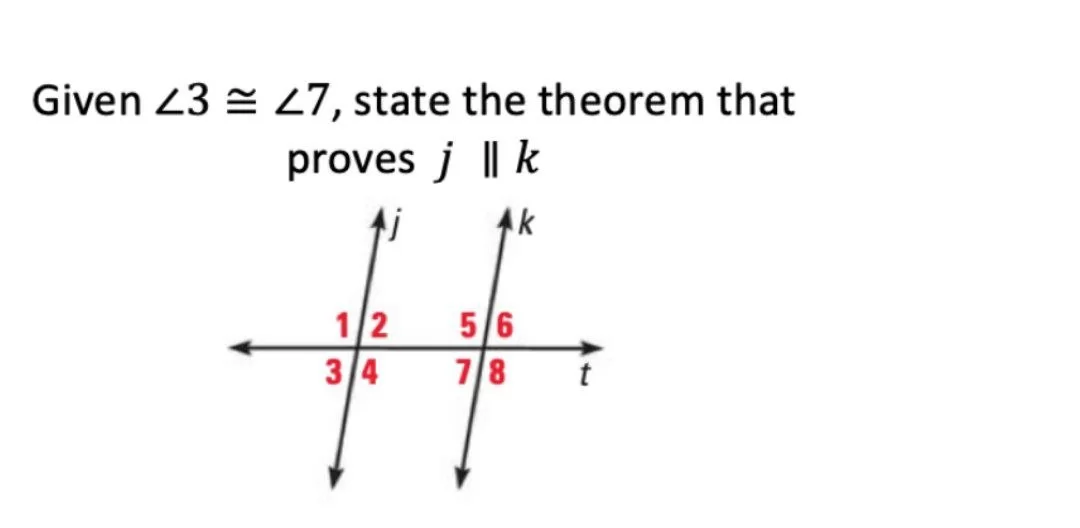
Given \(\angle 3 \cong \angle 7\), state the theorem that proves \(j \parallel k\).
Explanation
Since angles 3 and 7 are corresponding angles, their congruence proves the lines are parallel according to the Converse of the Corresponding Angles Postulate.
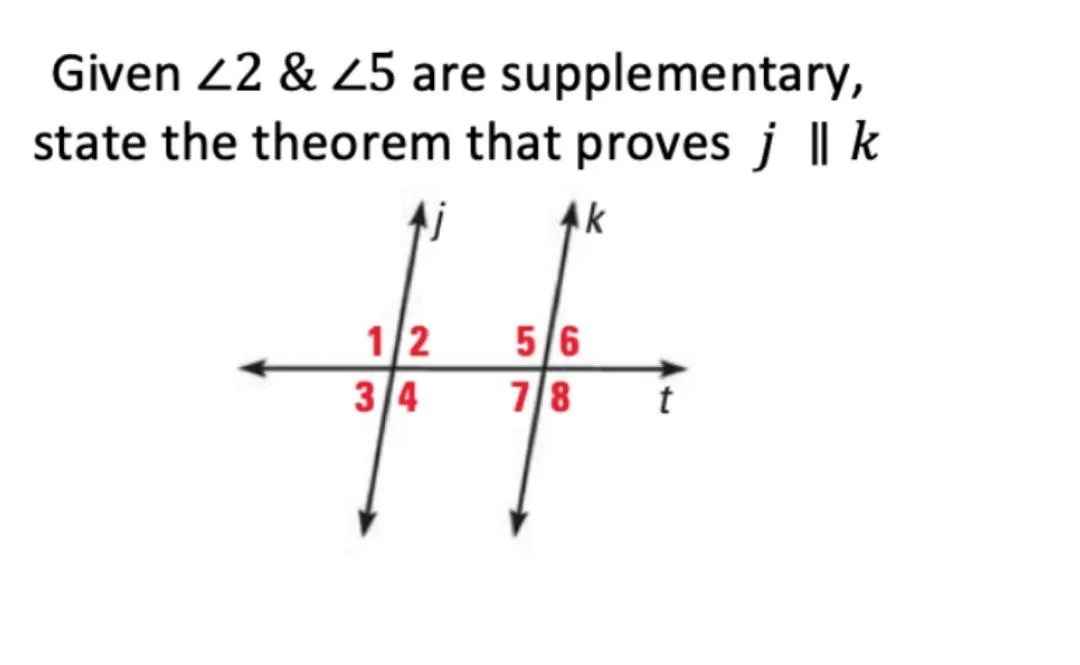
Given \(\angle 2\) & \(\angle 5\) are supplementary, state the theorem that proves \(j \parallel k\).
Explanation
Angles 2 and 5 are consecutive interior angles. If they are supplementary, the Converse of the Consecutive Interior Angles Theorem proves the lines are parallel.
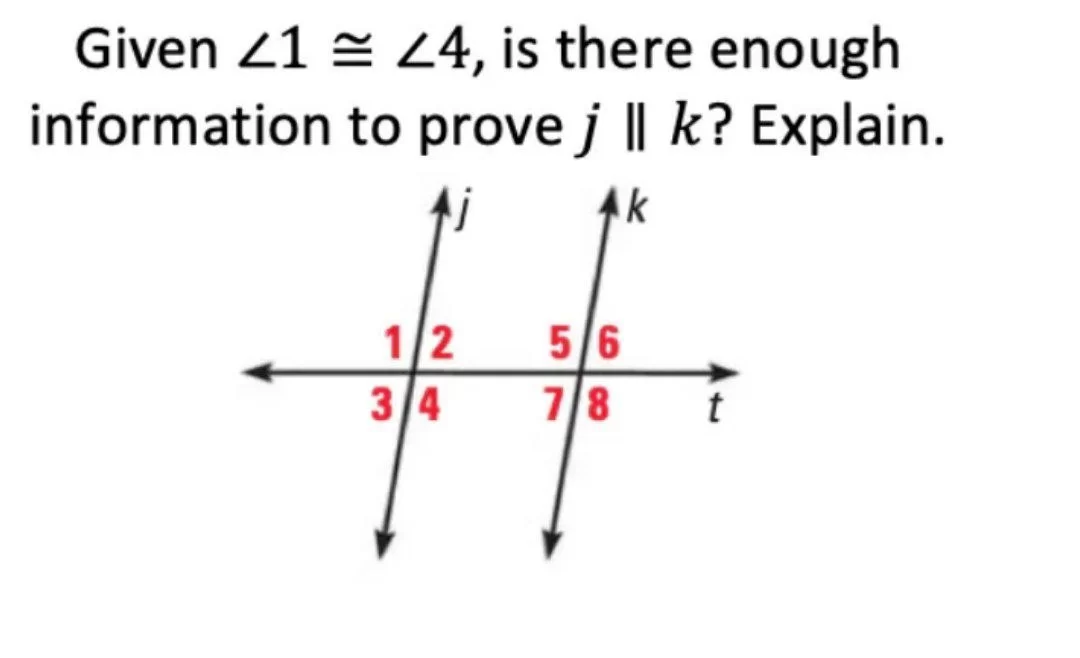
Given \(\angle 1 \cong \angle 4\), is there enough information to prove \(j \parallel k\)? Explain.
Explanation
Angles 1 and 4 are vertical angles at a single intersection. While they are always congruent, this relationship does not link line j to line k and thus cannot prove them parallel.
Here are more quizzes for الصف التاسع المتقدم by الفصل الثالث and subject رياضيات
This section is rendered only when the user reaches it while scrolling.
...
🍪
إشعار ملفات تعريف الارتباط
يستخدم هذا الموقع ملفات تعريف الارتباط لتحسين تجربة التصفح وقياس الأداء وعرض المحتوى بشكل أفضل.
باستخدامك للموقع فإنك توافق على استخدامنا لها وفق
سياسة الخصوصية.