اختر إجابة واحدة لكل سؤال. عند الاختيار ستظهر النتيجة فورًا: الأخضر صحيح، والأحمر خطأ، وسيظهر تفسير الإجابة مباشرة إن كان متوفرًا. وبعد آخر سؤال ستظهر الدرجة النهائية تلقائيًا.
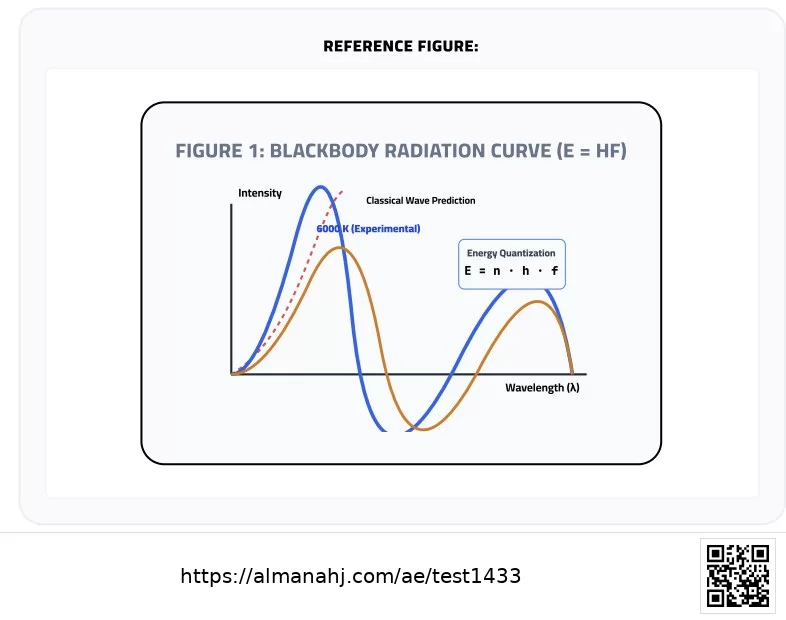
What does the concept of 'energy quantization' proposed by Max Planck mean?
Explanation
Planck's hypothesis of energy quantization states that energy is not continuous but exists in discrete packets called quanta.
Question 2
2
Points: 4
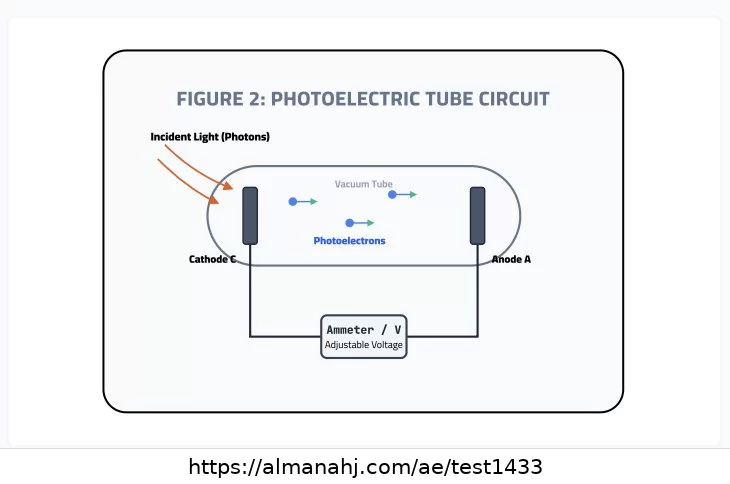
What is the precise academic definition of the 'Photoelectric Effect'?
Explanation
The photoelectric effect is defined as the emission of electrons from a material when light shines on it.
Question 3
3
Points: 4
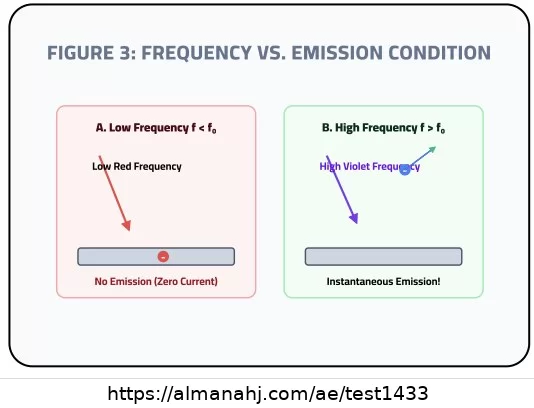
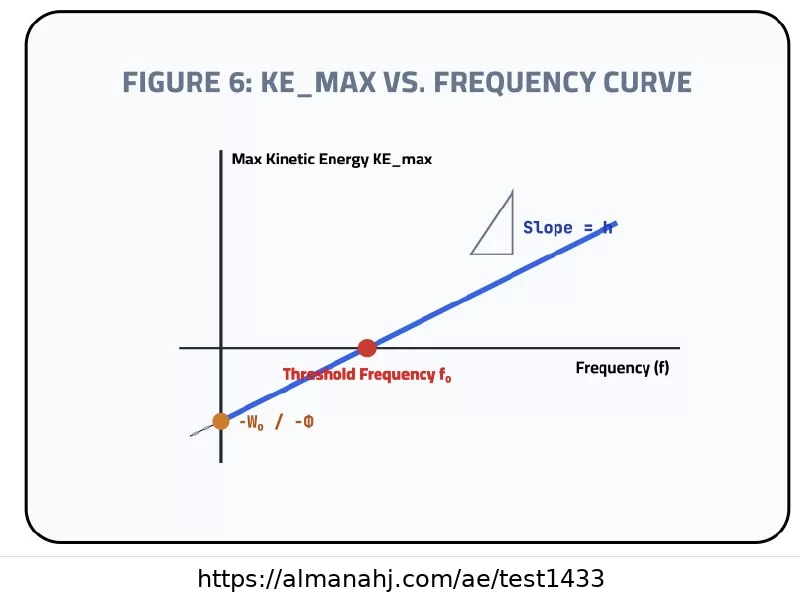
What is the precise definition of 'Threshold Frequency' (f0)?
Explanation
Threshold frequency is the minimum frequency of incident radiation required to cause photoelectric emission from a material.
Question 4
4
Points: 4
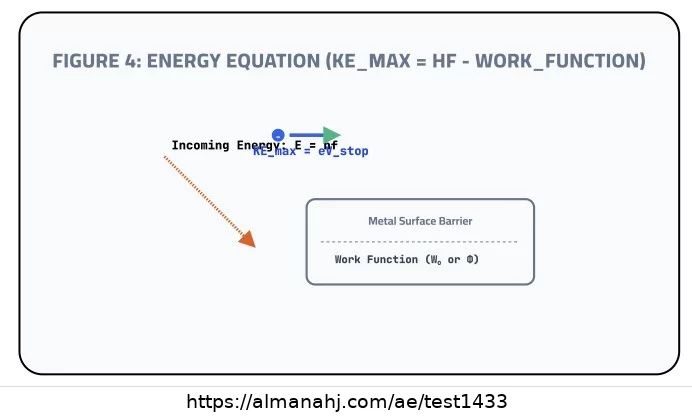
Which of the following equations represents Einstein's photoelectric formulation?
Explanation
Einstein's photoelectric equation states that the maximum kinetic energy of emitted photoelectrons is the energy of the incident photon (hf) minus the work function ($\Phi$) of the material.
Question 5
5
Points: 4
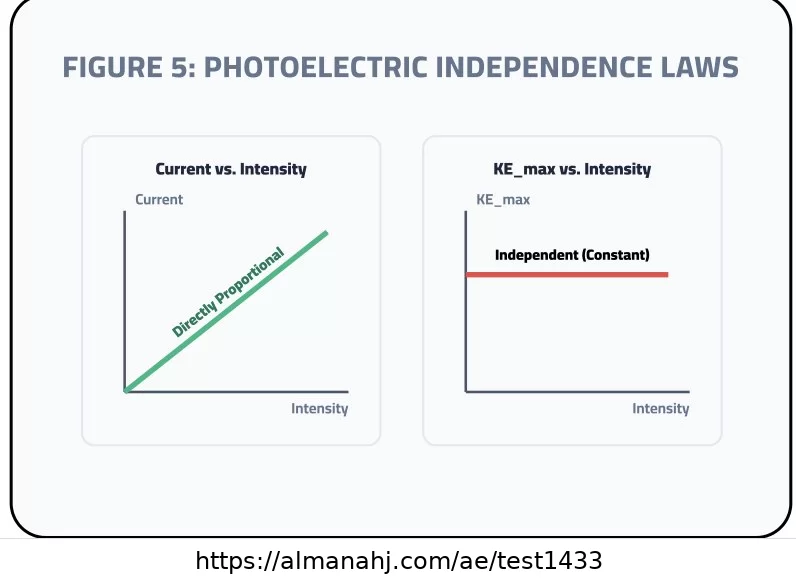
How does increasing the intensity of incident light (at constant suitable frequency) affect the maximum kinetic energy (KEmax) of emitted photoelectrons?
Explanation
The maximum kinetic energy of photoelectrons depends only on the frequency of the incident light and the work function of the metal, not its intensity. Intensity affects the *number* of emitted electrons (photocurrent).
Question 6
6
Points: 4
When plotting KEmax of photoelectrons on the y-axis versus incident frequency (f) on the x-axis, what is the significance of the graph's slope?
Explanation
From Einstein's photoelectric equation, $KE_{max} = hf - \Phi$. This is in the form of y = mx + c, where m = h (Planck's constant). Thus, the slope represents Planck's constant.
Question 7
7
Points: 4
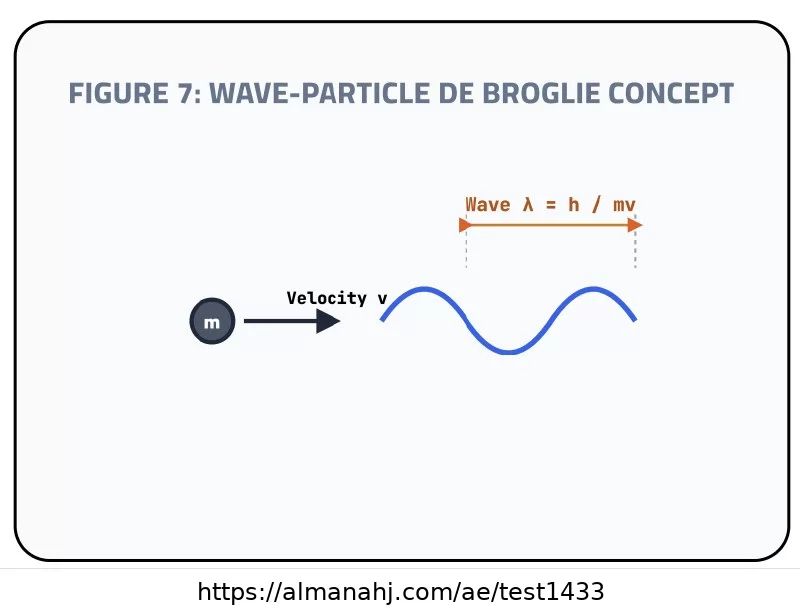
What does Louis de Broglie's hypothesis state regarding the wave-particle duality of matter?
Explanation
De Broglie's hypothesis states that all matter exhibits wave-like properties, and the wavelength is inversely proportional to its momentum ($\lambda = h/p$).
Question 8
8
Points: 4
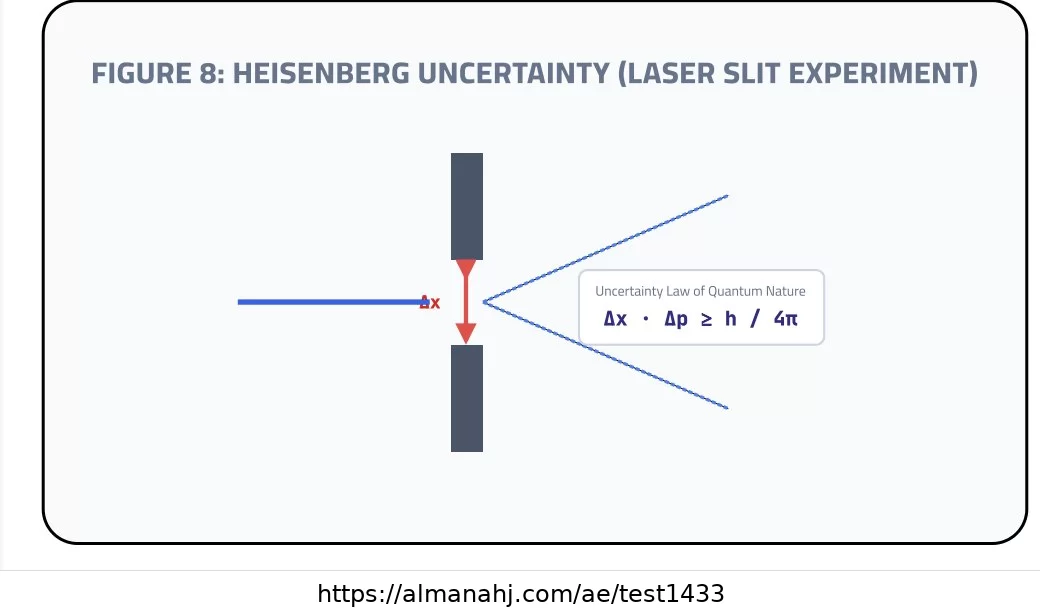
What is the physical meaning of Heisenberg's Uncertainty Principle?
Explanation
Heisenberg's Uncertainty Principle states that it's impossible to precisely know both the position and momentum of a particle simultaneously.
Question 9
9
Points: 4
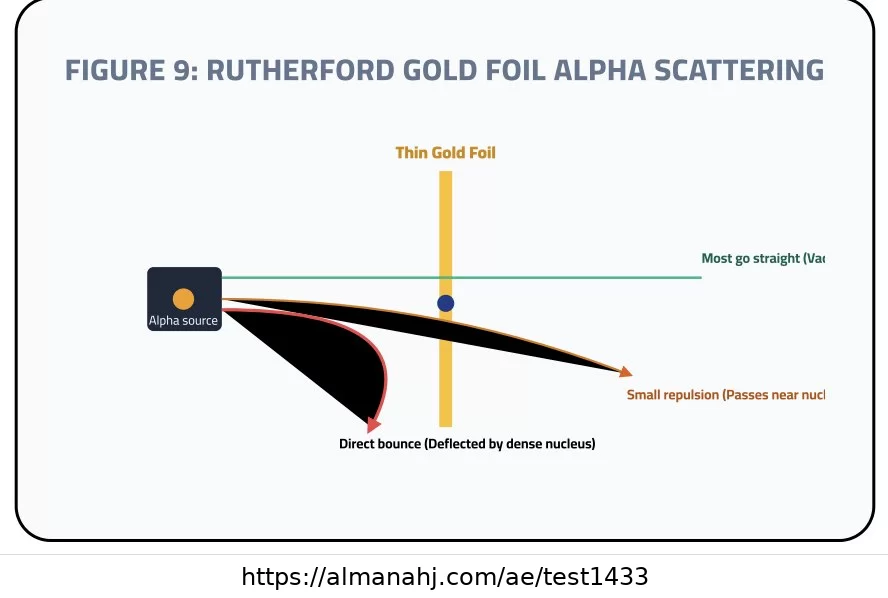
How did J.J. Thomson describe the internal structure of the atom in his classical Plum Pudding model?
Explanation
Thomson's Plum Pudding model described the atom as a sphere of uniformly distributed positive charge with electrons embedded within it, like plums in a pudding.
Question 10
10
Points: 4
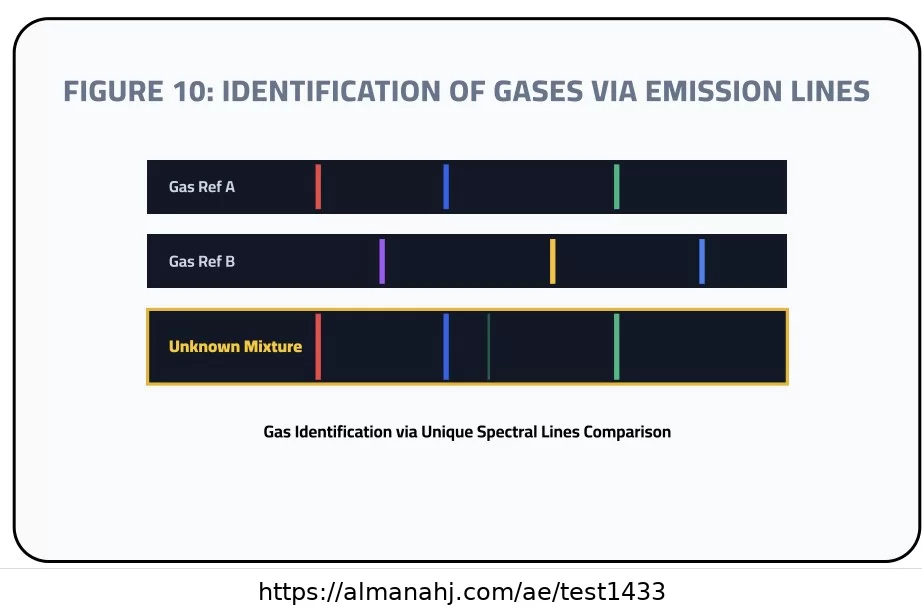
What is seen on a spectrometer screen when observing light emitted from an excited low-pressure gas?
Explanation
Excited low-pressure gases emit light at specific discrete wavelengths, producing a line emission spectrum.
Question 11
11
Points: 4
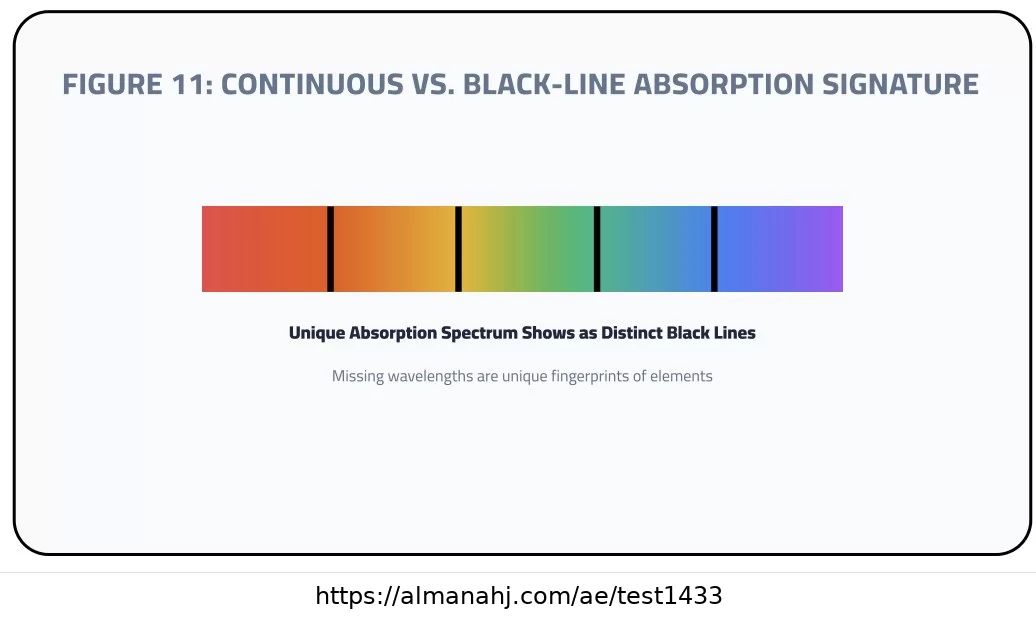
How is an absorption-line spectrum formed in modern physics?
Explanation
An absorption spectrum is formed when a continuous spectrum of electromagnetic radiation passes through a medium (like a cool gas) which absorbs radiation at specific wavelengths, leaving dark lines in the spectrum.
Question 12
12
Points: 4
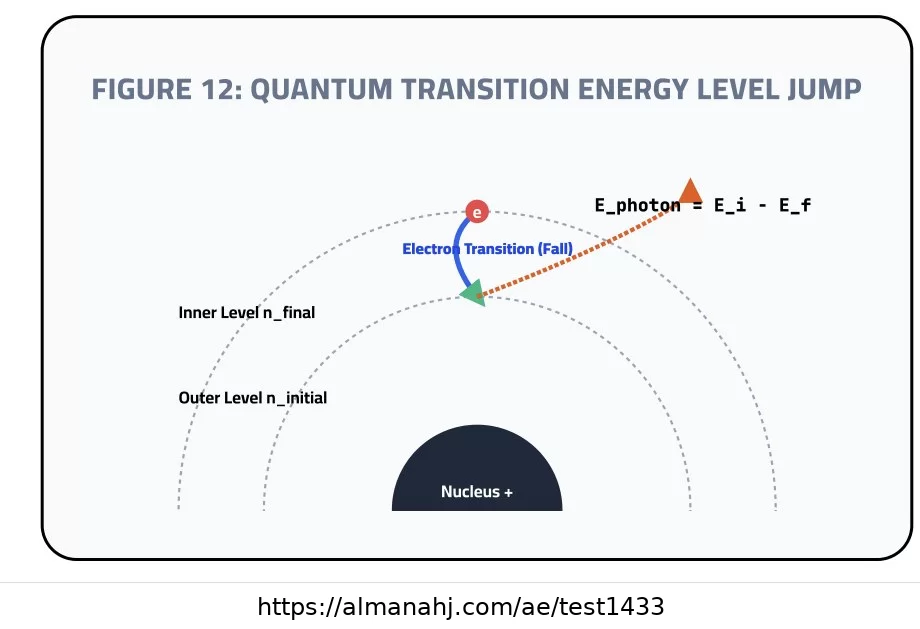
Under what conditions does a hydrogen atom emit a single photon?
Explanation
Photon emission occurs when an electron in an atom moves from a higher energy state to a lower energy state, releasing the energy difference as a photon.
Question 13
13
Points: 4
What is the radius of the ground state orbit (n = 1) of a hydrogen atom in Bohr's model?
Explanation
The Bohr radius, representing the radius of the ground state orbit of a hydrogen atom, is approximately 0.0529 nm, or 0.529 Å, which is 5.29 × 10⁻¹¹ m.
Question 14
14
Points: 4
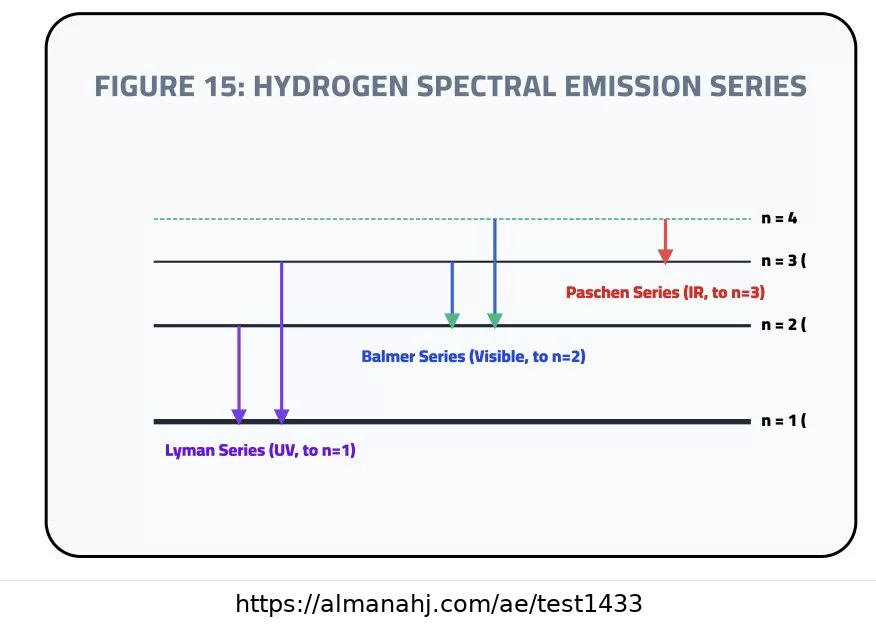
Which of the following physical series occurs when excited electrons transition and drop to the ground state (n = 1) of hydrogen?
Explanation
The Lyman series corresponds to electron transitions to the ground state (n=1) in a hydrogen atom, emitting ultraviolet photons.
Question 15
15
Points: 4
How does the modern quantum mechanical model of the atom describe the position of an electron?
Explanation
The quantum mechanical model describes electron positions in terms of orbitals, which are regions of space where there is a high probability of finding an electron, rather than fixed paths.
Question 16
16
Points: 4
What does the word acronym 'LASER' stand for in physics?
Explanation
LASER is an acronym for Light Amplification by Stimulated Emission of Radiation.
Question 17
17
Points: 4
What is the relationship between the mass number (A), original atomic number (Z), and neutron number (N) of a nucleus?
Explanation
The mass number (A) of an atom is the total number of protons (atomic number Z) and neutrons (N) in its nucleus.
Question 18
18
Points: 4
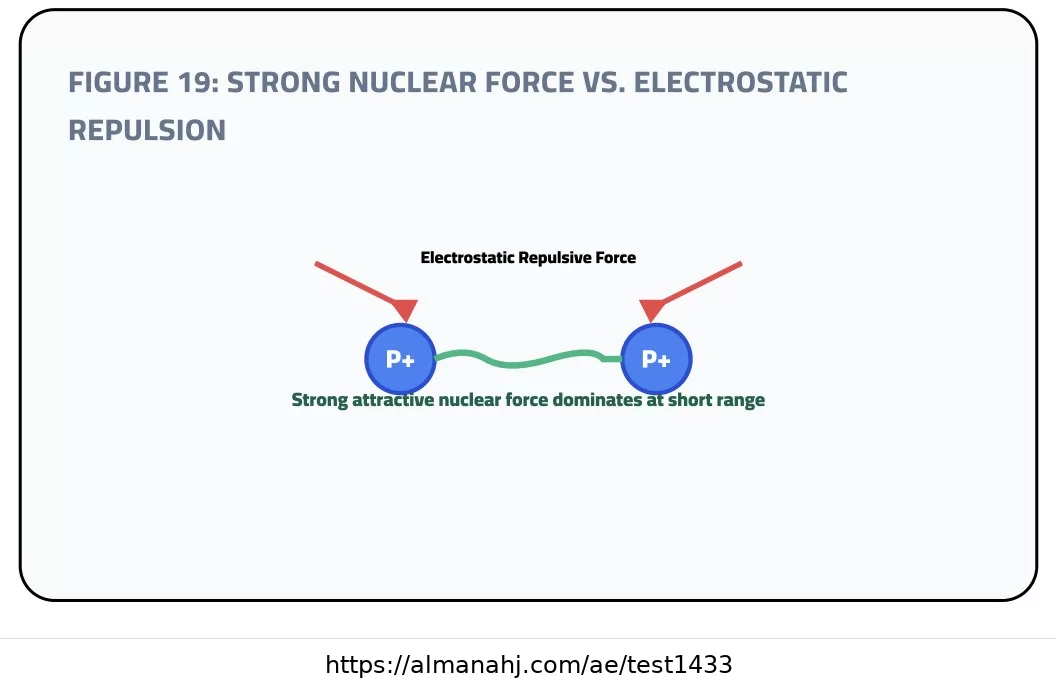
What is the primary role of the 'Strong Nuclear Force' inside the atomic nucleus?
Explanation
The strong nuclear force is responsible for holding protons and neutrons (nucleons) together in the atomic nucleus, overcoming the repulsive electrostatic forces between the positively charged protons.
Question 19
19
Points: 4
What is the primary physical function of the 'Strong Nuclear Force' inside the nucleus?
Explanation
The strong nuclear force is the fundamental force that holds protons and neutrons (nucleons) together in the nucleus, counteracting the electromagnetic repulsion between protons.
Question 20
20
Points: 4
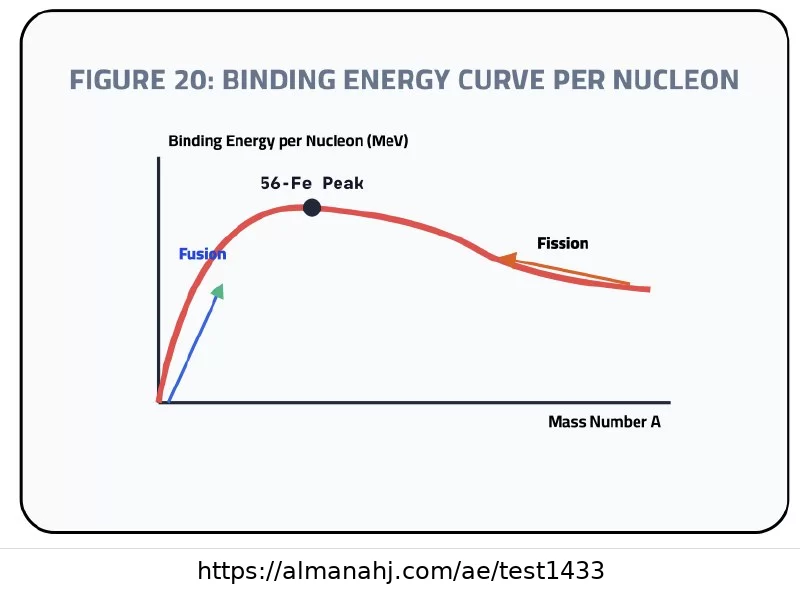
Which of the following parameters is used as the direct measure of nuclear stability?
Explanation
Nuclear stability is directly related to the binding energy per nucleon. Nuclei with higher binding energy per nucleon are more stable.
Question 21
21
Points: 4
When a radioactive nucleus undergoes alpha decay, what are the changes to its mass number (A) and atomic number (Z)?
Explanation
Alpha decay involves the emission of an alpha particle (which is a helium nucleus, ^42He). This means the mass number (A) decreases by 4, and the atomic number (Z) decreases by 2.
Question 22
22
Points: 4
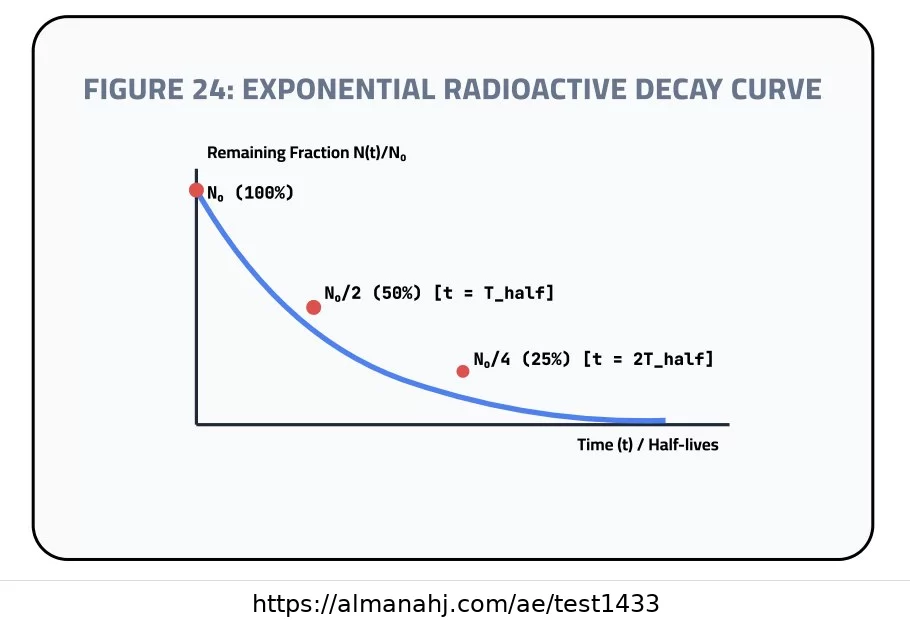
Which of the following defines the 'Half-Life' (T1/2) of a radioactive isotope?
Explanation
Half-life is the time it takes for half of the radioactive nuclei in a sample to undergo decay.
Question 23
23
Points: 4
What is nuclear fission?
Explanation
Nuclear fission is the process where a heavy atomic nucleus splits into two or more smaller nuclei, along with some by-products like neutrons and photons, releasing a large amount of energy.
Question 24
24
Points: 4
What is nuclear fusion?
Explanation
Nuclear fusion is a reaction in which two or more atomic nuclei combine to form one or more different atomic nuclei and subatomic particles (neutrons or protons), releasing large quantities of energy.
Question 25
25
Points: 4
According to the Standard Model, which of the following is classified as a truly fundamental elementary particle that cannot be split?
Explanation
In the Standard Model, electrons are classified as fundamental particles (leptons), meaning they are not composed of smaller constituents. Protons and neutrons are composite particles (baryons) made of quarks. Alpha particles are composite nuclei.
Result Tracking
Answered0 / 25
Correct Answers0
Wrong Answers0
Current Percentage0%
Quiz Completed
This is your final result after answering all questions.
Final Result
0/250%
Correct Answers0
Wrong Answers0
Answered Questions0 / 25
Total Possible Points100
You can reopen the page to start again.
يمكنك تسجيل الدخول لحفظ سجل محاولاتك، معرفة أخطائك المتكررة، والحصول على نصائح مخصصة. تسجيل الدخول باستخدام Google
Here are more quizzes for الصف الثاني عشر المتقدم by الفصل الثالث and subject فيزياء
This section is rendered only when the user reaches it while scrolling.
...
🍪
إشعار ملفات تعريف الارتباط
يستخدم هذا الموقع ملفات تعريف الارتباط لتحسين تجربة التصفح وقياس الأداء وعرض المحتوى بشكل أفضل.
باستخدامك للموقع فإنك توافق على استخدامنا لها وفق
سياسة الخصوصية.