Interactive multiple-choice quiz: The Building Blocks of Life منهج انسباير
Biology Question Bank focusing on Unit 1 – Lesson 4: The Building Blocks of Life. This comprehensive set of multiple-choice questions covers essential topics including Carbon and Organic Compounds, Carbohydrates, Lipids, Proteins, and Nucleic Acids. Ideal for students reviewing molecular biology and biochemistry fundamentals.
🏆 انضم إلى التحدي واحصل على ترتيبك
اختبار شهادة تدريبي مؤقت للصف والمادة والفصل نفسه.
اختر إجابة واحدة لكل سؤال. عند الاختيار ستظهر النتيجة فورًا: الأخضر صحيح، والأحمر خطأ، وسيظهر تفسير الإجابة مباشرة إن كان متوفرًا. وبعد آخر سؤال ستظهر الدرجة النهائية تلقائيًا.
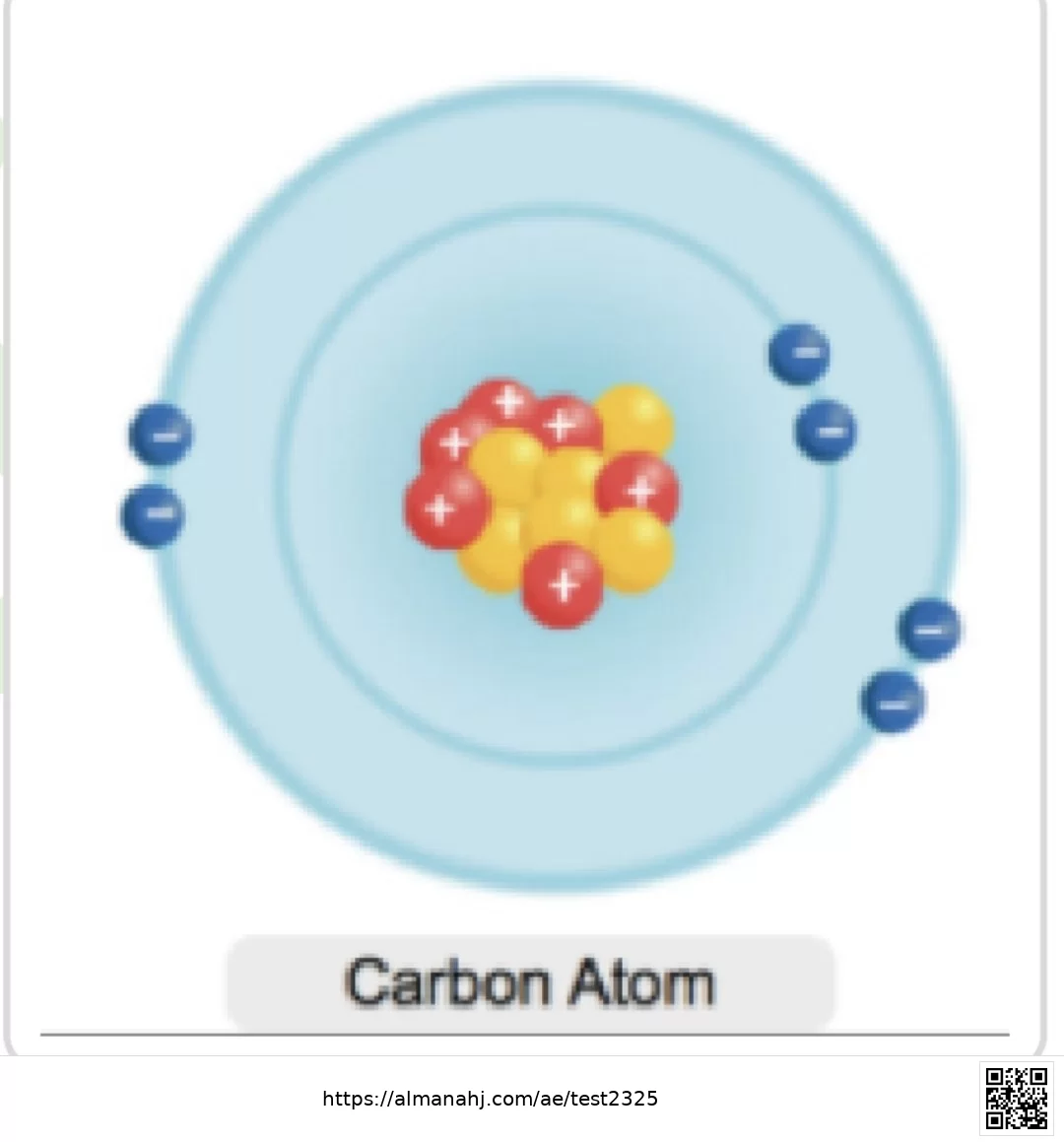
A carbon atom has ______ protons and ______ electrons in its outermost energy level.
Explanation
Carbon has an atomic number of 6 (6 protons) and has 4 valence electrons in its outer shell.
Question 2
2
Points: 1
Which property of carbon explains the variety of compounds and structures found in carbon-based molecules?
Explanation
Carbon's ability to form four stable covalent bonds allows it to create complex, diverse molecular structures.
Question 3
3
Points: 1
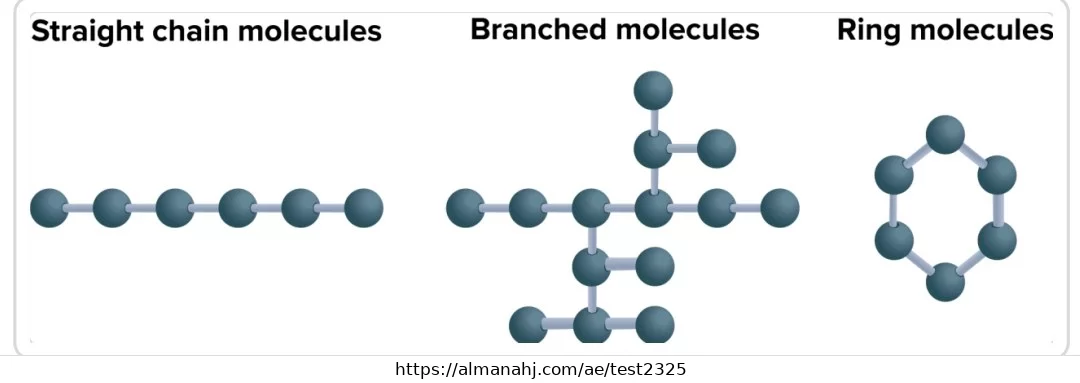
The figure shows three ways in which carbon atoms can be arranged. Which statement is correct?
Explanation
As shown in the diagram, carbon skeletons can be linear (straight), branched, or arranged in cyclic rings.
Question 4
4
Points: 1
Which of the following is NOT a characteristic of the element carbon?
Explanation
Carbon is a non-metal and typically forms covalent bonds, not ionic bonds.
Question 5
5
Points: 1
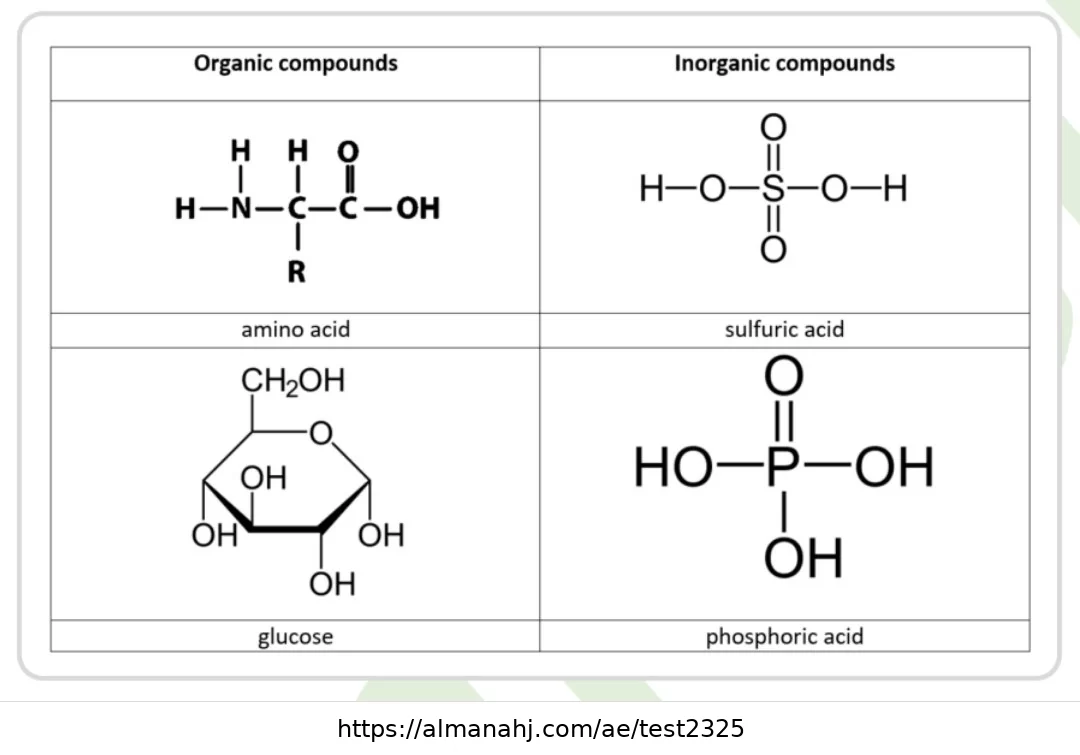
Study the structural formulas of organic and inorganic compounds below. The reason why glucose and amino acids are organic compounds is that:
Explanation
Organic compounds are primarily characterized by containing carbon-carbon and carbon-hydrogen bonds.
Question 6
6
Points: 1
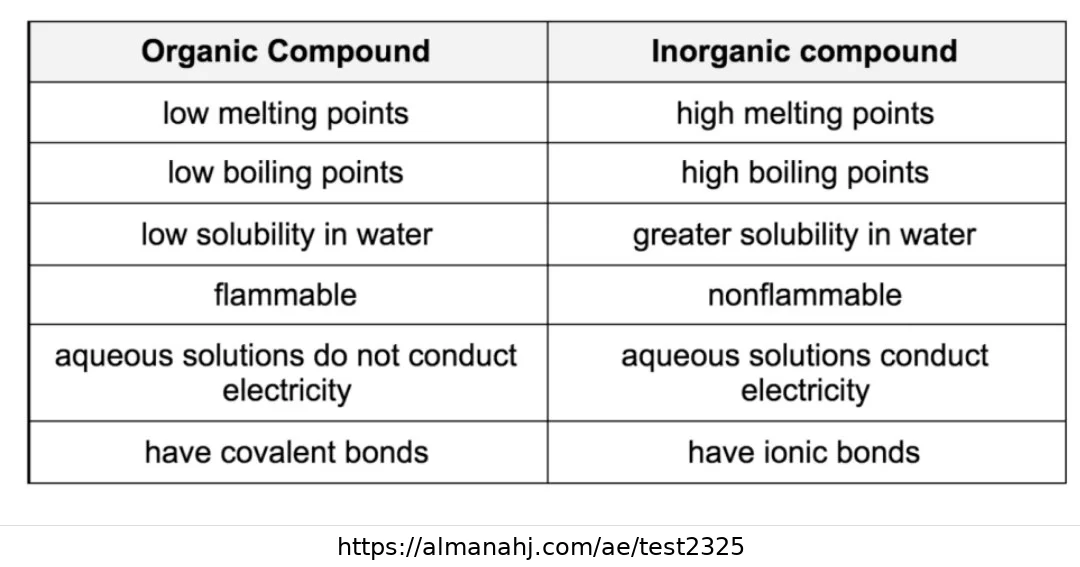
The table shows the general properties of organic and inorganic compounds. Which of the following compounds is likely an organic compound?
Explanation
Organic compounds generally have low boiling points, are flammable, and are often insoluble in water.
Question 7
7
Points: 1
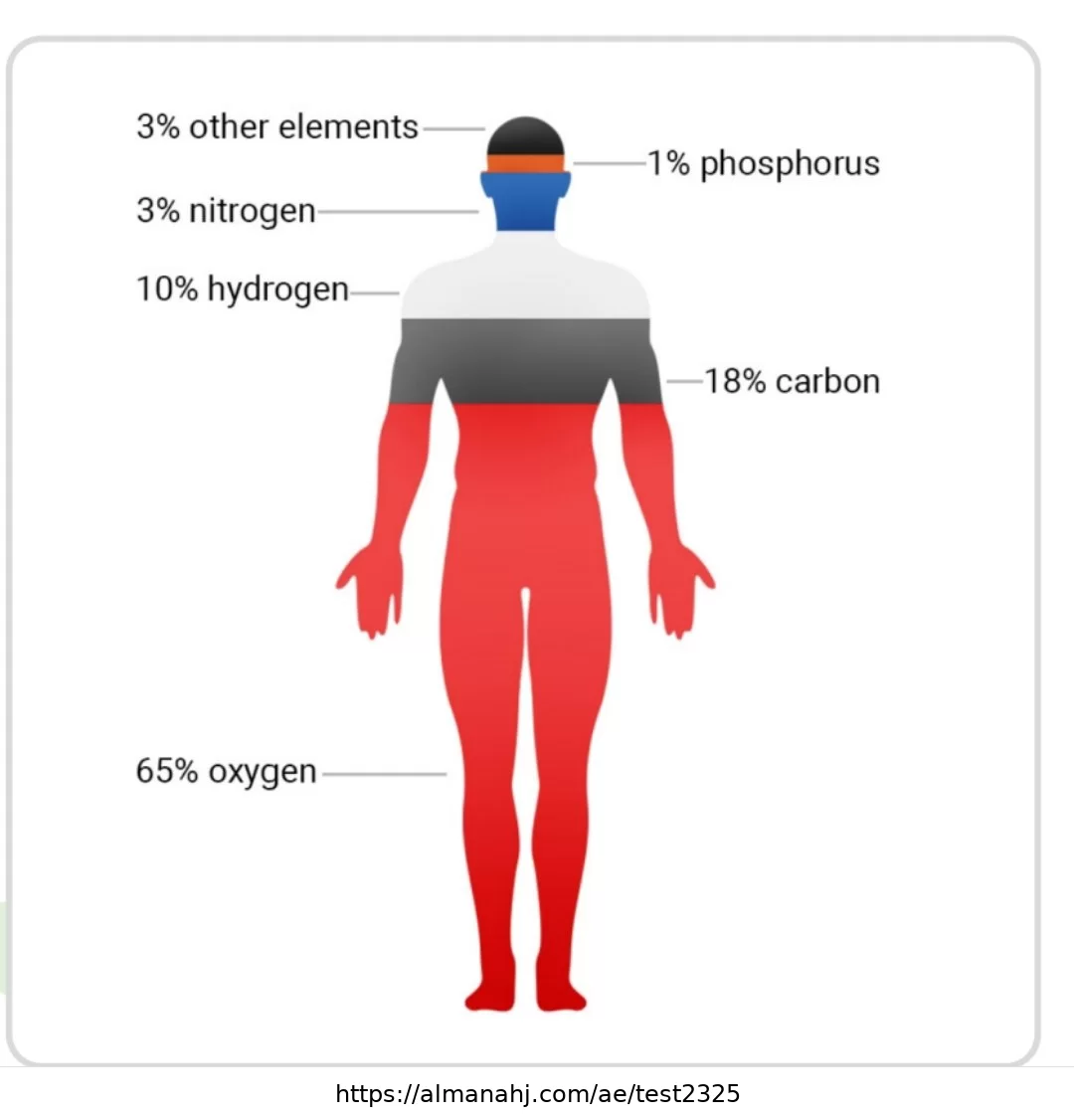
Study the diagram that shows the percentage of elements by mass in the human body. The top three most abundant elements are:
Explanation
The diagram shows Oxygen (65%), Carbon (18%), and Hydrogen (10%) as the most abundant elements by mass.
Question 8
8
Points: 1
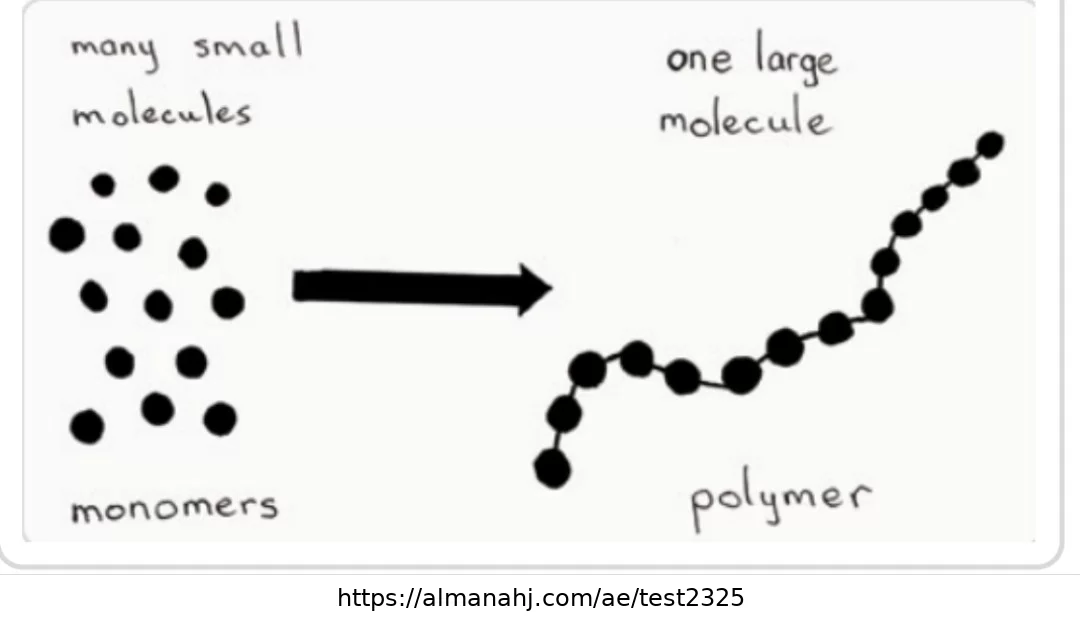
The figure shows many small molecules joining to form one large molecule. Which statement correctly describes monomers?
Explanation
Monomers are the individual repeating units that link together to form a large molecule called a polymer.
Question 9
9
Points: 1
Which one of the following is NOT a biological macromolecule?
Explanation
Water is a small inorganic molecule, not a biological macromolecule (polymer).
Question 10
10
Points: 1
Carbohydrates are compounds made of carbon, hydrogen and oxygen. What is the ratio of C : H : O in a carbohydrate?
Explanation
Most carbohydrates follow the general formula (CH2O)_n, giving a ratio of 1 Carbon : 2 Hydrogen : 1 Oxygen.
Question 11
11
Points: 1
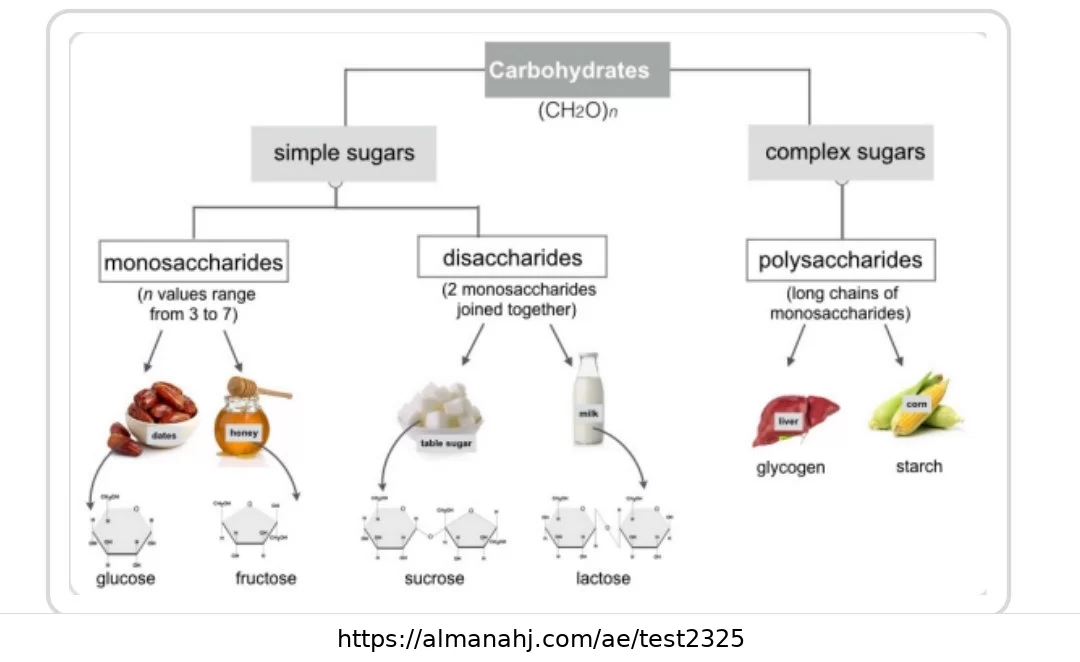
Study the classification of carbohydrates in the diagram. Sucrose and lactose are examples of:
Explanation
As shown in the classification chart, disaccharides consist of two monosaccharides joined together, including sucrose and lactose.
Question 12
12
Points: 1
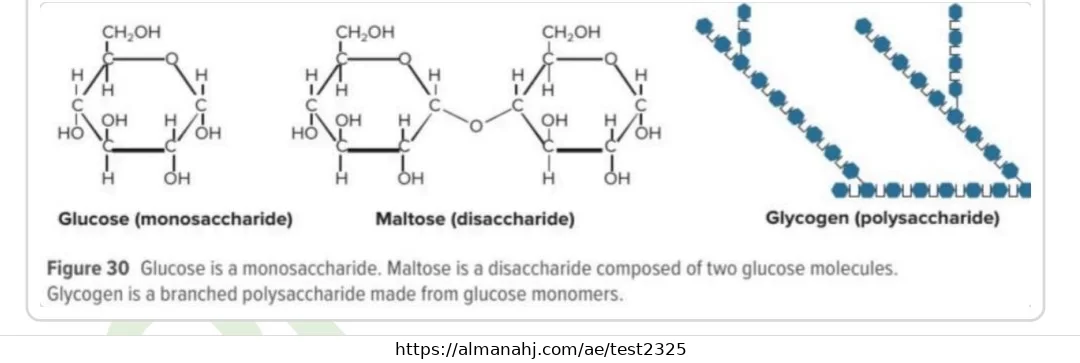
Which molecule in the figure is a branched polysaccharide made from glucose monomers?
Explanation
Glycogen is a highly branched polysaccharide used for energy storage in animals.
Question 13
13
Points: 1
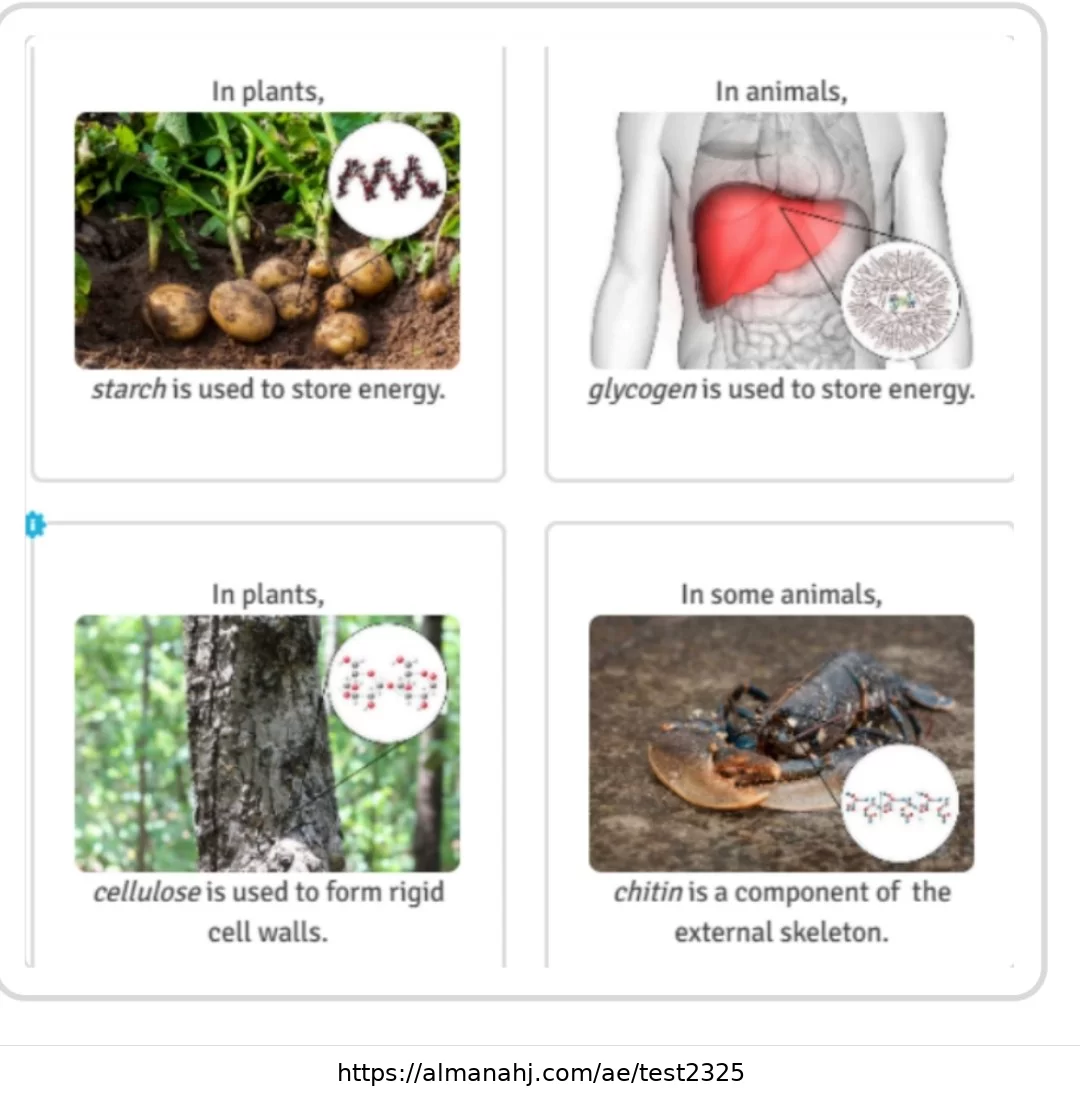
Study the figure. Which pair correctly matches a polysaccharide with its function?
Explanation
Glycogen is the primary storage form of glucose in animals, whereas starch is for plants, and cellulose forms plant cell walls.
Question 14
14
Points: 1
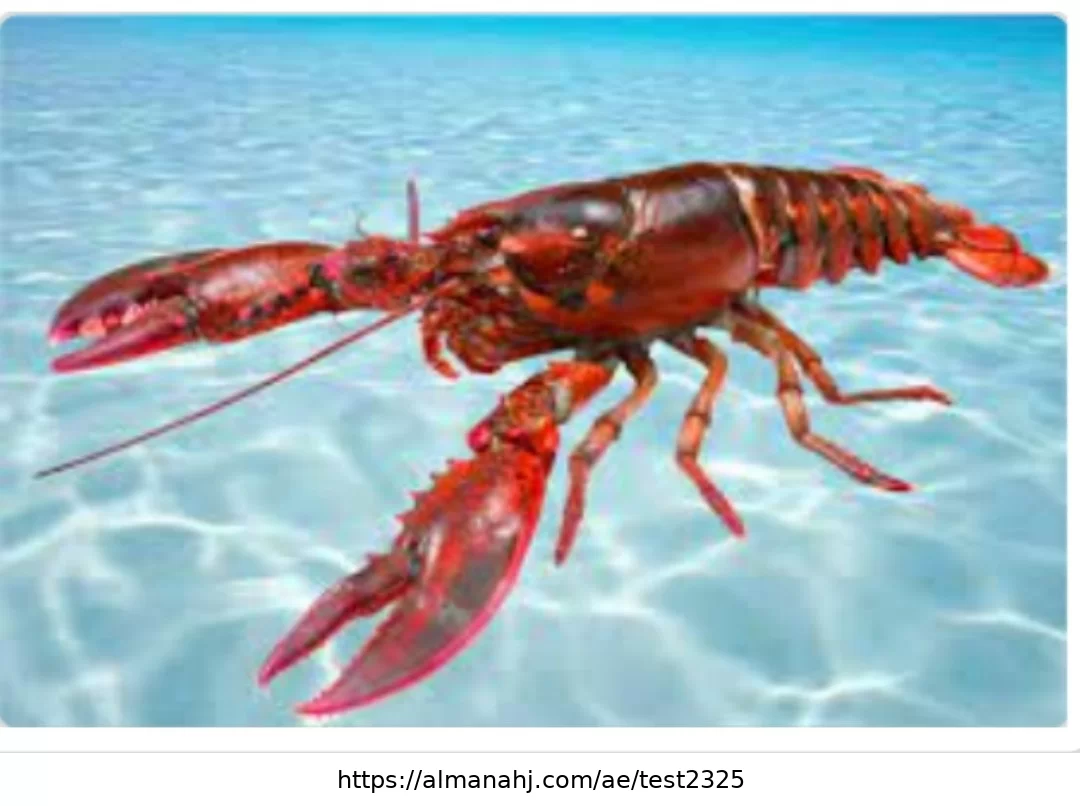
The hard outer shell of a lobster is made mainly of which carbohydrate?
Explanation
Chitin is a structural polysaccharide found in the exoskeletons of arthropods like lobsters and insects.
Question 15
15
Points: 1
Which statement correctly describes carbohydrates?
Explanation
Carbohydrates primarily serve as energy sources (like starch/glycogen) and structural components (like cellulose/chitin).
Question 16
16
Points: 1
Which statement about lipids is correct?
Explanation
Lipids are nonpolar molecules that do not dissolve in water (hydrophobic) and consist largely of C and H atoms.
Question 17
17
Points: 1
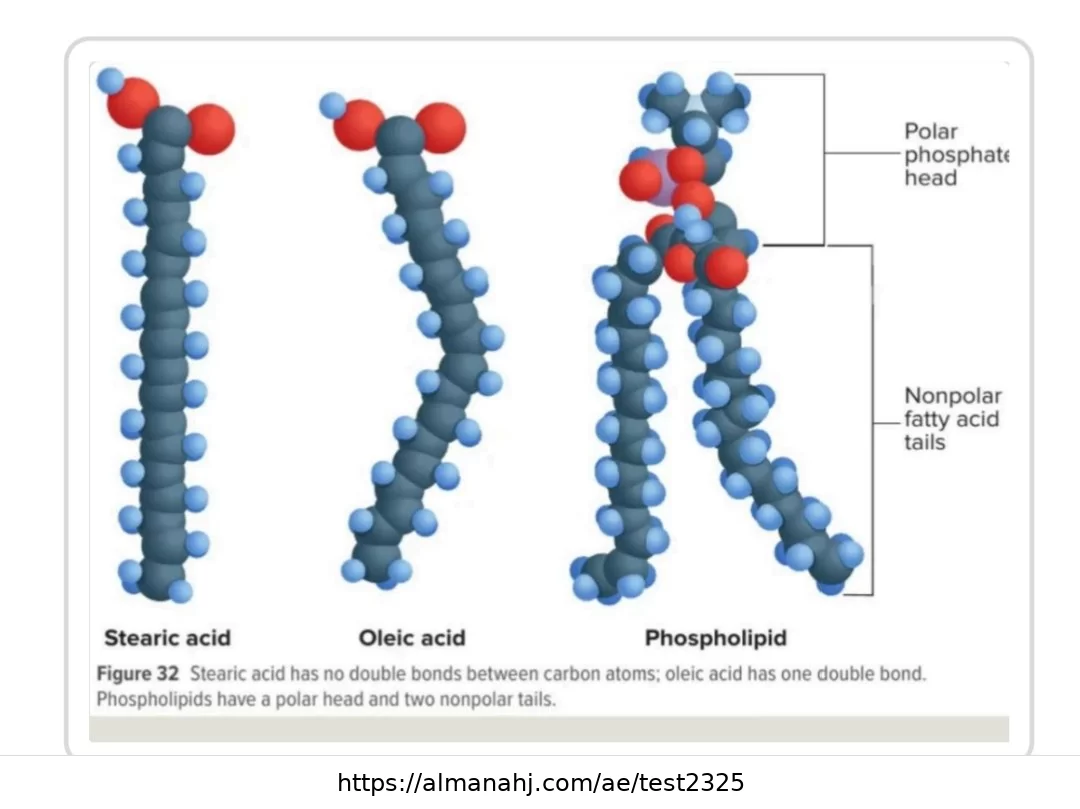
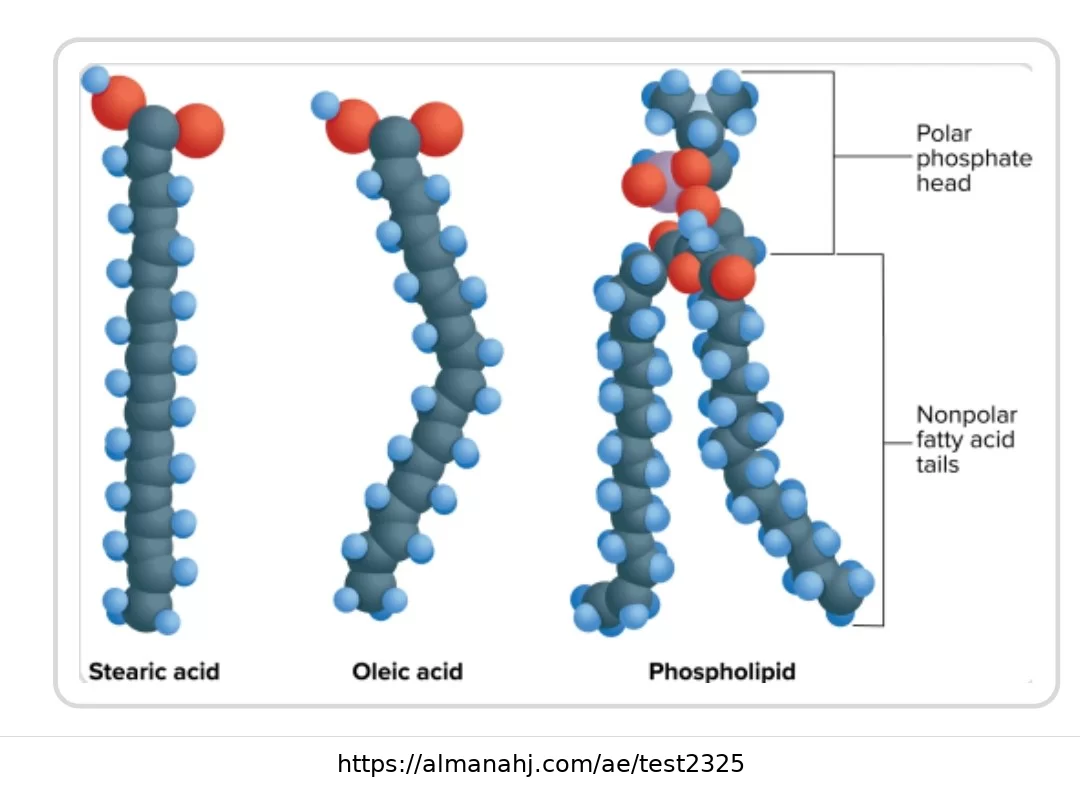
Stearic acid has no double bonds between carbon atoms, while oleic acid has one double bond. Which statement about oleic acid is correct?
Explanation
Unsaturated fatty acids contain double bonds which create kinks, preventing tight packing and resulting in a liquid state (oil) at room temperature.
Question 18
18
Points: 1
Butter is solid at room temperature. Which description best fits the fatty acid chains in butter?
Explanation
Butter contains saturated fats, which have straight chains (no double bonds) that pack tightly together, making them solid.
Question 19
19
Points: 1
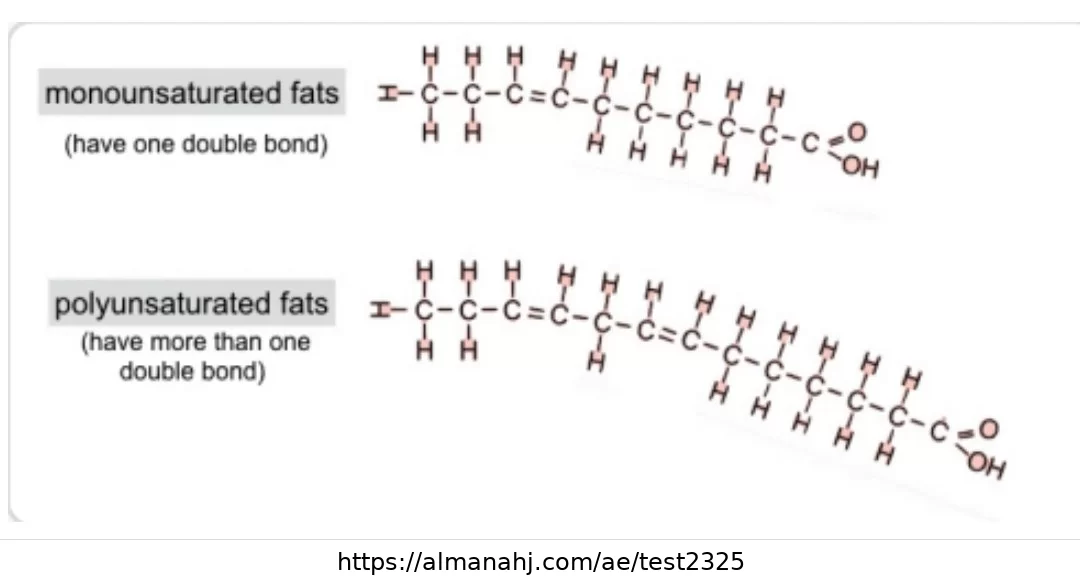
Study the structures. Fats with more than one double bond in the tail are called:
Explanation
'Poly-' means many; polyunsaturated fats have two or more carbon-carbon double bonds in their hydrocarbon tails.
Question 20
20
Points: 1
Which lipid has a polar phosphate head and two nonpolar fatty acid tails, and is the major component of all cell membranes?
Explanation
Phospholipids are amphipathic molecules that form the bilayer structure of cell membranes.
Question 21
21
Points: 1
Cholesterol is a steroid. It provides the starting point for making:
Explanation
Steroids like cholesterol are precursors for the synthesis of Vitamin D and steroid hormones.
Question 22
22
Points: 1
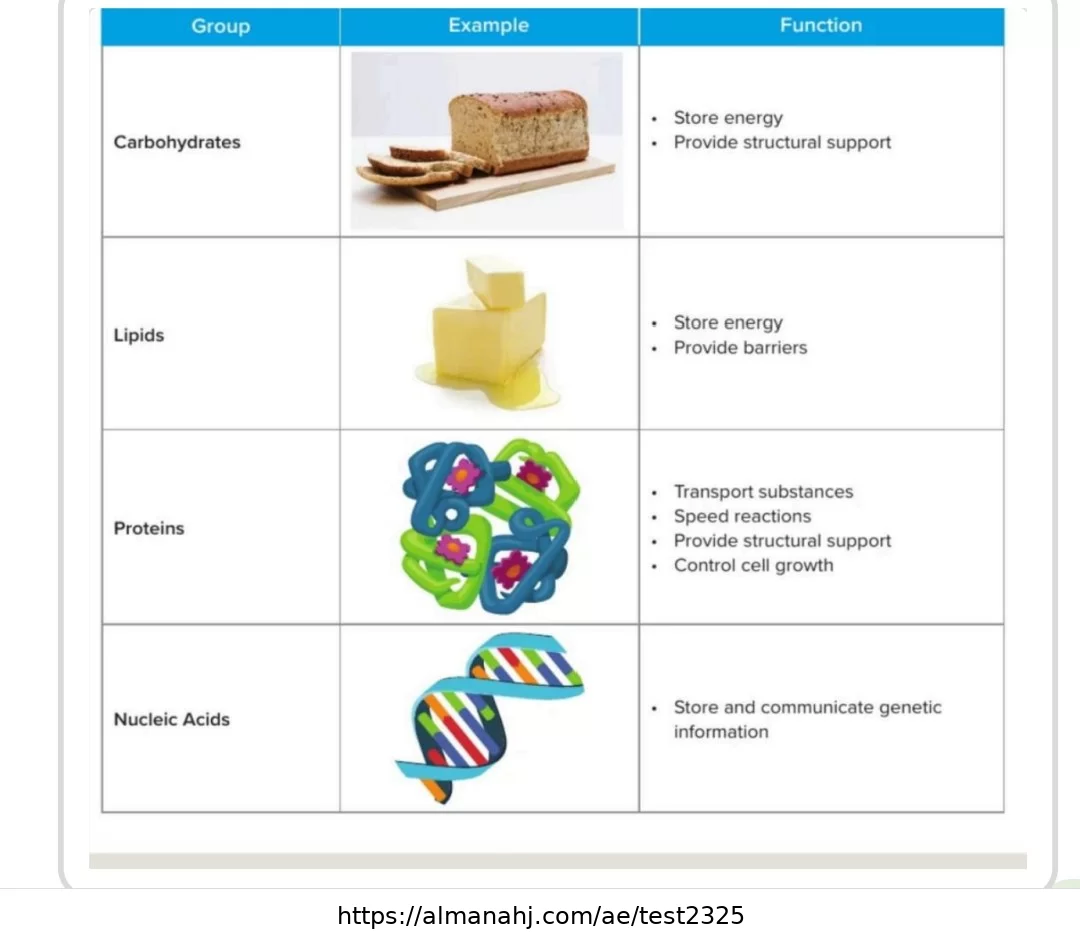
According to the table, which group of macromolecules both stores energy and provides barriers?
Explanation
As listed in the table, lipids function in energy storage and providing barriers (cell membranes).
Question 23
23
Points: 1
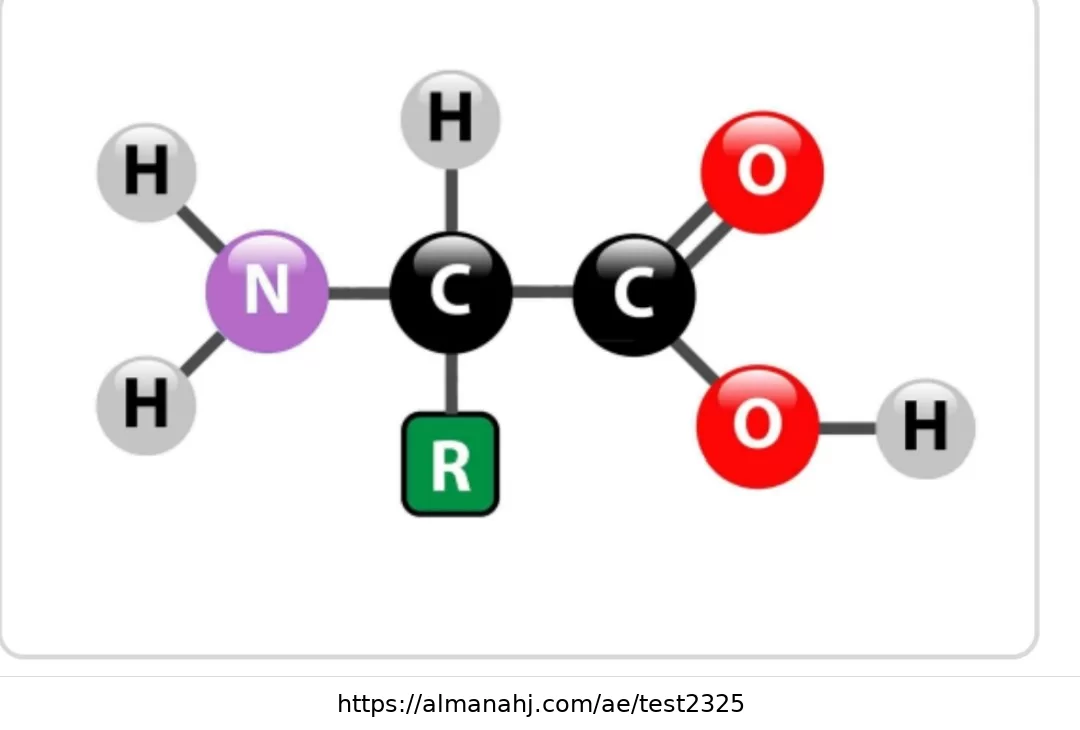
The figure shows the general structure of an amino acid. Which part is different in each of the 20 amino acids?
Explanation
Every amino acid has an amino group, a carboxyl group, and a central carbon; they differ only in their R-group (side chain).
Question 24
24
Points: 1
Which statement is CORRECT about peptide bonds?
Explanation
Peptide bonds are covalent bonds formed by dehydration synthesis between the carboxyl group (COOH) and amino group (NH2) of adjacent amino acids.
Question 25
25
Points: 1
Which one of the following statements is NOT a function of proteins?
Explanation
Body insulation is primarily a function of lipids (fats), not proteins.
Question 26
26
Points: 1
Which one of the following proteins gives the cell its shape and helps organize the parts of the cell?
Explanation
Microtubules are structural proteins that make up the cytoskeleton, providing shape and organization.
Question 27
27
Points: 1
Hemoglobin is a protein with a quaternary structure made up of multiple polypeptide chains. Select the correct sequence of molecules in order of increasing size.
Explanation
Amino acids are the monomers; they link to form polypeptide chains, and one or more chains form a functional protein.
Question 28
28
Points: 1
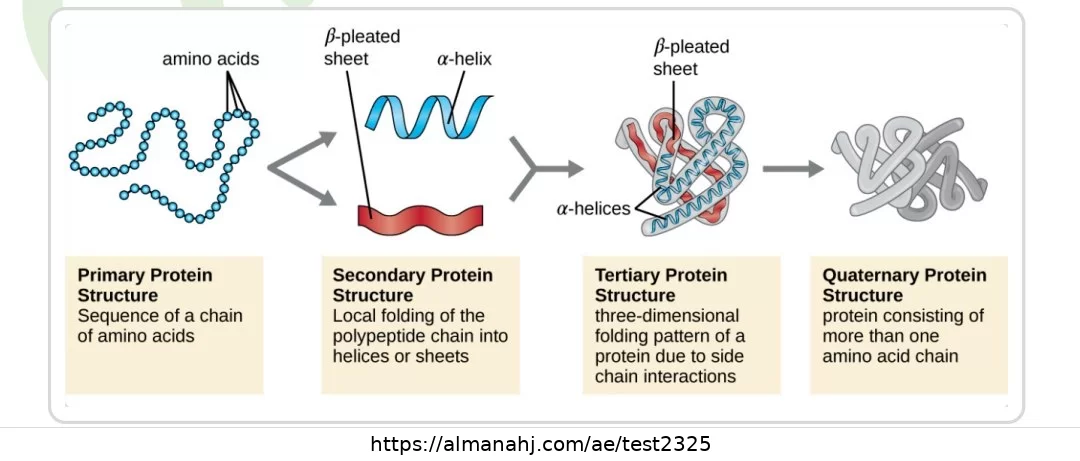
Study the four levels of protein structure. Which level is described as the folding of a polypeptide chain into a helix or a pleated sheet?
Explanation
Secondary structure involves local folding into alpha-helices or beta-pleated sheets due to hydrogen bonding.
Question 29
29
Points: 1
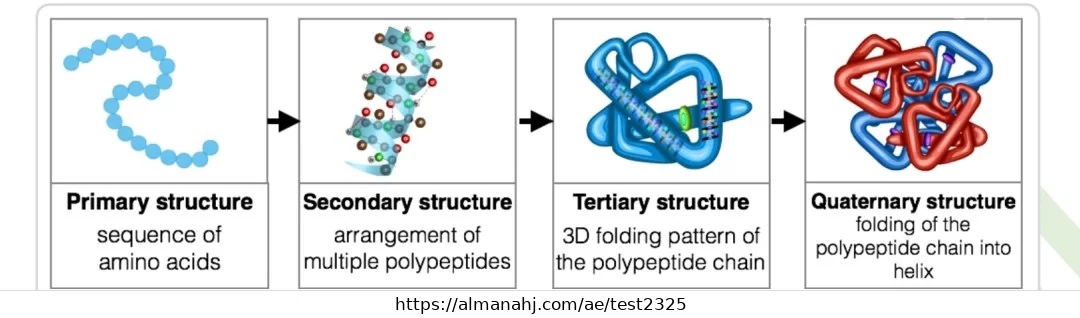
A student created the flow chart below to show the four levels of protein structure. Which statement correctly evaluates the diagram?
Explanation
In the diagram, 'Secondary' should describe folding into helices/sheets, while 'Quaternary' should describe multiple polypeptides joining.
Question 30
30
Points: 1
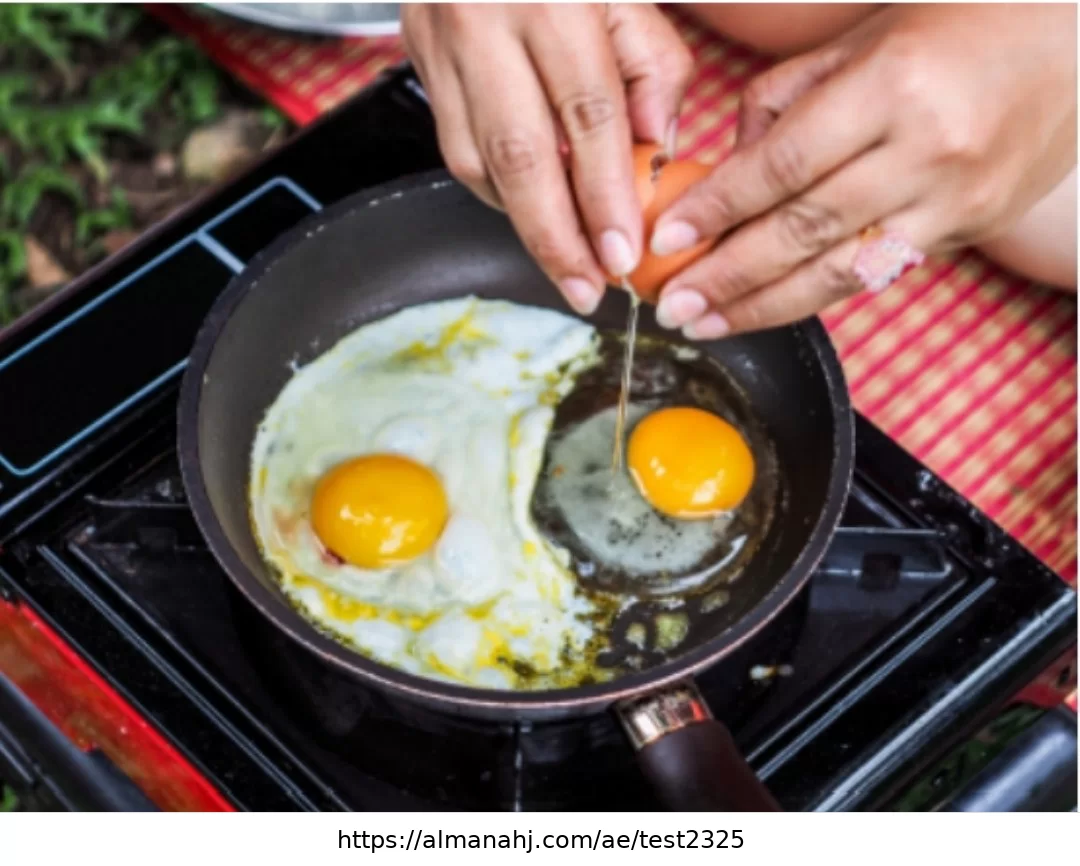
Boiling an egg makes it hard and solid because heat changes the 3D structure of its proteins (denaturation). Which statement is also true?
Explanation
Denaturation affects all proteins, including enzymes, by unfolding their functional 3D shapes.
Question 31
31
Points: 1
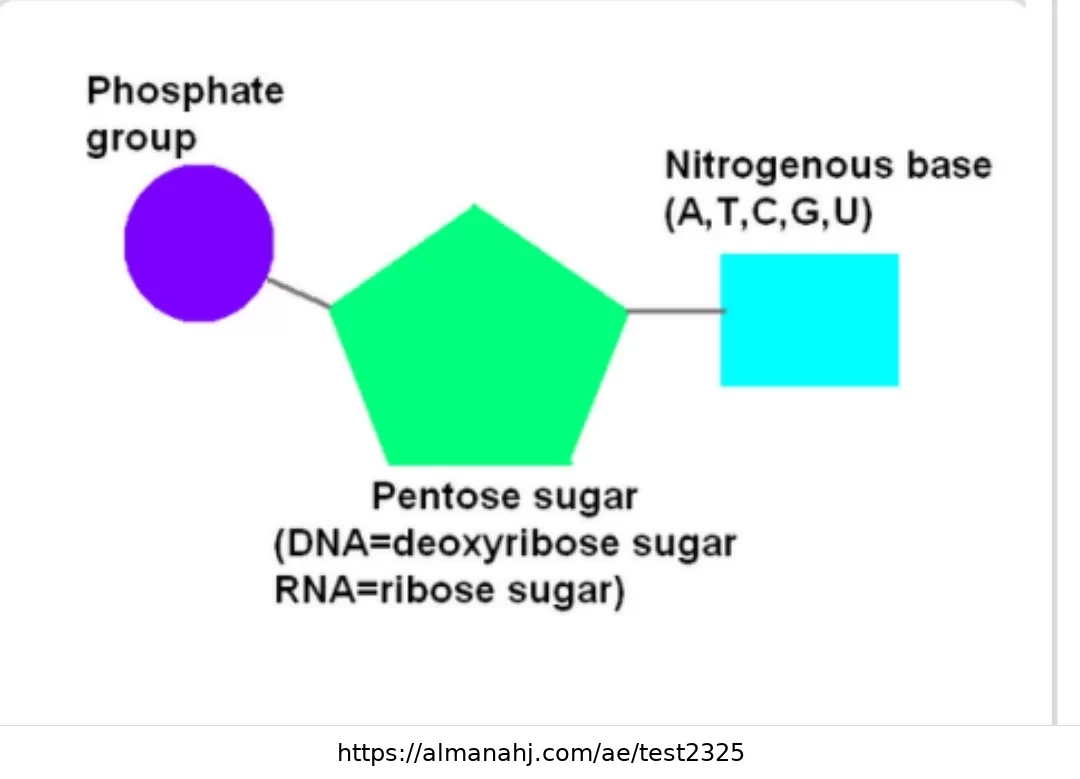
Which three parts make up a nucleotide, as shown in the figure?
Explanation
Nucleotides consist of three components: a phosphate group, a pentose (5-carbon) sugar, and a nitrogen-containing base.
Question 32
32
Points: 1
A newspaper article states that DNA provides the code for making lipids. This statement is false because DNA is a type of:
Explanation
DNA is a nucleic acid that stores the genetic blueprints used to synthesize proteins.
Question 33
33
Points: 1
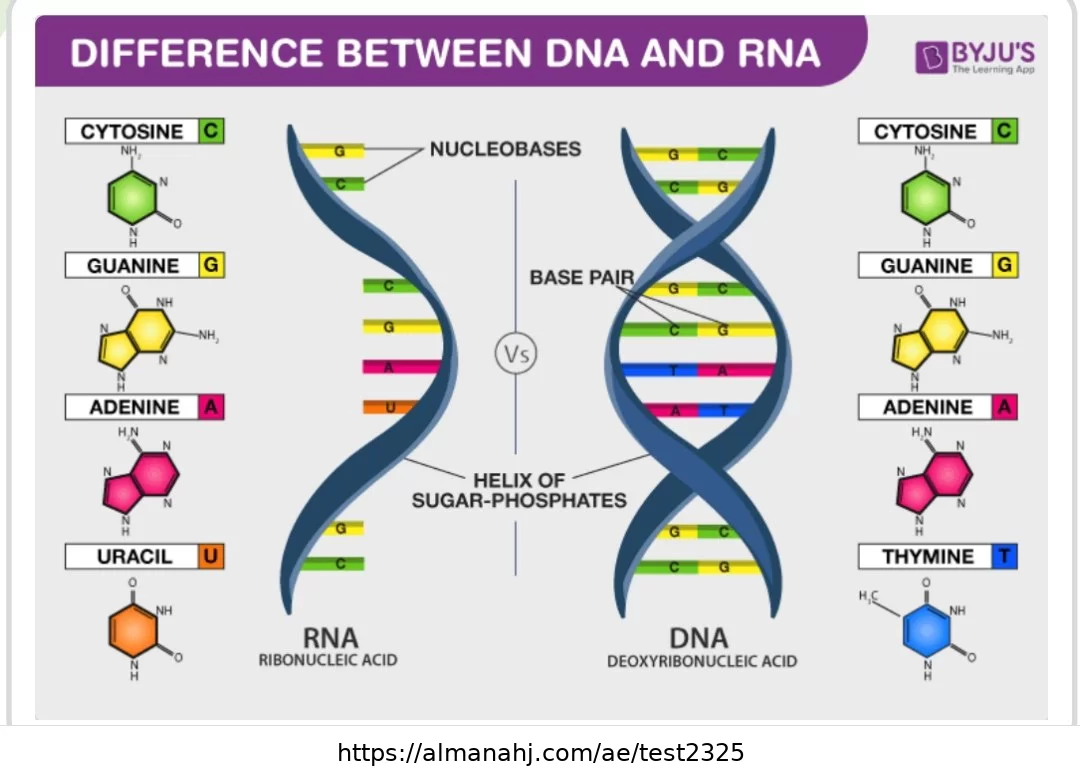
Study the figure comparing DNA and RNA. Which nitrogenous base is found in RNA but NOT in DNA?
Explanation
DNA uses Adenine, Guanine, Cytosine, and Thymine. RNA replaces Thymine with Uracil.
Question 34
34
Points: 1
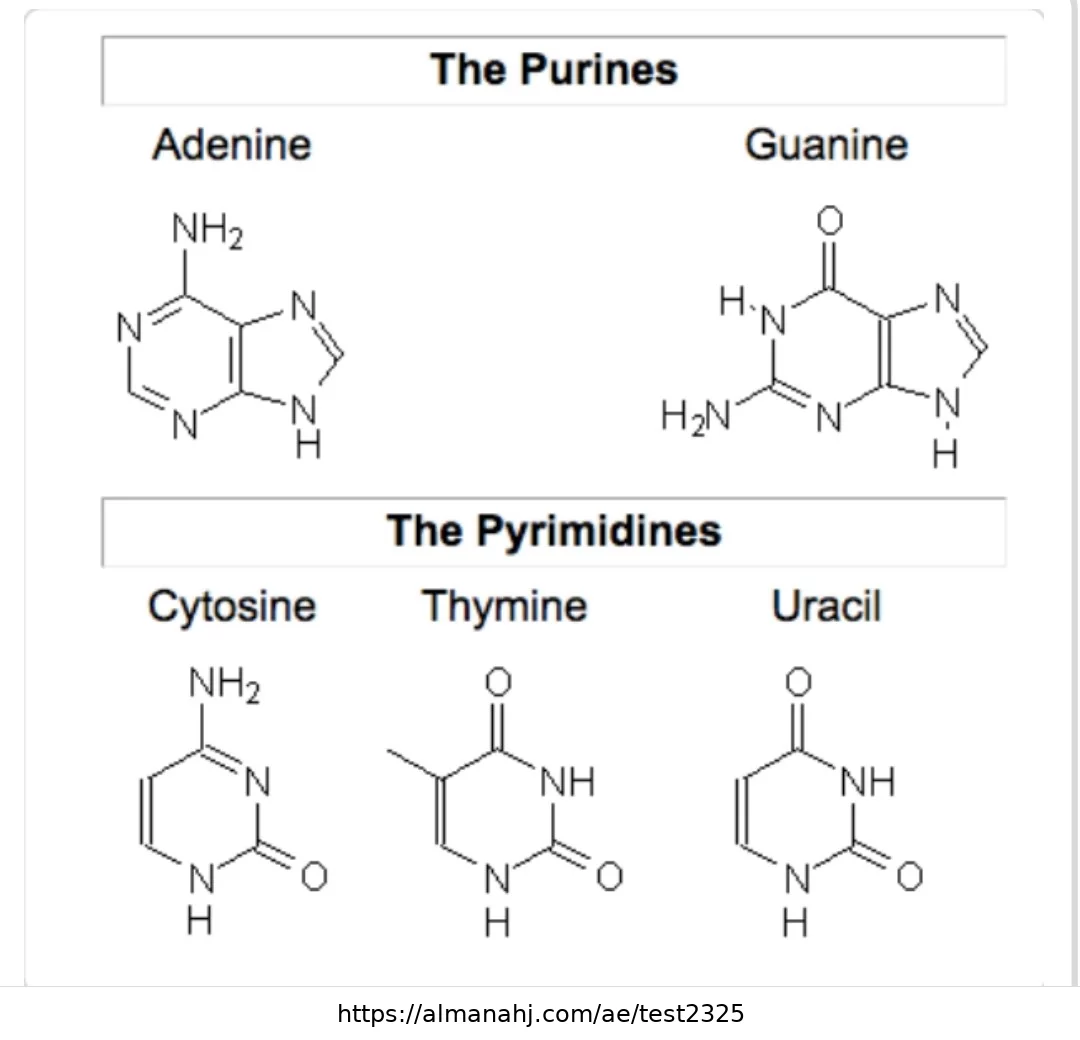
Study the nitrogenous bases below. Which list contains only pyrimidines?
Explanation
Pyrimidines are single-ring bases (C, T, U), while purines are double-ring bases (A, G).
Question 35
35
Points: 1
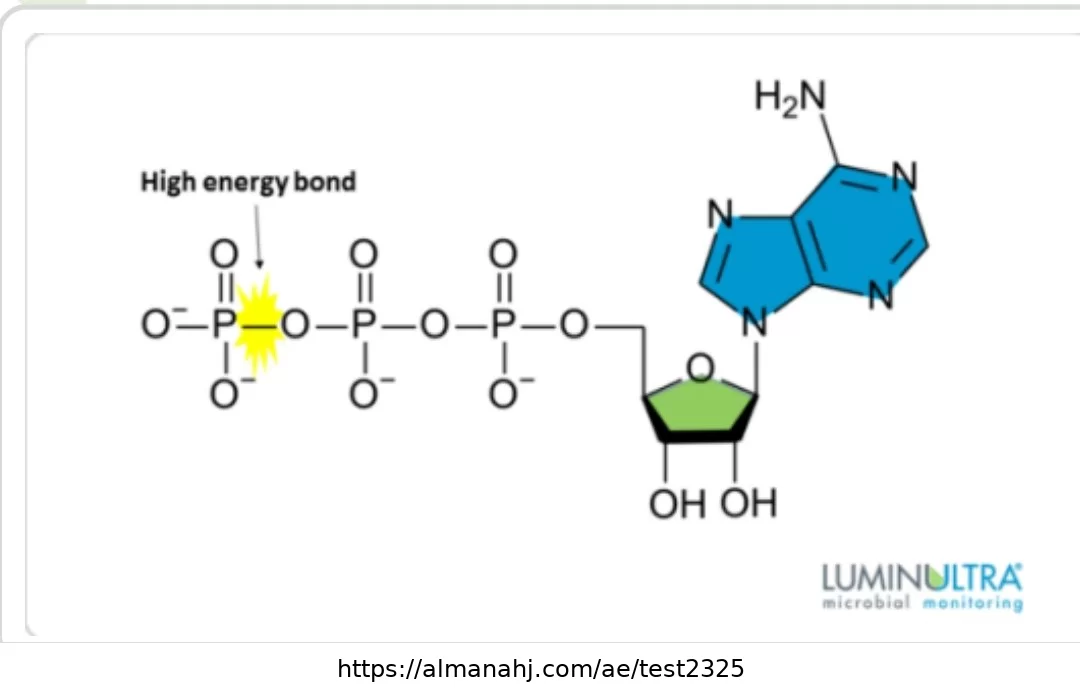
The molecule below stores chemical energy that cells can use during reactions. Which statement about it is correct?
Explanation
The molecule shown is ATP (Adenosine Triphosphate), the primary energy carrier in cells.
Question 36
36
Points: 1
Which row correctly matches a macromolecule with its monomer?
Explanation
Nucleic acids (DNA/RNA) are polymers made of nucleotide monomers.
Question 37
37
Points: 1
Which row correctly matches a macromolecule group with its function?
Explanation
Enzymes are a specialized group of proteins that catalyze (speed up) chemical reactions.
Result Tracking
Answered0 / 37
Correct Answers0
Wrong Answers0
Current Percentage0%
Quiz Completed
This is your final result after answering all questions.
Final Result
0/370%
Correct Answers0
Wrong Answers0
Answered Questions0 / 37
Total Possible Points37
You can reopen the page to start again.
يمكنك تسجيل الدخول لحفظ سجل محاولاتك، معرفة أخطائك المتكررة، والحصول على نصائح مخصصة. تسجيل الدخول باستخدام Google
Here are more quizzes for الصف التاسع المتقدم by الفصل الأول and subject أحياء
This section is rendered only when the user reaches it while scrolling.
...
🍪
إشعار ملفات تعريف الارتباط
يستخدم هذا الموقع ملفات تعريف الارتباط لتحسين تجربة التصفح وقياس الأداء وعرض المحتوى بشكل أفضل.
باستخدامك للموقع فإنك توافق على استخدامنا لها وفق
سياسة الخصوصية.