Interactive multiple-choice quiz: اختبار الوحدة الثالثة منهج انسباير
اختبار الوحدة الثالثة لمادة العلوم للصف السابع الفصل الدراسي الأول. يتناول الاختبار موضوعات التنوع البيولوجي، استقرار الأنظمة البيئية، والمناطق الحيوية (Biomes). يركز الاختبار على العوامل المؤثرة في البيئة والتهديدات التي تواجه التنوع الحيوي مثل التلوث وتغير المناخ.
🏆 انضم إلى التحدي واحصل على ترتيبك
اختبار شهادة تدريبي مؤقت للصف والمادة والفصل نفسه.
اختر إجابة واحدة لكل سؤال. عند الاختيار ستظهر النتيجة فورًا: الأخضر صحيح، والأحمر خطأ، وسيظهر تفسير الإجابة مباشرة إن كان متوفرًا. وبعد آخر سؤال ستظهر الدرجة النهائية تلقائيًا.
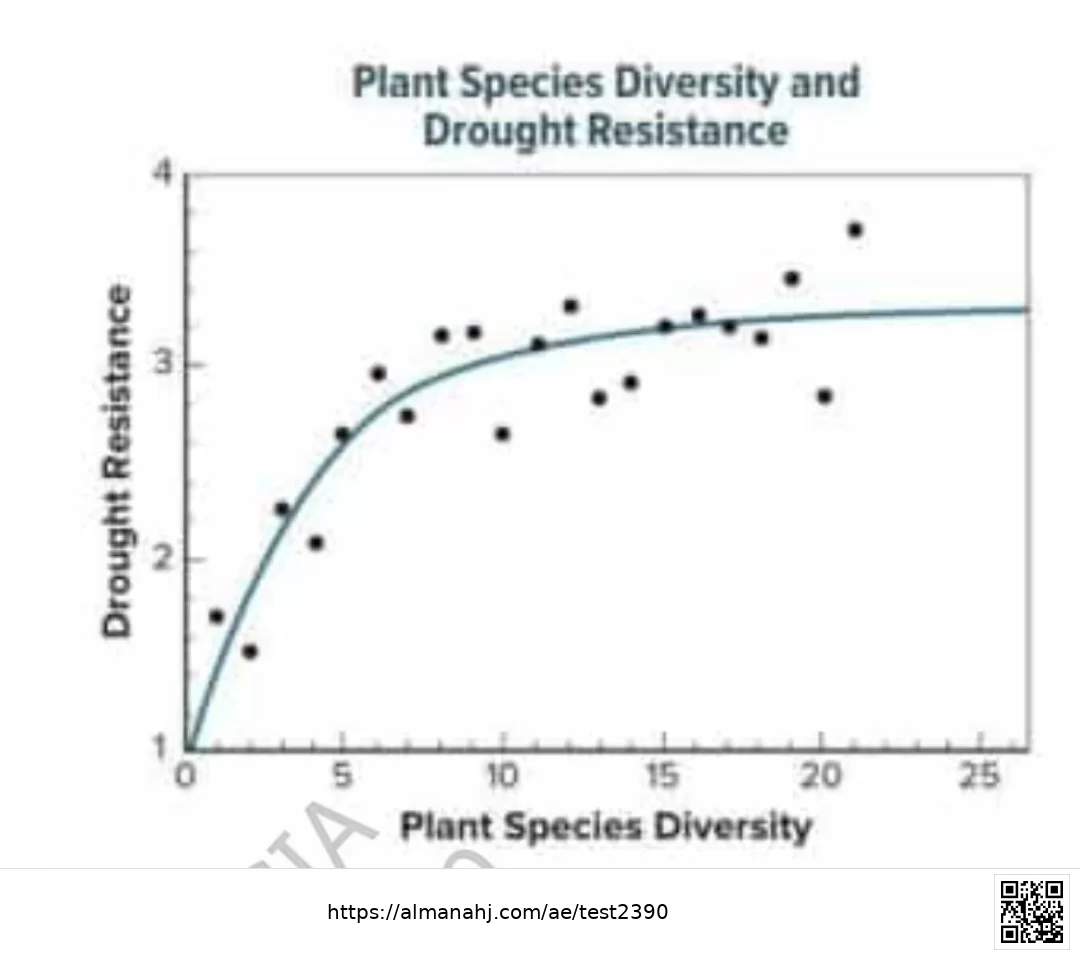
The graph below shows more data from the second experiment described in the Investigation Plant Productivity. During the course of the experiment, the region experienced an extended drought. The researchers tracked the relationship between plant species diversity and the ecosystem's resilience to the drought. Values closer to one on the vertical axis imply less resilience to the drought. What conclusion can be made by analyzing the data from the graph?
Explanation
The graph shows a clear positive correlation: as the plant species diversity (x-axis) increases, the drought resistance/resilience value on the vertical axis also increases.
Question 2
2
Points: 1
What would happen to the biodiversity index of an ecosystem if a change in the ecosystem caused the number of species to stay the same and the total number of individuals to increase?
Explanation
Biodiversity indices account for both species richness and evenness. If the number of species remains constant but the total number of individuals increases (implying a few species may become much more dominant), the overall evenness and thus the biodiversity index generally decreases.
Question 3
3
Points: 1
What is the term for the number and variety of organisms found in a specific region?
Explanation
Biodiversity is the broad term used to describe the variety and number of different species in a given area or throughout the planet.
Question 4
4
Points: 1
What are mist nets used for?
Explanation
Mist nets are fine-mesh nets used by biologists to safely and humanely capture birds or bats to study them, tag them, or collect biological data.
Question 5
5
Points: 1
What is a "biome"?
Explanation
A biome is a large-scale ecosystem characterized by its climate (abiotic) and the types of plants and animals (biotic) that have adapted to live there.
Question 6
6
Points: 1
How have desert-dwelling animals and plants survived?
Explanation
Organisms in deserts have developed specific physiological and behavioral adaptations (like nocturnal activity or water storage) to survive extreme heat and low water availability.
Question 7
7
Points: 1
Why are grasslands important for the environment?
Explanation
Grasslands play a critical role in the environment by sequestering carbon dioxide from the atmosphere and storing it in their deep root systems and soil.
Question 8
8
Points: 1
The orange-spotted filefish, a fish that lives on coral reefs, is highly sensitive to changes in water temperature. After an extended period of warm water temperatures in 1988, the fish disappeared from the coral reefs off the coasts of Japan. Which threat to biodiversity caused the change in the population of orange spotted filefish?
Explanation
Abnormal increases in ocean temperatures that affect marine life distributions and survival are a direct effect of global climate change.
Question 9
9
Points: 1
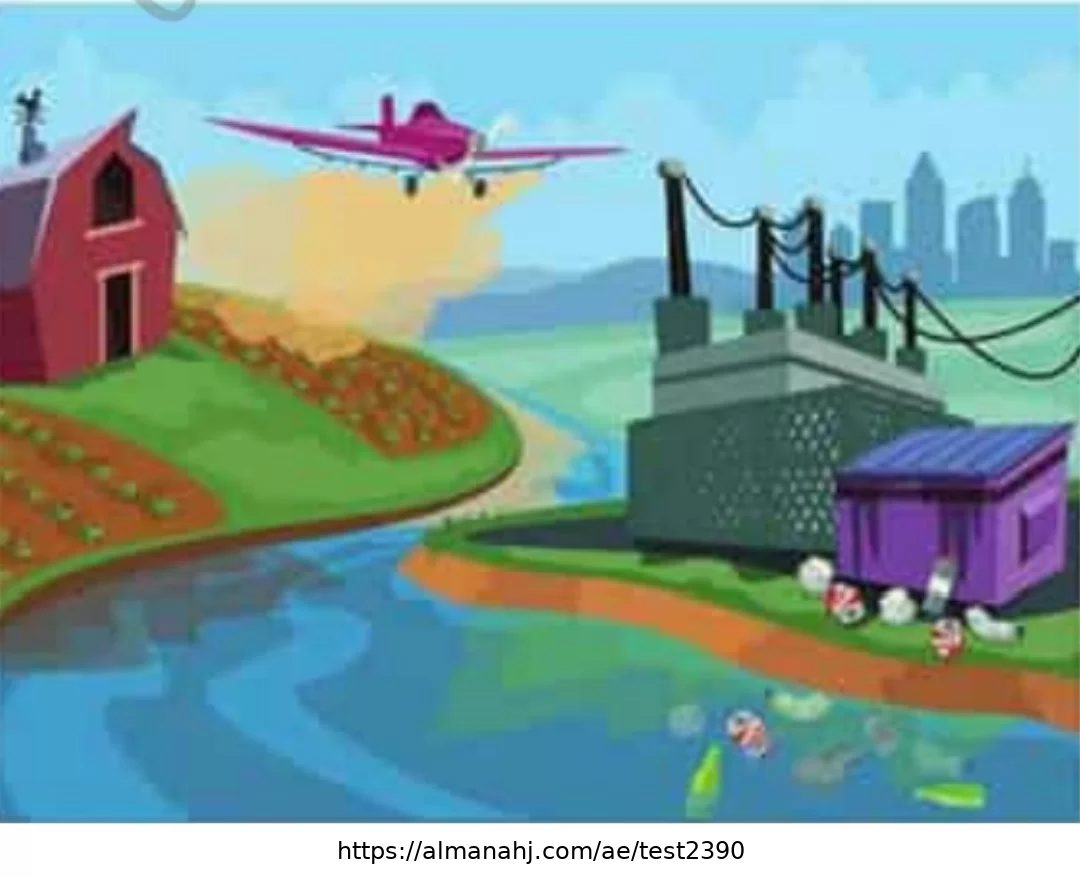
Evaluate the following possible solutions to combat the threats to biodiversity shown in the image above. Which of the following would be the least effective solution?
Explanation
The image highlights industrial pollution, air pollution from transport, and waste. While regulating fishing is a conservation measure, it is the least effective solution for addressing the specific industrial and chemical pollution threats depicted.
Question 10
10
Points: 1
What is the definition of "pollution"
Explanation
Pollution refers to the presence or introduction into the environment of contaminants that cause harm or discomfort to humans or other living organisms.
Question 11
11
Points: 1
What does "habitat destruction" involve?
Explanation
Habitat destruction occurs when a natural habitat is altered or destroyed to the point that it can no longer support its native species.
Question 12
12
Points: 1
What does "climate change" refer to?
Explanation
Climate change describes the long-term shifts in temperatures and weather patterns, predominantly characterized currently by global warming.
Question 13
13
Points: 1
According to the text, when are new species considered "invasive"?
Explanation
A species is defined as invasive when it is non-native to an ecosystem and its introduction causes or is likely to cause harm, often by outcompeting the native species for resources.
Question 14
14
Points: 1
Why is purple loosestrife devastating for wetlands?
Explanation
Purple loosestrife is an invasive plant that forms dense monocultures, physically crowding out native vegetation and reducing habitat quality for wildlife.
Question 15
15
Points: 1
What is one way scientists and conservation groups help protect coral reefs?
Explanation
Marine reserves provide a safe zone from human exploitation (like fishing), allowing reef ecosystems to recover and maintain their biodiversity.
Result Tracking
Answered0 / 15
Correct Answers0
Wrong Answers0
Current Percentage0%
Quiz Completed
This is your final result after answering all questions.
Final Result
0/150%
Correct Answers0
Wrong Answers0
Answered Questions0 / 15
Total Possible Points15
You can reopen the page to start again.
يمكنك تسجيل الدخول لحفظ سجل محاولاتك، معرفة أخطائك المتكررة، والحصول على نصائح مخصصة. تسجيل الدخول باستخدام Google
Here are more quizzes for الصف السابع by الفصل الأول and subject علوم
This section is rendered only when the user reaches it while scrolling.
...
🍪
إشعار ملفات تعريف الارتباط
يستخدم هذا الموقع ملفات تعريف الارتباط لتحسين تجربة التصفح وقياس الأداء وعرض المحتوى بشكل أفضل.
باستخدامك للموقع فإنك توافق على استخدامنا لها وفق
سياسة الخصوصية.