Interactive multiple-choice quiz: Inspire: Particles in Motion, States of Matter, Thermal Energy Transfers, and Thermal Energy Conductivity
This assessment covers concepts related to the behavior of particles when energy is added or removed. It focuses on the scientific explanations for the expansion and contraction of materials based on particle movement.
🏆 انضم إلى التحدي واحصل على ترتيبك
اختبار شهادة تدريبي مؤقت للصف والمادة والفصل نفسه.
اختر إجابة واحدة لكل سؤال. عند الاختيار ستظهر النتيجة فورًا: الأخضر صحيح، والأحمر خطأ، وسيظهر تفسير الإجابة مباشرة إن كان متوفرًا. وبعد آخر سؤال ستظهر الدرجة النهائية تلقائيًا.
This is the principle of thermal expansion: when particles gain energy (thermal energy), they move more vigorously and spread apart, causing the substance to expand and occupy more volume.
Question 2
2
Points: 10
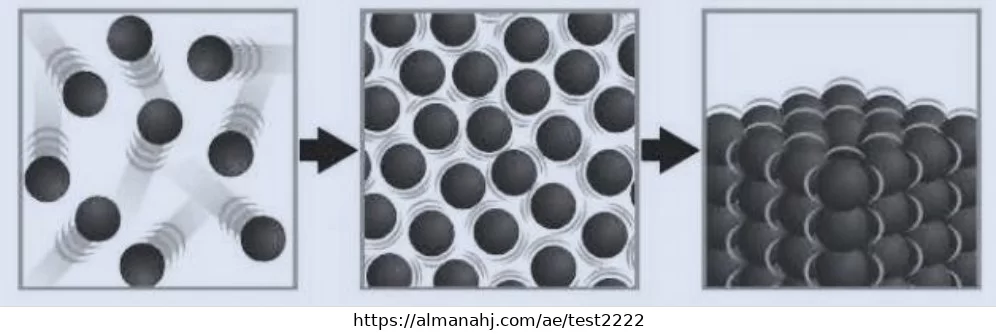
Examine the particle model shown in the image. The particles are undergoing a change in energy. Which statement best describes what is taking place?
Explanation
The middle model represents a liquid and the right model represents a solid, so the particles in the middle have greater kinetic energy.
Question 3
3
Points: 10
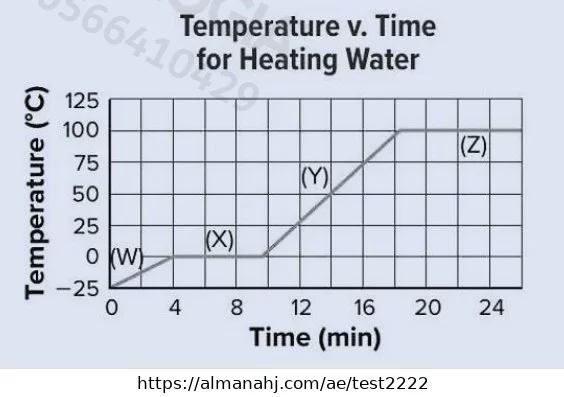
Analyze the heating curve of water shown in the image. Which area or areas of the curve show a change in the potential energy of the particles?
Explanation
Potential energy changes during phase changes, which occur along the flat sections X and Z of the heating curve.
Question 4
4
Points: 10
A scientist was working with substance Y. Which of the following does not represent an increase in thermal energy?
Explanation
Freezing changes a liquid into a solid and releases thermal energy rather than increasing the substance’s thermal energy.
Question 5
5
Points: 10
Which lab equipment did Velinda omit from her materials list that will ensure her personal safety as she performs her experiment?
Explanation
Goggles, an apron, and heat-resistant gloves directly protect the student during an investigation involving hot materials.
Question 6
6
Points: 10
Identify the independent and dependent variables of the experiment.
Explanation
Time is the independent variable at which measurements are taken, and temperature is the measured dependent variable.
Question 7
7
Points: 10
Jake and Sonya place equal amounts of hot water in a foam cup, a mug, and an empty soda can. Which container material is best at conducting thermal energy?
Explanation
The metal soda can conducts thermal energy more effectively than foam or ceramic.
Question 8
8
Points: 10
Which variable would Jake and Sonya need to keep constant to make sure it does not affect how thermal energy transfers out of the three containers?
Explanation
Water mass, exposed surface area, and container color can all affect heat transfer, so all must be controlled.
Question 9
9
Points: 10
Jorge seals water in a plastic bag and tapes it to a sunny window. After a few hours, water beads form inside the bag. Which processes are represented by this model?
Explanation
Liquid water first evaporates in the sunlight, and water vapor then condenses into beads on the bag.
Question 10
10
Points: 10
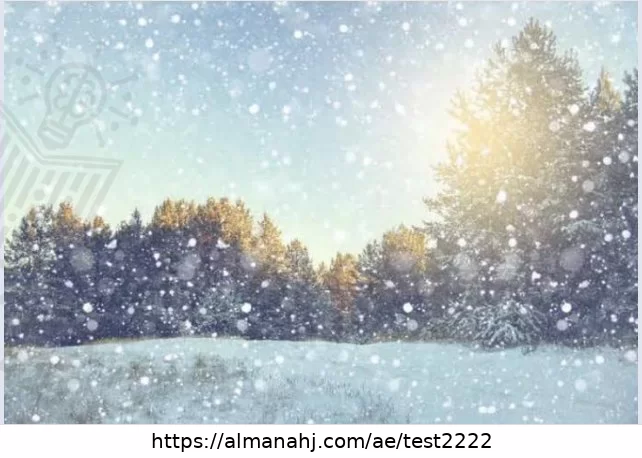
Which statement best describes the transfer of energy in the photograph?
Explanation
The photograph represents melting. Water absorbs thermal energy when it changes from solid ice or snow to liquid water.
Question 11
11
Points: 10
Four friends give different explanations for why a stream moves along Earth’s surface. Which person do you agree with the most?
Explanation
Gravity pulls stream water from higher elevations toward lower elevations.
Question 12
12
Points: 10
Which pathway of processes explains how a water molecule from the stream could end up in an ice sheet?
Explanation
Stream water can evaporate, condense in the atmosphere, crystallize into ice, and then fall as precipitation onto an ice sheet.
Question 13
13
Points: 10
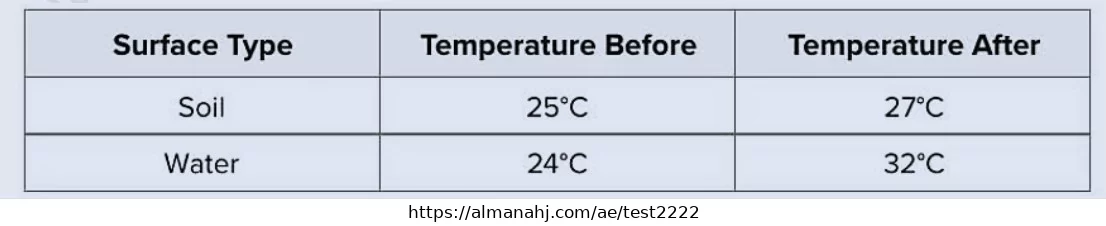
Natia exposed equal containers of soil and water to a heat lamp for two minutes. Based on the results table shown in the image, are her results valid?
Explanation
The table shows water warming much more than soil, but soil normally heats faster under the same conditions, so the results are not valid.
Question 14
14
Points: 10
How is conduction related to cold air temperatures at the poles, which are covered with ice and snow?
Explanation
Snow and ice reflect much of the incoming solar energy, so they absorb and transfer less thermal energy to the air.
Question 15
15
Points: 10
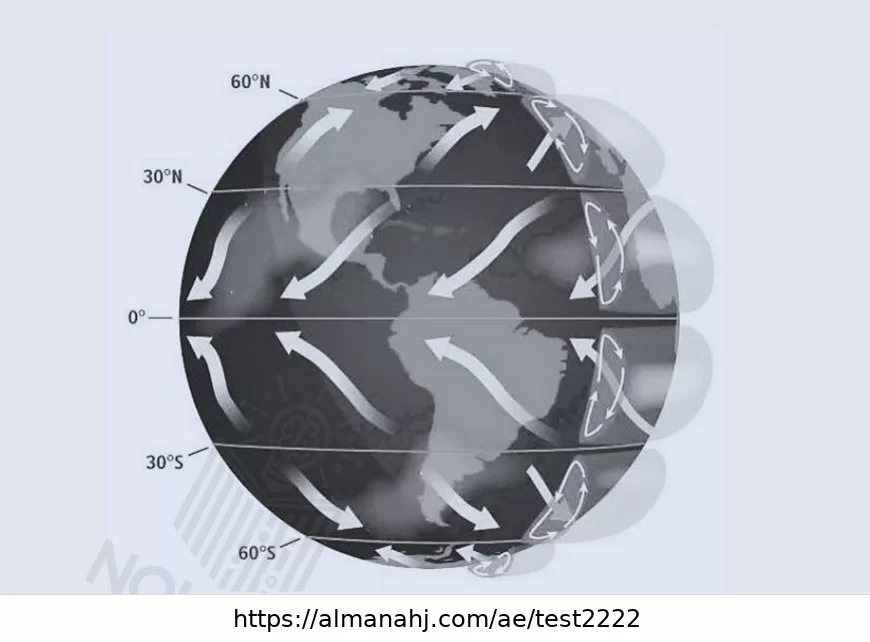
The diagram models convection cells and wind patterns over the globe. Which option best summarizes what you can infer about their causes?
Explanation
Uneven solar heating drives convection, air moves from high to low pressure, and Earth’s rotation curves wind through the Coriolis effect.
Question 16
16
Points: 10
An Arctic air mass is approaching Lake Huron. Identify how this mass will affect the weather in the area.
Explanation
Cold Arctic air is dense and is generally associated with high pressure and clear skies.
Question 17
17
Points: 10
How will the weather change in an area if a cold air mass meets a warm air mass?
Explanation
When an advancing cold air mass meets and replaces warm air, the temperature can drop suddenly.
Question 18
18
Points: 10
The forecast predicted a 10 percent chance of rain in the morning, but it was raining by the end of the school day. What explains why this prediction differed from the observed weather?
Explanation
Weather forecasts express probabilities, so a low predicted chance does not mean rain is impossible.
Question 19
19
Points: 10
Compared with land areas near the Gulf Stream, which weather and climate conditions are most likely near the California Current?
Explanation
The California Current is a cold current, so nearby coastal land is generally cooler and relatively dry compared with land influenced by the warm Gulf Stream.
Question 20
20
Points: 10
Why are land areas near the California Current generally cooler and relatively dry compared with land areas near the Gulf Stream?
Explanation
Because it is a cold current, the California Current transfers less thermal energy and moisture to the air than the warm Gulf Stream.
Result Tracking
Answered0 / 20
Correct Answers0
Wrong Answers0
Current Percentage0%
Quiz Completed
This is your final result after answering all questions.
Final Result
0/200%
Correct Answers0
Wrong Answers0
Answered Questions0 / 20
Total Possible Points191
You can reopen the page to start again.
يمكنك تسجيل الدخول لحفظ سجل محاولاتك، معرفة أخطائك المتكررة، والحصول على نصائح مخصصة. تسجيل الدخول باستخدام Google
Here are more quizzes for الصف السادس by الفصل الأول and subject علوم
This section is rendered only when the user reaches it while scrolling.
...
🍪
إشعار ملفات تعريف الارتباط
يستخدم هذا الموقع ملفات تعريف الارتباط لتحسين تجربة التصفح وقياس الأداء وعرض المحتوى بشكل أفضل.
باستخدامك للموقع فإنك توافق على استخدامنا لها وفق
سياسة الخصوصية.