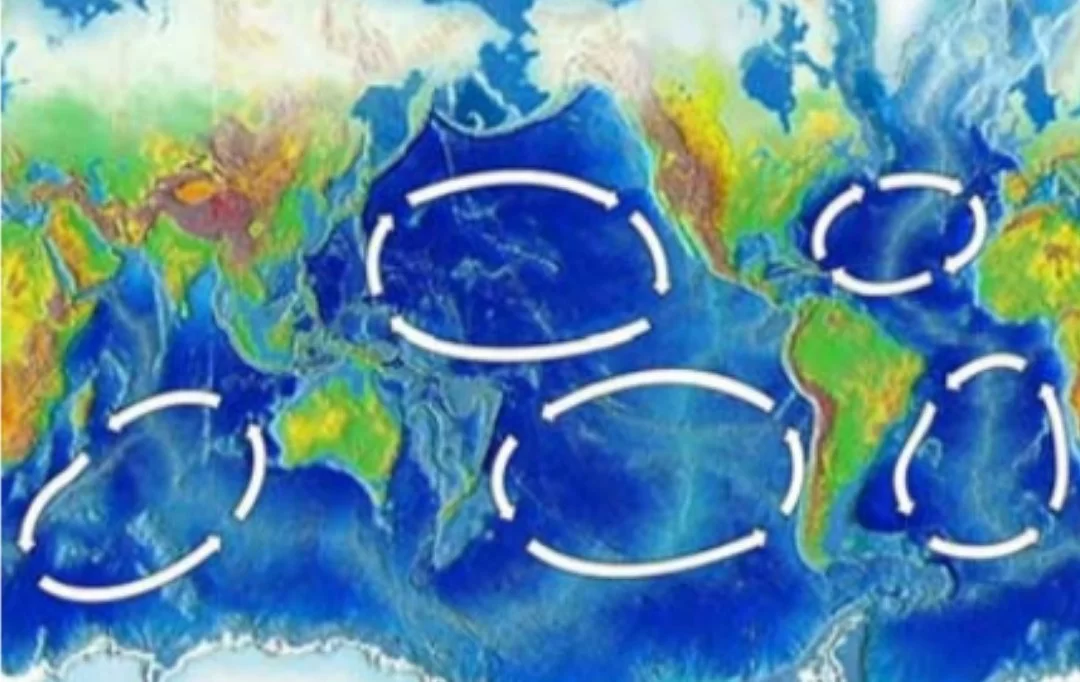
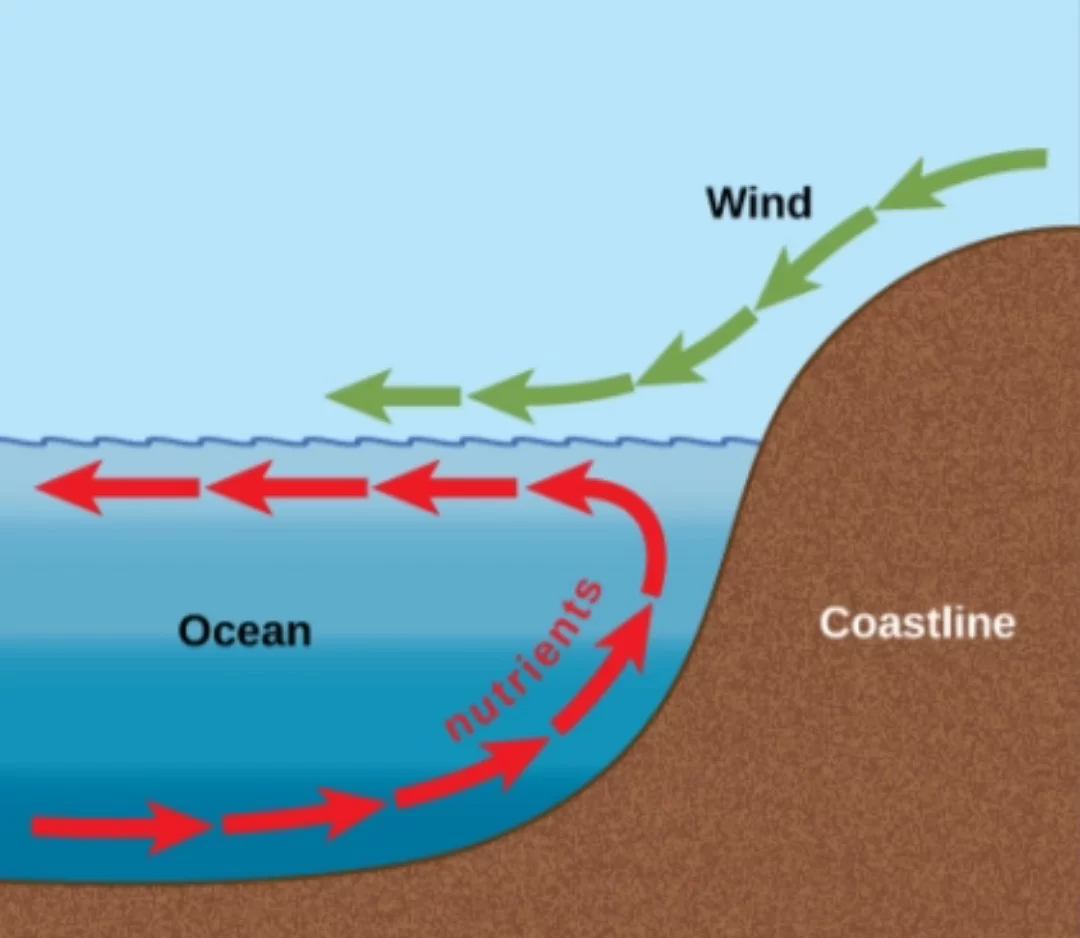
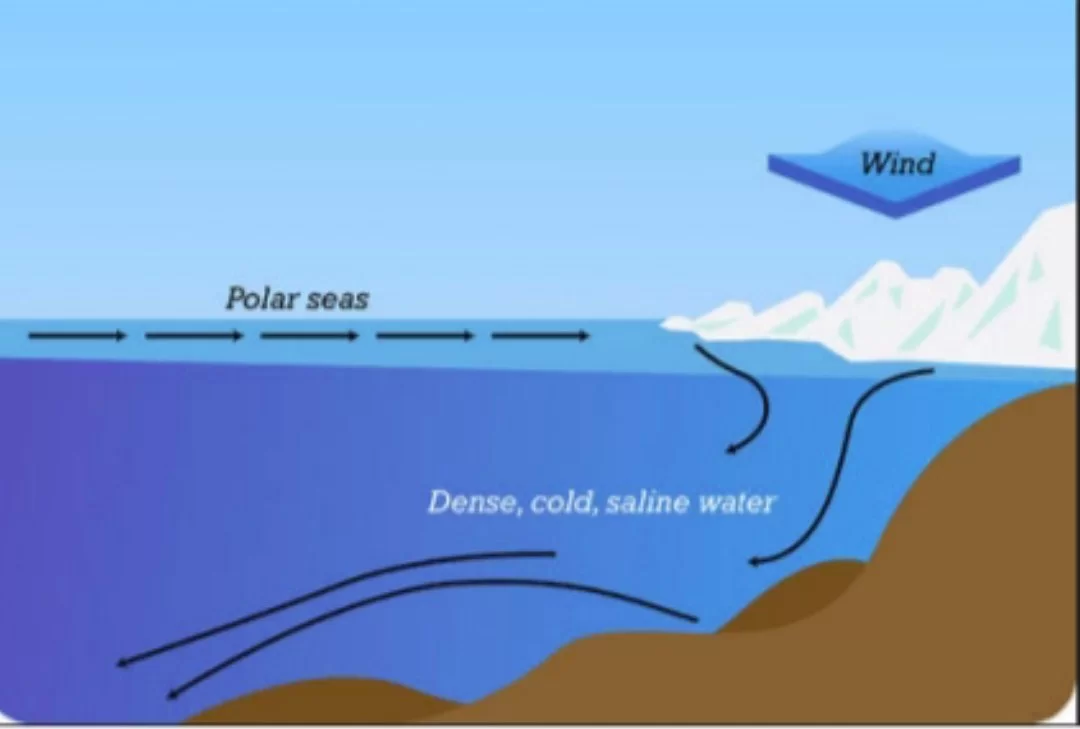
Ocean currents are continuous, directed movements of seawater generated by various forces acting upon the water, including wind, the Coriolis effect, and density differences caused by temperature and salinity. These currents are categorized into surface currents, which occur at the upper layers and are primarily wind-driven, and deep ocean currents, which move far below the surface. This circulation system, often called the Global Conveyor Belt, is vital for regulating Earth's climate and distributing nutrients like cold, nutrient-filled water to the surface through processes like upwelling.
🏆 انضم إلى التحدي واحصل على ترتيبك
اختبار شهادة تدريبي مؤقت للصف والمادة والفصل نفسه.
اختر إجابة واحدة لكل سؤال. عند الاختيار ستظهر النتيجة فورًا: الأخضر صحيح، والأحمر خطأ، وسيظهر تفسير الإجابة مباشرة إن كان متوفرًا. وبعد آخر سؤال ستظهر الدرجة النهائية تلقائيًا.
The movement of deep, cold, nutrient filled water to the surface of the ocean is..
Explanation
Upwelling is the oceanographic phenomenon that involves wind-driven motion of dense, cooler, and usually nutrient-rich water from deep water towards the ocean surface.
Question 2
2
Points: 1
What affects the density of water?
Explanation
Both salinity (salt content) and temperature are the primary factors that determine the density of seawater.
Question 3
3
Points: 1
Two types of ocean currents are
Explanation
Ocean currents are broadly classified into two categories based on depth: surface currents and deep-water currents.
Question 4
4
Points: 1
Currents that occur at or near the surface of the ocean are called
Explanation
As the name implies, surface currents are those that flow in the top layer of the ocean, typically driven by wind.
Question 5
5
Points: 1
Surface currents are mainly caused by
Explanation
The primary driving force for surface ocean currents is the global wind patterns.
Question 6
6
Points: 1
Regular movements of water far below the oceans surface are called
Explanation
Movements of water deep within the ocean, beneath the surface layer, are known as deep currents.
Question 7
7
Points: 1
What heats the Earth's oceans?
Explanation
The sun is the ultimate source of energy that heats the Earth's surface, including the oceans.
Question 8
8
Points: 1
What causes ocean currents in the Northern Hemisphere to curve to the right?
Explanation
The Coriolis effect, which is the result of Earth's rotation on its axis, causes moving fluids like ocean currents and wind to deflect to the right in the Northern Hemisphere.
Question 9
9
Points: 1
What causes vertical ocean currents?
Explanation
Vertical currents are driven by differences in water density, which are caused by variations in temperature and salinity (thermohaline circulation).
Question 10
10
Points: 1
Where is ocean water the densest.
Explanation
Denser water, which is colder and saltier, naturally sinks below less dense water, accumulating at the bottom of the ocean.
Question 11
12
Points: 1
Temperature and salinity differences in ocean water cause:
Explanation
Differences in temperature and salinity create density gradients that drive the flow of deep ocean currents.
Question 12
13
Points: 1
As you go deeper in the ocean, the water is colder and less salty.
Explanation
While it is generally true that deep water is colder, it is typically more saline (saltier) or maintains high salinity to remain dense enough to sink; thus the statement 'less salty' makes it false.
Question 13
14
Points: 1
Warm ocean currents generally come from
Explanation
Ocean water is warmest at the equator due to direct sunlight, and currents originating there carry that heat toward higher latitudes.
Question 14
15
Points: 1
A horizontal movement of ocean water that is caused by wind and that occurs at or near the ocean's surface.
Explanation
The description defines a surface current, which is horizontal, wind-driven, and near the surface.
Question 15
16
Points: 1
What process brings the deep cold ocean currents up to the surface?
Explanation
The vertical transfer of heat and mass in fluids due to density differences is known as convection. In the ocean, this process brings cold deep water up and warm surface water down.
Question 16
17
Points: 1
Why are surface currents at the surface of the ocean?
Explanation
Surface water is generally warmer and less saline than deep water, making it less dense and allowing it to float at the surface.
Question 17
18
Points: 1
Ocean water is more dense than fresh water at the same temperature due to differences in:
Explanation
Salinity refers to the amount of dissolved salts in water; these salts increase the mass of the water per unit volume, making it denser than fresh water.
Result Tracking
Answered0 / 17
Correct Answers0
Wrong Answers0
Current Percentage0%
Quiz Completed
This is your final result after answering all questions.
Final Result
0/170%
Correct Answers0
Wrong Answers0
Answered Questions0 / 17
Total Possible Points17
You can reopen the page to start again.
يمكنك تسجيل الدخول لحفظ سجل محاولاتك، معرفة أخطائك المتكررة، والحصول على نصائح مخصصة. تسجيل الدخول باستخدام Google
Here are more quizzes for الصف السادس by الفصل الثالث and subject لغة انجليزية
This section is rendered only when the user reaches it while scrolling.
...
🍪
إشعار ملفات تعريف الارتباط
يستخدم هذا الموقع ملفات تعريف الارتباط لتحسين تجربة التصفح وقياس الأداء وعرض المحتوى بشكل أفضل.
باستخدامك للموقع فإنك توافق على استخدامنا لها وفق
سياسة الخصوصية.