Interactive multiple-choice quiz: How Organisms Obtain Energy - Question Bank
This question bank covers the fundamental concepts of energy transformation in biological systems, specifically focusing on the laws of thermodynamics, the roles of autotrophs and heterotrophs in food chains and energy pyramids, and the structure and function of ATP as the primary energy currency of the cell. Students will explore how organisms obtain and use energy through metabolic pathways, including photosynthesis and cellular respiration, while understanding the principles of entropy and energy flow in ecosystems.
🏆 انضم إلى التحدي واحصل على ترتيبك
اختبار شهادة تدريبي مؤقت للصف والمادة والفصل نفسه.
اختر إجابة واحدة لكل سؤال. عند الاختيار ستظهر النتيجة فورًا: الأخضر صحيح، والأحمر خطأ، وسيظهر تفسير الإجابة مباشرة إن كان متوفرًا. وبعد آخر سؤال ستظهر الدرجة النهائية تلقائيًا.
Question 1
1
Points: 1
All cellular processes in your body require energy. Energy is best defined as:
Explanation
Energy is scientifically defined as the capacity or ability to perform work.
Question 2
2
Points: 1
The study of the flow and transformation of energy in the universe is called:
Explanation
Thermodynamics is the branch of physical science that deals with the relations between heat and other forms of energy.
Question 3
3
Points: 1
The stored energy in these foods is converted to chemical energy when you eat, and then to which form of energy when you run or kick a ball?
Explanation
When muscles use energy to move the body, chemical energy is converted into mechanical energy.
Question 4
4
Points: 1
Which statement correctly describes the first law of thermodynamics?
Explanation
The first law of thermodynamics (Law of Conservation of Energy) states that energy cannot be created or destroyed, only transformed.
Question 5
5
Points: 1
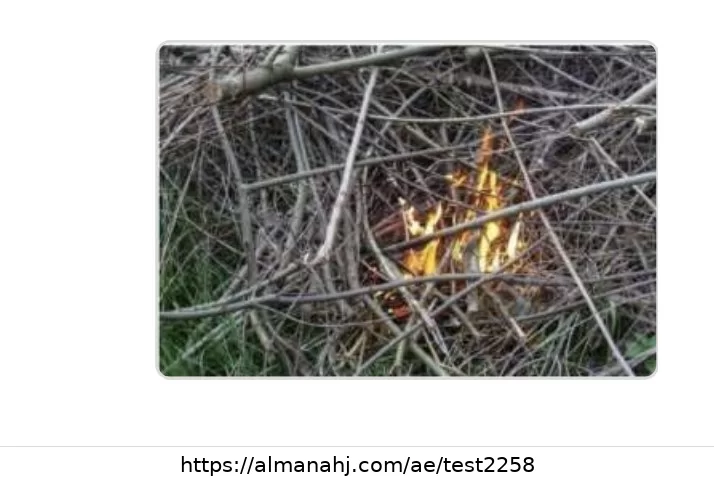
When wood burns, its chemical energy changes into thermal and light energy. Which statement is correct about this change?
Explanation
Energy conversion is never 100% efficient; some energy is always lost as heat, increasing the system's entropy.
Question 6
6
Points: 1
According to the second law of thermodynamics, what always increases when energy is converted?
Explanation
The second law of thermodynamics states that entropy (disorder) in the universe increases with every energy transfer.
Question 7
7
Points: 1
Entropy can be described as:
Explanation
Entropy is a thermodynamic property that measures the degree of disorder or randomness in a system.
Question 8
8
Points: 1
Directly or indirectly, nearly all the energy for life comes from:
Explanation
The Sun is the ultimate source of energy for almost all life forms on Earth through the process of photosynthesis.
Question 9
9
Points: 1
Which statement correctly compares autotrophs and heterotrophs?
Explanation
Autotrophs (producers) create their own organic nutrients, whereas heterotrophs (consumers) must consume other organisms.
Question 10
10
Points: 1
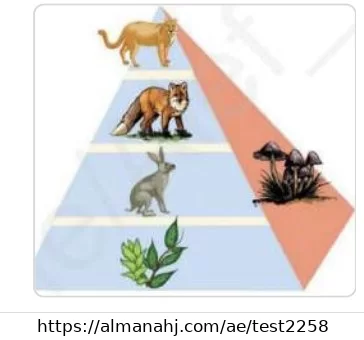
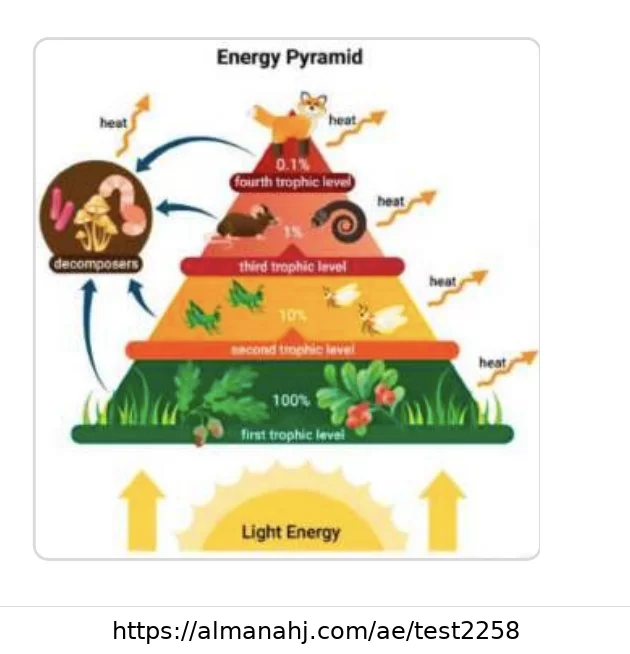
In this food pyramid, the mushroom is an example of a(n):
Explanation
Mushrooms are fungi, which are heterotrophs (specifically decomposers) because they cannot produce their own food through photosynthesis.
Question 11
11
Points: 1
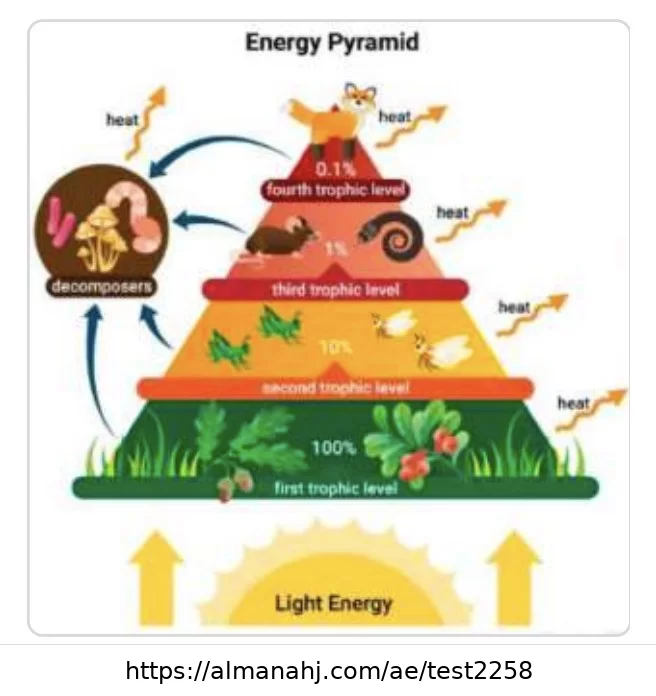
Study the energy pyramid. What happens to the amount of usable energy as we go up each trophic level?
Explanation
As energy flows through trophic levels, about 90% is lost, mainly as heat, leaving only 10% available for the next level.
Question 12
12
Points: 1
According to this ecological pyramid, which trophic level has the most available energy for transfer to the next level?
Explanation
The first trophic level (producers) contains the highest amount of energy in an ecosystem.
Question 13
13
Points: 1
Which sequence best describes the flow of energy in an ocean ecosystem?
Explanation
Energy flows from the sun to producers (phytoplankton) and then through various levels of consumers.
Question 14
14
Points: 1
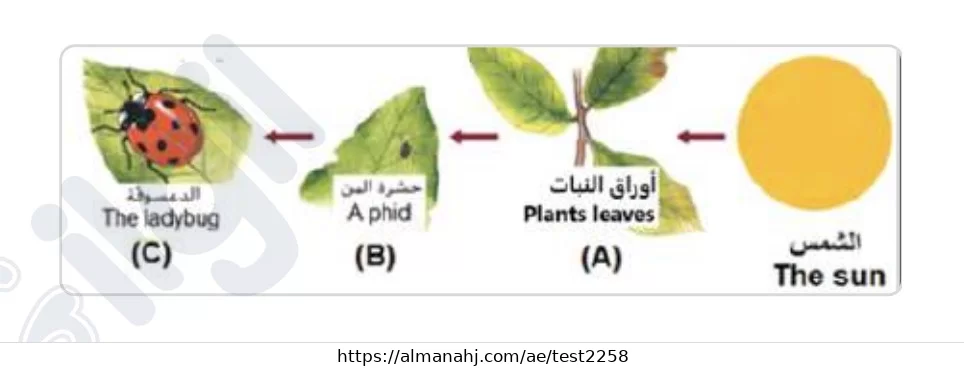
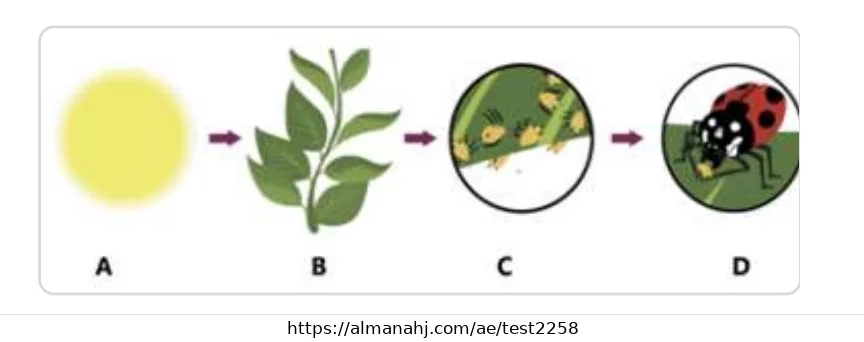
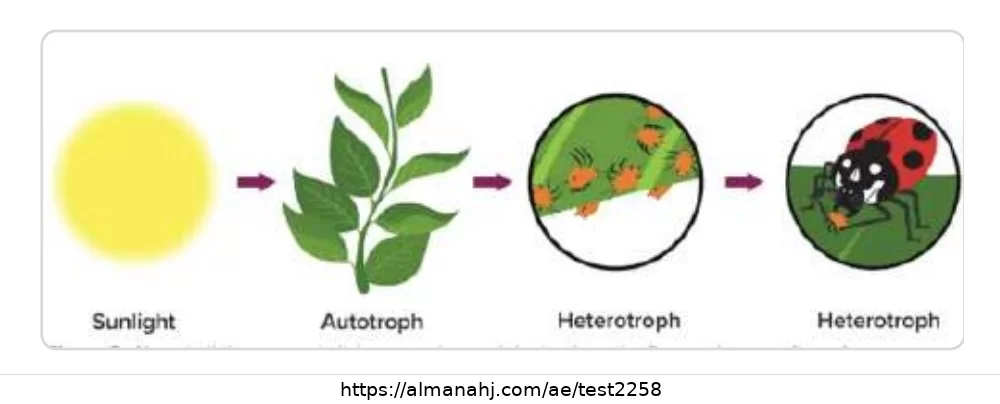
Almost all the energy in living organisms originates from the Sun. In the figure, which of the following refers to an organism that can transform chemical energy into mechanical energy?
Explanation
Organisms B (Aphid) and C (Ladybug) are animals that consume food and convert chemical energy into mechanical energy for movement.
Question 15
15
Points: 1
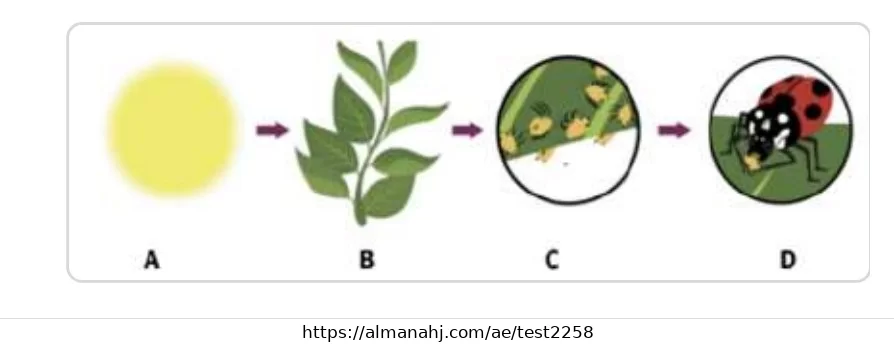
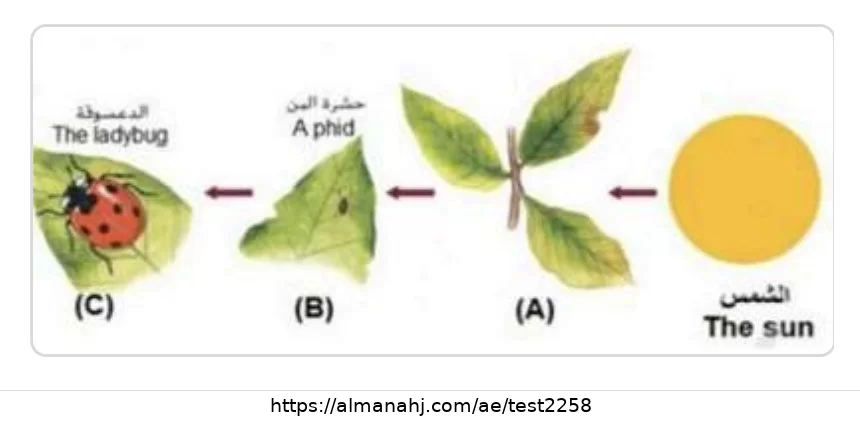
In the figure below, almost all the energy in living organisms originates from the Sun. According to the second law of thermodynamics, which of the following letters represents the trophic level with the highest entropy and least usable energy?
Explanation
Trophic level D (the top predator) has the highest entropy and the least amount of usable energy compared to previous levels.
Question 16
16
Points: 1
In the figure, almost all the energy in living organisms originates from the Sun. Which of the following statements is true regarding the plants’ leaves?
Explanation
Plants, as producers, are at the base of the food chain and hold the maximum usable energy available from sunlight.
Question 17
17
Points: 1
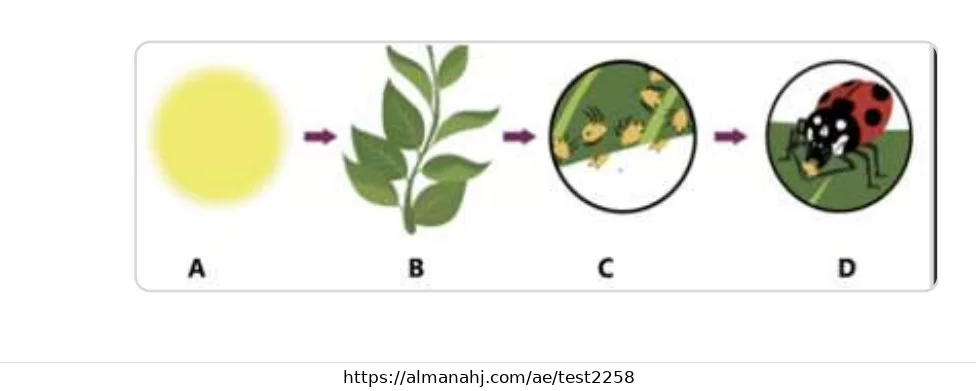
Almost all the energy in living organisms originates from the Sun. In the figure below, which of the following refers to a heterotrophic organism?
Explanation
Organisms B and C are heterotrophs because they must eat other organisms to obtain energy.
Question 18
18
Points: 1
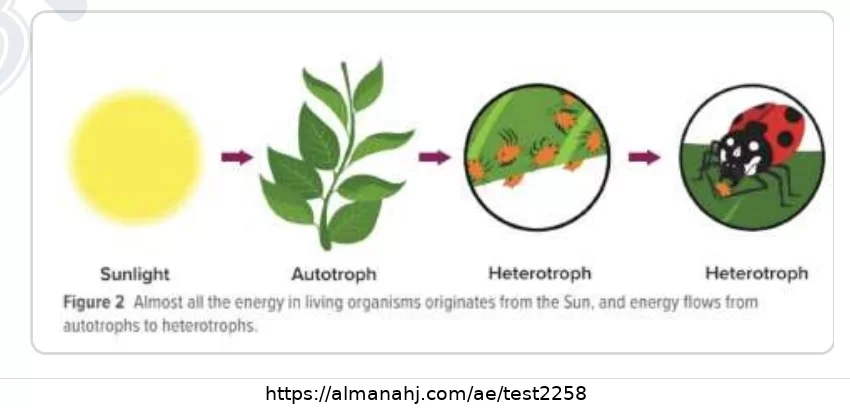
The food chain in the figure below is a clear example of the laws of thermodynamics. Which of the following refers to an organism that absorbs energy from its environment and relies on the anabolic pathway to produce large molecules from small molecules?
Explanation
Organism B (the plant) is an autotroph that uses photosynthesis (an anabolic pathway) to build complex molecules using environmental energy.
Question 19
19
Points: 1
According to the second law of thermodynamics, what would be expected as energy moves from the plant to the aphid and then to the ladybug?
Explanation
Energy transfer is inefficient; some energy is always dissipated as heat to the environment.
Question 20
20
Points: 1
Which statement explains why the ladybug is classified as a heterotroph?
Explanation
Heterotrophs are organisms that cannot produce their own food and must feed on other organic matter.
Question 21
21
Points: 1
A scientist measures the amount of usable energy at each level shown in the figure. At which level would the greatest amount of usable energy be expected?
Explanation
The producers (plants) have the most available energy because they capture it directly from the sun.
Question 22
22
Points: 1
All of the chemical reactions in a cell are referred to as the cell’s:
Explanation
Metabolism is the sum of all chemical processes that occur within a living organism in order to maintain life.
Question 23
23
Points: 1
A series of chemical reactions in which the product of one reaction is the substrate for the next is called a:
Explanation
A metabolic pathway is a linked series of chemical reactions occurring within a cell.
Question 24
24
Points: 1
Which statement correctly describes anabolic and catabolic pathways?
Explanation
Anabolism builds complex molecules from simpler ones (requiring energy), while catabolism breaks down complex molecules into simpler ones (releasing energy).
Question 25
25
Points: 1
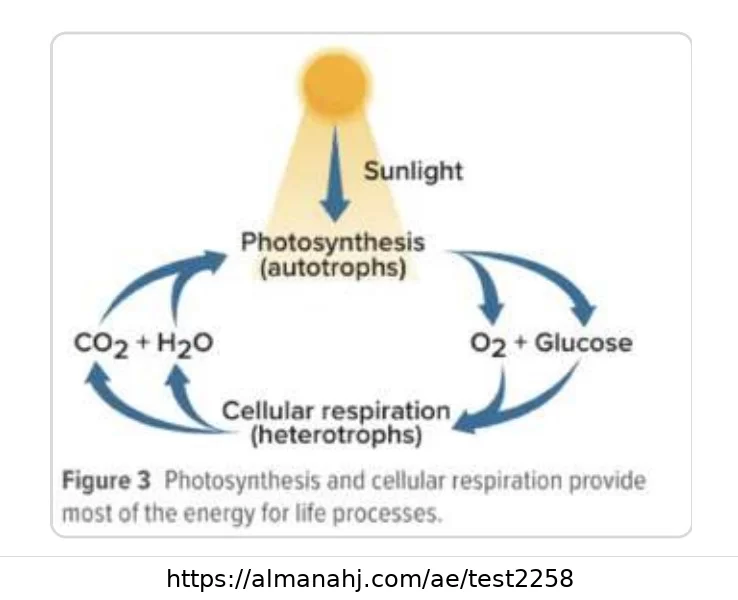
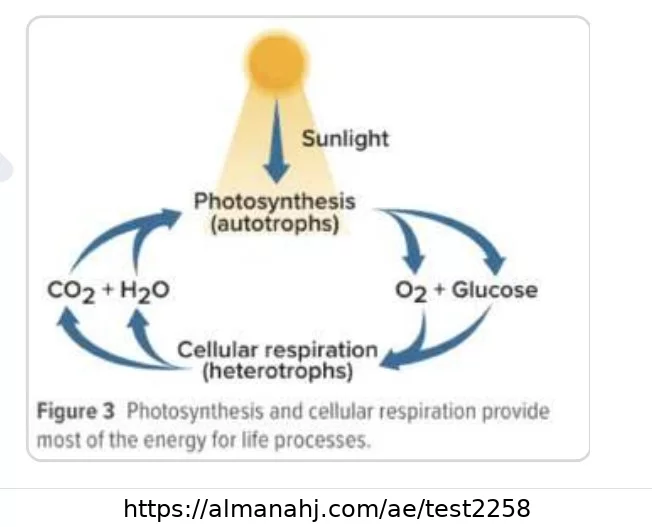
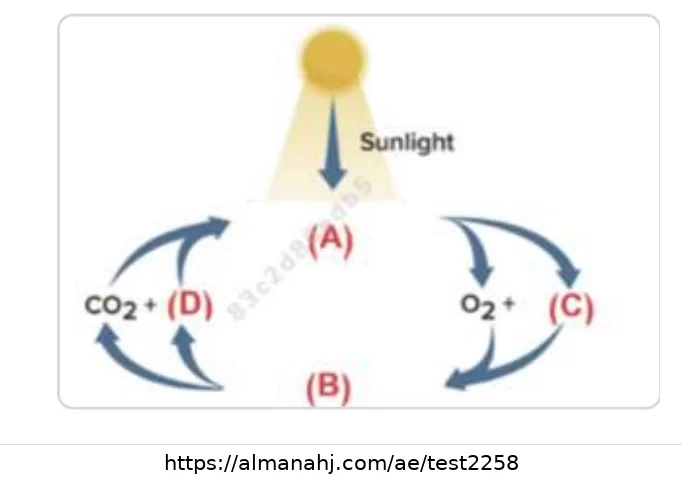
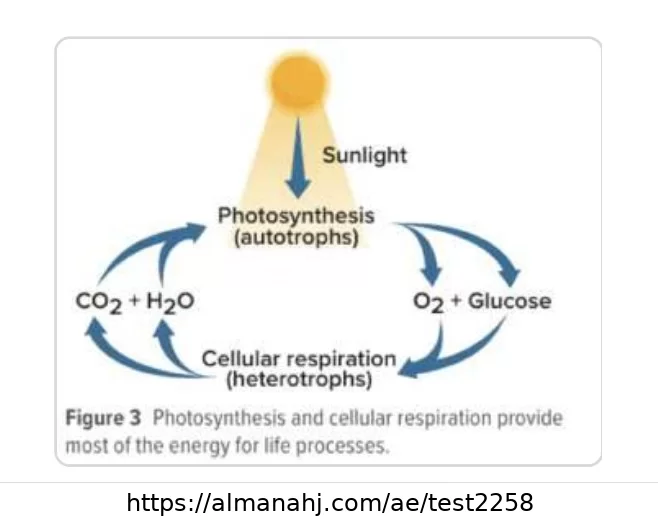
In the figure, photosynthesis is best described as:
Explanation
Photosynthesis is an anabolic process because it uses energy (from light) to build complex sugar molecules.
Question 26
26
Points: 1
Based on the same figure, cellular respiration is a(n):
Explanation
Cellular respiration is catabolic because it breaks down glucose to release energy (ATP) for the cell.
Question 27
27
Points: 1
Photosynthesis and cellular respiration shown in the figure are examples of which type of processes?
Explanation
Both photosynthesis and cellular respiration are major metabolic processes involving energy transformation in cells.
Question 28
28
Points: 1
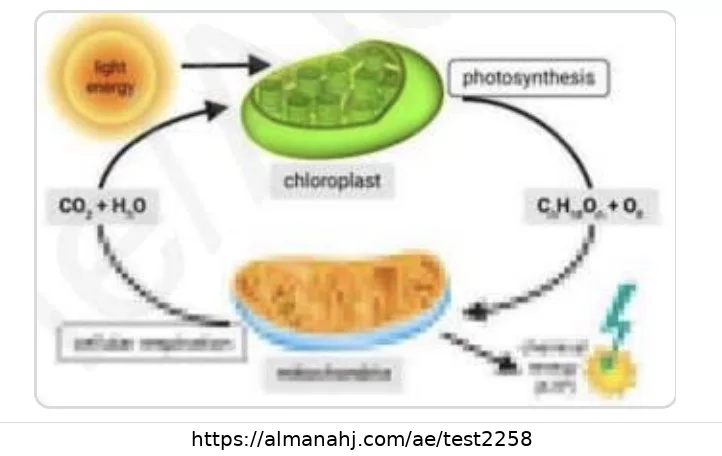
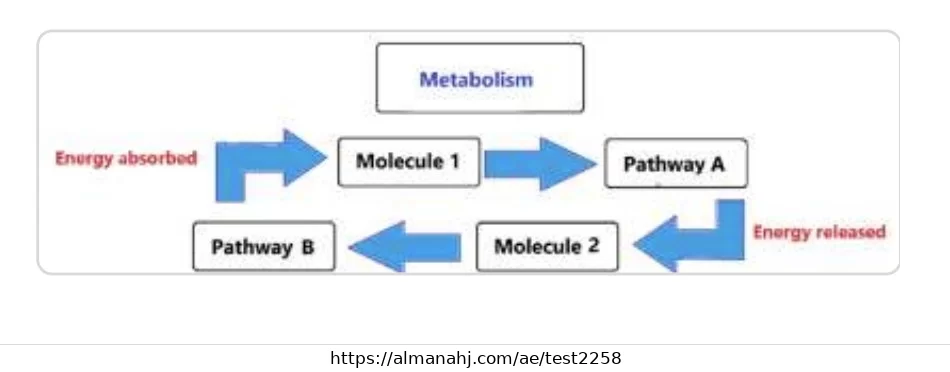
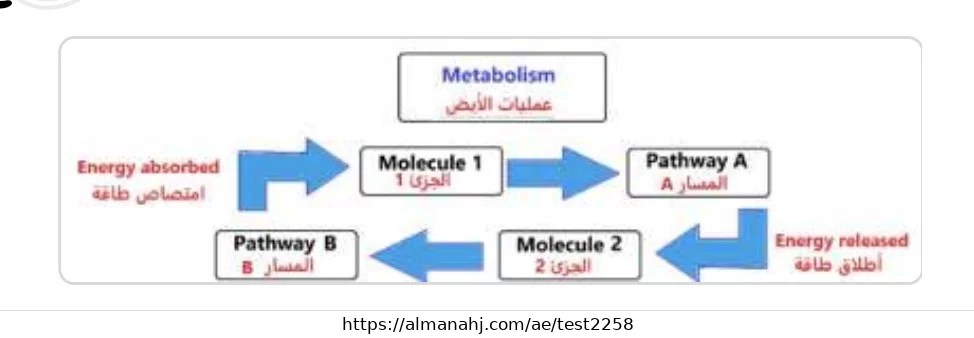
The figure below demonstrates the metabolism in plants. Which of the following is a correct description of the ongoing process?
Explanation
In Pathway B, energy is absorbed to synthesize Molecule 1, which corresponds to the anabolic process of photosynthesis.
Question 29
29
Points: 1
The figure below demonstrates the metabolism in plants. Which of the following is a correct description of the ongoing process?
Explanation
Pathway A releases energy by breaking down Molecule 1 into Molecule 2, which is the definition of a catabolic pathway.
Question 30
30
Points: 1
In an ecosystem, photosynthesis and cellular respiration form an integrated cycle. Which of the following best describes the process labelled with the letter A?
Explanation
Letter A points to photosynthesis (using CO2 + H2O and sunlight to make O2 and glucose), which is an anabolic process performed by autotrophs.
Question 31
31
Points: 1
Which statement best defines metabolism?
Explanation
Metabolism encompasses every chemical reaction within an organism.
Question 32
32
Points: 1
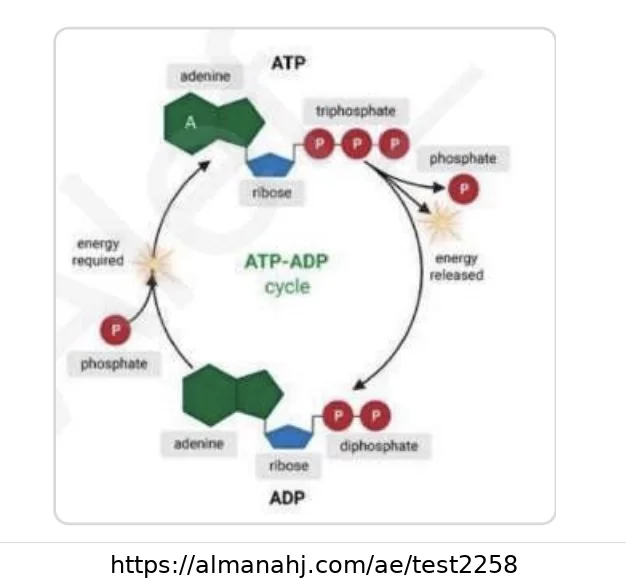
ATP is a nucleotide made of:
Explanation
ATP (Adenosine Triphosphate) consists of an adenine base, a ribose sugar, and three phosphate groups.
Question 33
33
Points: 1
Why is ATP described as a multipurpose storehouse of chemical energy?
Explanation
ATP provides the energy for almost all types of cellular work, making it a universal energy currency.
Question 34
34
Points: 1
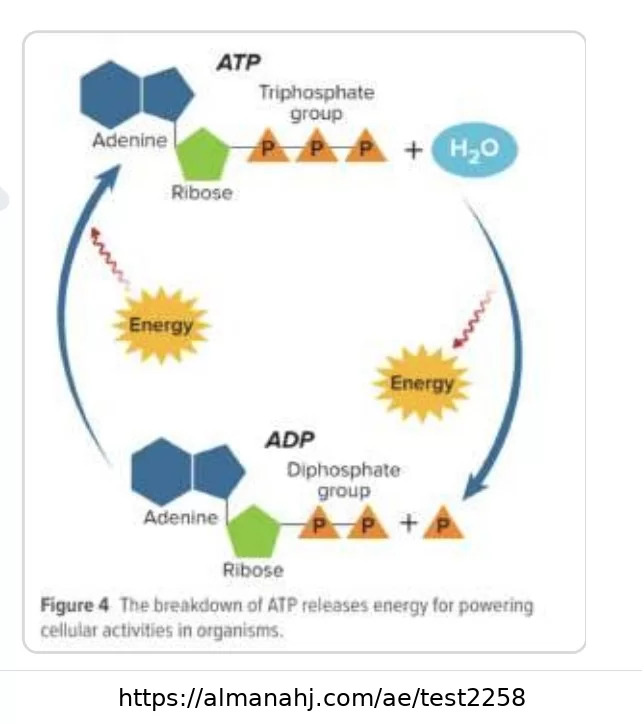
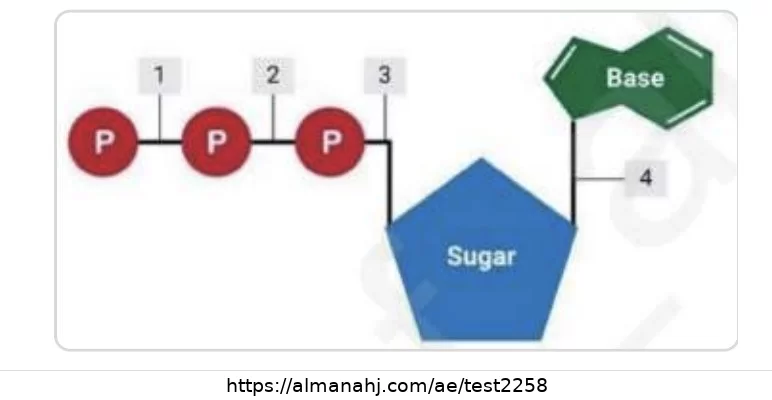
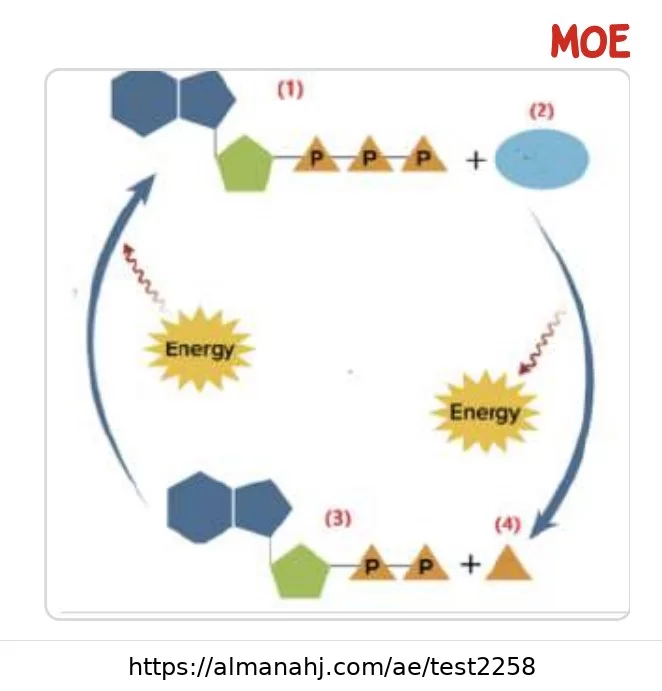
To form ADP from the ATP molecule in the figure, the bond should break at position:
Explanation
Bond 1 represents the high-energy bond between the second and third phosphate groups. Breaking it releases energy and converts ATP to ADP.
Question 35
35
Points: 1
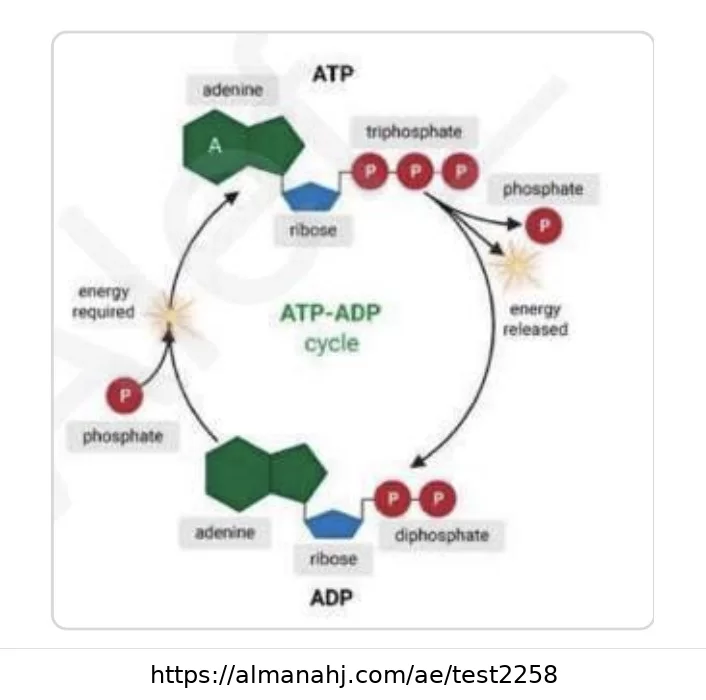
Which of the following events stores energy in the ATP-ADP cycle?
Explanation
Phosphorylation (adding a phosphate to ADP) stores energy in the resulting ATP molecule.
Question 36
36
Points: 1
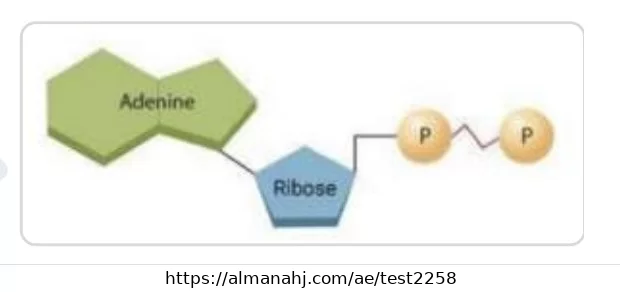
What is the molecule shown in the diagram?
Explanation
The diagram shows a molecule with two phosphate groups attached to the ribose sugar, identifying it as Adenosine Diphosphate (ADP).
Question 37
37
Points: 1
Most energy reactions in the cell involve conversions between ATP and ADP rather than ADP and AMP because:
Explanation
The energy released by breaking the second phosphate bond is much less significant than the terminal bond, making the ATP-ADP cycle more efficient.
Question 38
38
Points: 1
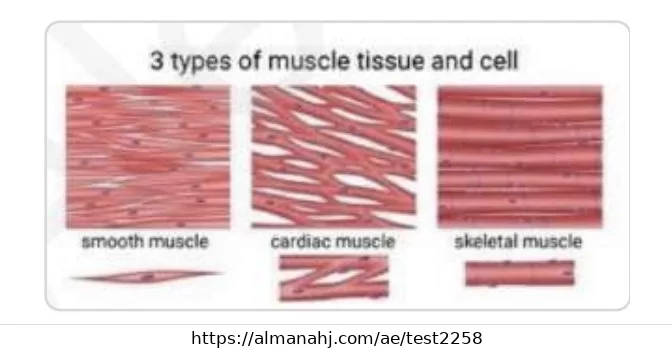
Muscle cells convert chemical energy into mechanical energy. Which molecule would these cells use most to supply this energy?
Explanation
ATP is the primary source of energy used for muscle contraction and cellular movement.
Question 39
39
Points: 1
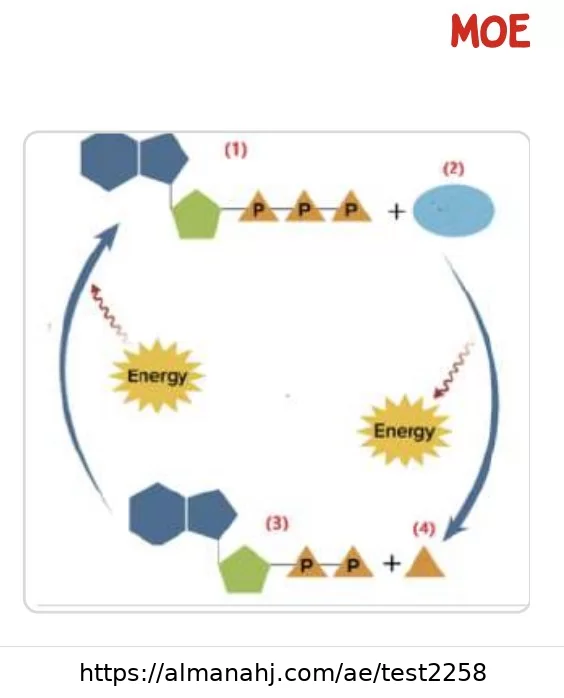
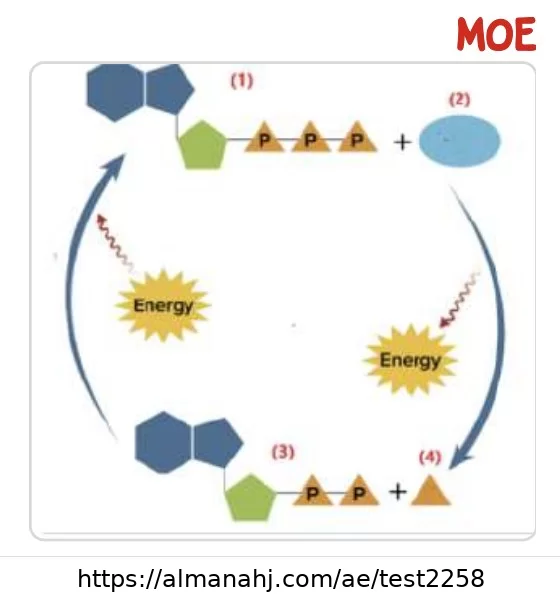
In living organisms, chemical energy is stored in biological molecules and can be converted to other forms of energy when needed. Which of the following represents number (3)?
Explanation
In the ATP cycle, the molecule produced after ATP releases energy and a phosphate group is ADP.
Question 40
40
Points: 1
Based on the same figure, which of the following is true regarding the compound (1)?
Explanation
Compound 1 is ATP, which serves as a short-term storehouse of chemical energy in the cell.
Question 41
41
Points: 1
The figure shows the breakdown of ATP. Which of the following is an incorrect labeling?
Explanation
Label (2) represents water or energy entering the reaction, not AMP.
Question 42
42
Points: 1
According to the ATP-ADP figure, ATP differs from ADP because ATP contains:
Explanation
ATP has three phosphate groups, while ADP has only two.
Question 43
43
Points: 1
A cell uses the energy released from cellular respiration to build large molecules such as proteins. What is the best explanation for this?
Explanation
This is called metabolic coupling; the energy released from catabolic respiration fuels anabolic protein synthesis.
Question 44
44
Points: 1
A student claims: “The top predator in a food chain receives the most usable energy because it eats many organisms.” Which statement best evaluates this claim?
Explanation
Due to the second law of thermodynamics, energy decreases as it moves up a food chain, meaning predators receive the least usable energy.
Question 45
45
Points: 1
During exercise, a muscle cell uses ATP very quickly, but the amount of ATP in the cell stays nearly constant. What is the most likely explanation?
Explanation
Cells continuously recycle ADP back into ATP using energy from food to maintain constant levels.
Question 46
46
Points: 1
When an entire forest burns, which change in the ecosystem is most likely to happen?
Explanation
Burning organic matter releases stored carbon as CO2, and the loss of trees reduces the capacity for CO2 removal via photosynthesis.
Result Tracking
Answered0 / 46
Correct Answers0
Wrong Answers0
Current Percentage0%
Quiz Completed
This is your final result after answering all questions.
Final Result
0/460%
Correct Answers0
Wrong Answers0
Answered Questions0 / 46
Total Possible Points46
You can reopen the page to start again.
يمكنك تسجيل الدخول لحفظ سجل محاولاتك، معرفة أخطائك المتكررة، والحصول على نصائح مخصصة. تسجيل الدخول باستخدام Google
Report a question
Here are more quizzes for الصف الحادي عشر المتقدم by الفصل الأول and subject أحياء
This section is rendered only when the user reaches it while scrolling.
...
🍪
إشعار ملفات تعريف الارتباط
يستخدم هذا الموقع ملفات تعريف الارتباط لتحسين تجربة التصفح وقياس الأداء وعرض المحتوى بشكل أفضل.
باستخدامك للموقع فإنك توافق على استخدامنا لها وفق
سياسة الخصوصية.