اختبار إلكتروني: Review for the Atomic Theory and the Atom
The evolution of atomic theory provides a fascinating look into how scientists discovered the fundamental building blocks of matter. Starting with ancient philosophers like Democritus and moving into the scientific era with John Dalton, models evolved from solid spheres to J.J. Thomson’s 'plum pudding' model. Rutherford’s gold foil experiment further refined this by identifying a dense, positive nucleus, while Niels Bohr introduced planetary orbits for electrons. Today, we define atoms by their subatomic particles—protons, neutrons, and electrons—and use properties like atomic number and mass number to categorize them in the periodic table.
رقم الاختبار841
الصفالصف العاشر العام
المادةأحياء
الفصلالفصل الثالث
السنة الدراسية2025/2026
عدد الأسئلة20
إجمالي النقاط20
تاريخ الإضافة2026-04-21
الزيارات30
المعلم أو الناشرAmal Salman
اختر إجابة واحدة لكل سؤال. عند الاختيار ستظهر النتيجة فورًا: الأخضر صحيح، والأحمر خطأ، وسيظهر تفسير الإجابة مباشرة إن كان متوفرًا. وبعد آخر سؤال ستظهر الدرجة النهائية تلقائيًا.
Question 1
Points: 1
The "plum pudding" model was proposed by:
Explanation
J.J. Thomson proposed the plum pudding model, suggesting that electrons were embedded within a sphere of positive charge.
Question 2
Points: 1
John Dalton stated:
Explanation
Dalton's atomic theory stated that all matter is made of atoms, all atoms of a given element are identical, and atoms are indivisible.
Question 3
Points: 1
What did Bohr's atomic theory model look like?
Explanation
The Bohr model describes electrons moving in specific, fixed circular orbits (or shells) around the nucleus, similar to planets orbiting a sun.
Question 4
Points: 1
What did Rutherford discover about atoms?
Explanation
Rutherford's gold foil experiment showed that most alpha particles passed through, but some deflected, leading to the discovery of a small, dense, positive nucleus.
Question 5
Points: 1
What is a negatively charged particle?
Explanation
Electrons are the subatomic particles that carry a negative electric charge.
Question 6
Points: 1
What is a particle with no charge?
Explanation
Neutrons are subatomic particles found in the nucleus that have no electrical charge (they are neutral).
Question 7
Points: 1
Who was considered as one of the founders of the ancient atomist theory?
Explanation
Democritus was an ancient Greek philosopher who first proposed the idea that matter is composed of tiny, indivisible particles called atoms.
Question 8
Points: 1
Which scientist saw the atom as a solid sphere?
Explanation
John Dalton's early atomic model depicted the atom as a solid, indivisible sphere, often compared to a billiard ball.
Question 9
Points: 1
He developed the planetary model of the atom.
Explanation
Niels Bohr developed the planetary model, where electrons move in quantized orbits around the nucleus.
Question 10
Points: 1
What did Thomson discover?
Explanation
J.J. Thomson discovered the electron through his experiments with cathode ray tubes.
Question 11
Points: 1
Subatomic particles with a positive charge
Explanation
Protons are subatomic particles located in the nucleus that carry a positive electric charge.
The deflection of alpha particles in Rutherford's experiment proved the existence of a small, dense, positively charged nucleus.
Question 13
Points: 1
Value representing the number of protons in an element
Explanation
The atomic number is the unique number of protons found in the nucleus of every atom of that element.
Question 14
Points: 1
What is the mass number?
Explanation
The mass number is the total count of protons and neutrons in an atom's nucleus.
Question 15
Points: 1
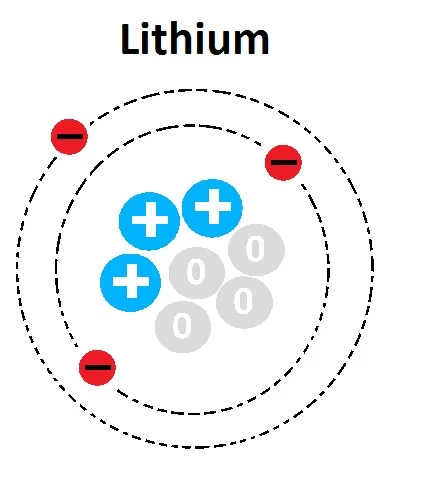
What is the atomic number of this atom?
Explanation
Based on the provided answer key, the answer is 4, although the atomic number (number of protons) shown in the image is 3.
Question 16
Points: 1
What is one way Neutrons are different from electrons?
Explanation
The primary difference in charge is that neutrons are neutral (zero charge) and electrons are negative.
Question 17
Points: 1
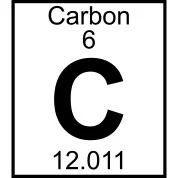
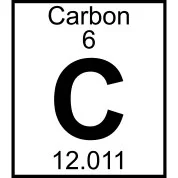
What does the C represent?
Explanation
In a periodic table entry, the large letter (C) represents the chemical symbol of the element (Carbon).
Question 18
Points: 1
what does the 6 represent?
Explanation
In the periodic table entry for Carbon, the number 6 is the atomic number, indicating the number of protons.
Question 19
Points: 1
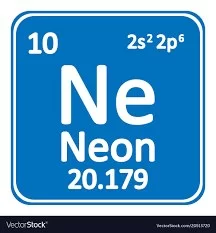
What is the atomic mass of Neon?
Explanation
The image shows the atomic mass of Neon as 20.179, which rounds to 20.
Question 20
Points: 1
What is the atomic number of this nucleus?
Explanation
The atomic number is equal to the number of protons. The image of the nucleus contains 3 positively charged protons (+).
Result Tracking
Answered0 / 20
Correct Answers0
Wrong Answers0
Current Percentage0%
Quiz Completed
This is your final result after answering all questions.
Final Result
0/200%
Correct Answers0
Wrong Answers0
Answered Questions0 / 20
Total Possible Points20
You can reopen the page to start again.
🍪
إشعار ملفات تعريف الارتباط
يستخدم هذا الموقع ملفات تعريف الارتباط لتحسين تجربة التصفح وقياس الأداء وعرض المحتوى بشكل أفضل.
باستخدامك للموقع فإنك توافق على استخدامنا لها وفق
سياسة الخصوصية.