Triangle congruence theorems are essential tools in geometry for determining if two triangles are identical in shape and size. The most common theorems include SSS (Side-Side-Side), SAS (Side-Angle-Side), ASA (Angle-Side-Angle), and AAS (Angle-Angle-Side). ASA requires two angles and the included side, while AAS requires two angles and a non-included side. Understanding these criteria helps in solving complex geometric proofs and calculating missing dimensions in figures.
🏆 انضم إلى التحدي واحصل على ترتيبك
اختبار شهادة تدريبي مؤقت للصف والمادة والفصل نفسه.
اختر إجابة واحدة لكل سؤال. عند الاختيار ستظهر النتيجة فورًا: الأخضر صحيح، والأحمر خطأ، وسيظهر تفسير الإجابة مباشرة إن كان متوفرًا. وبعد آخر سؤال ستظهر الدرجة النهائية تلقائيًا.
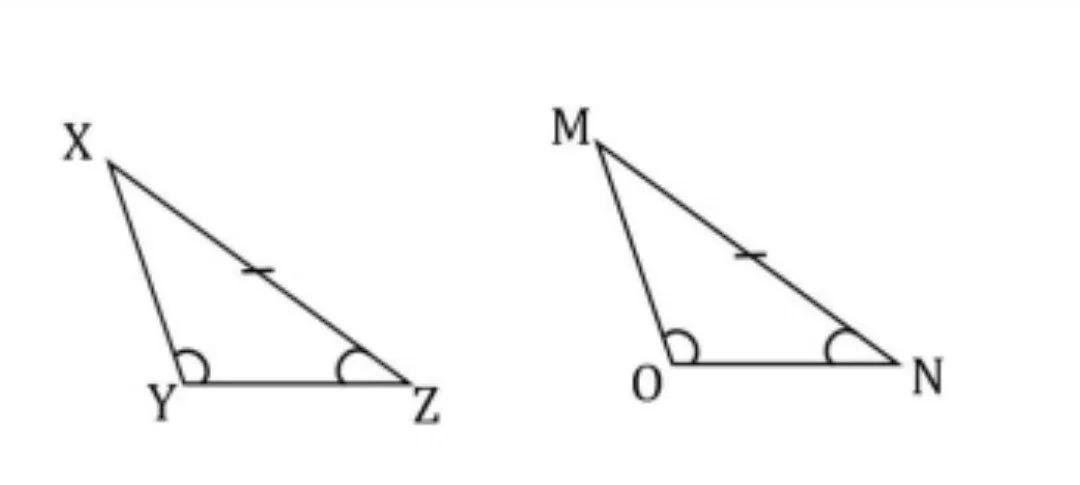
The triangles have two pairs of congruent angles and one pair of non-included congruent sides, which satisfies the AAS (Angle-Angle-Side) congruence theorem.
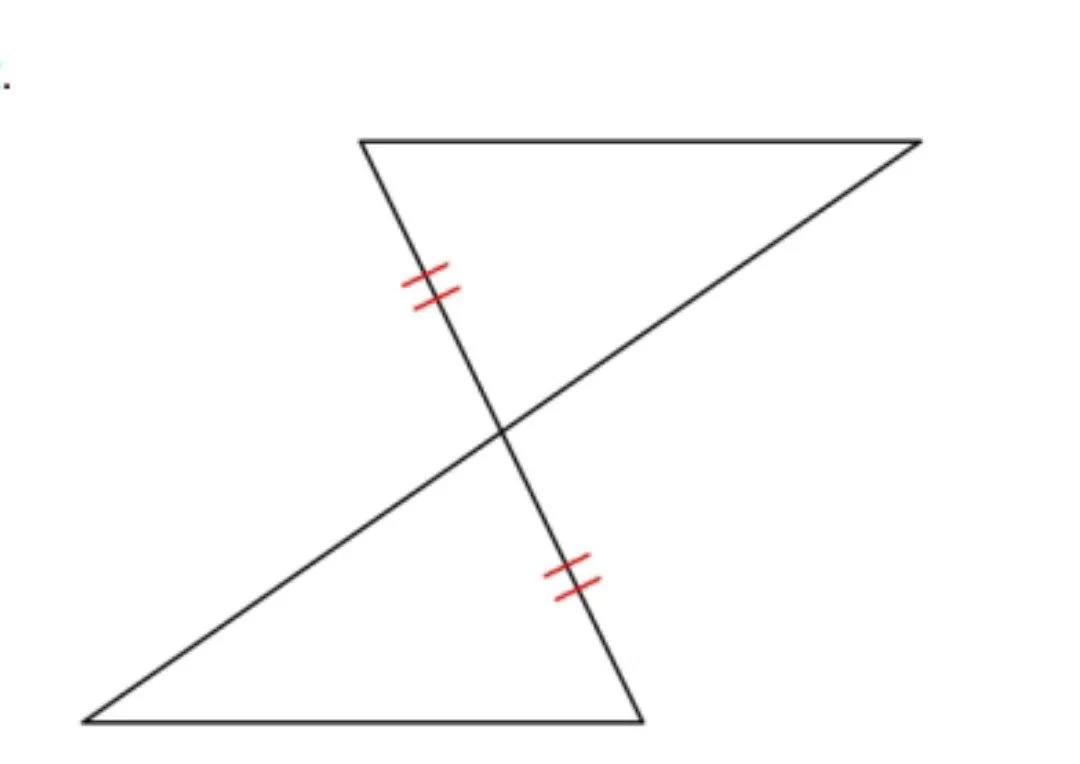
Only one pair of sides is marked congruent, and the vertical angles are congruent. This provides only one side and one angle (SA), which is insufficient to prove congruence.
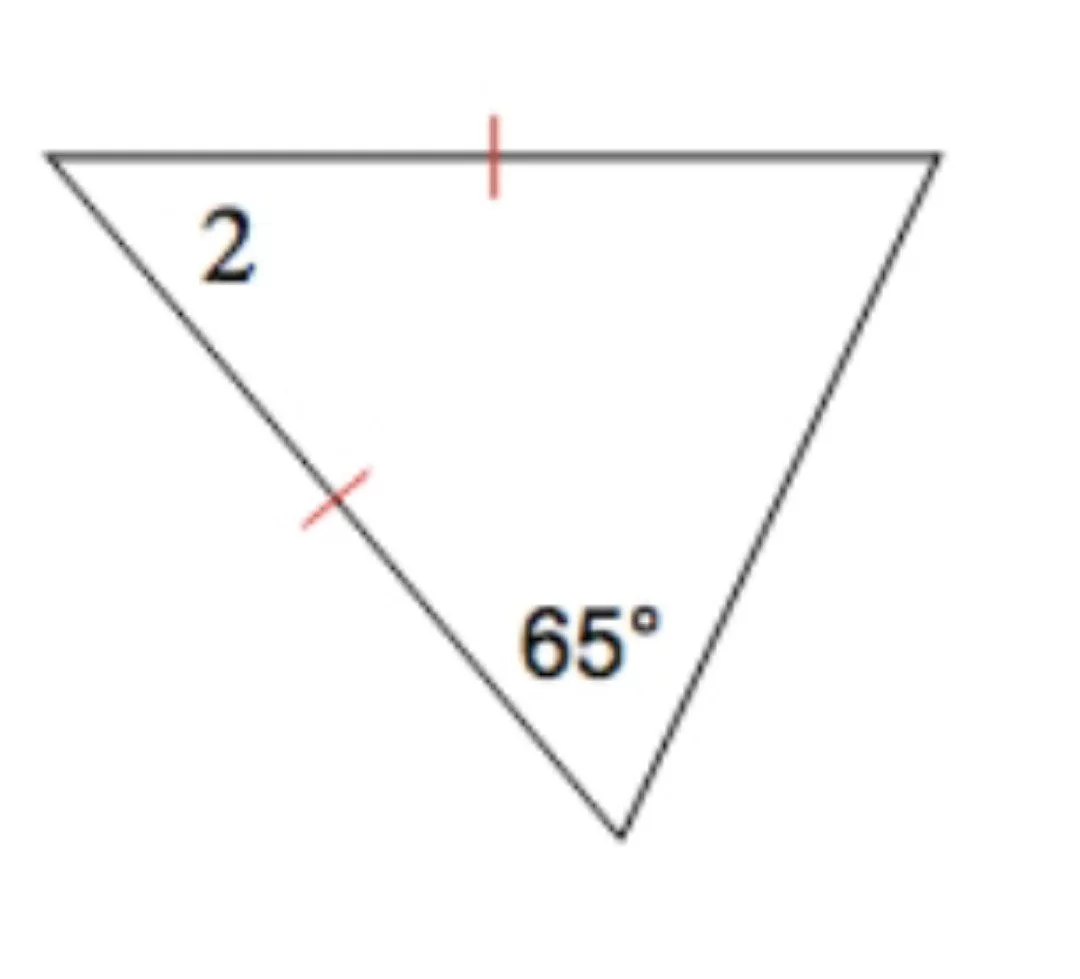
The triangle is isosceles because two sides are marked congruent, meaning the base angles are equal (\(65^{\circ}\) each). The sum of angles in a triangle is \(180^{\circ}\), so angle 2 is 180 - (65 + 65) = 50.
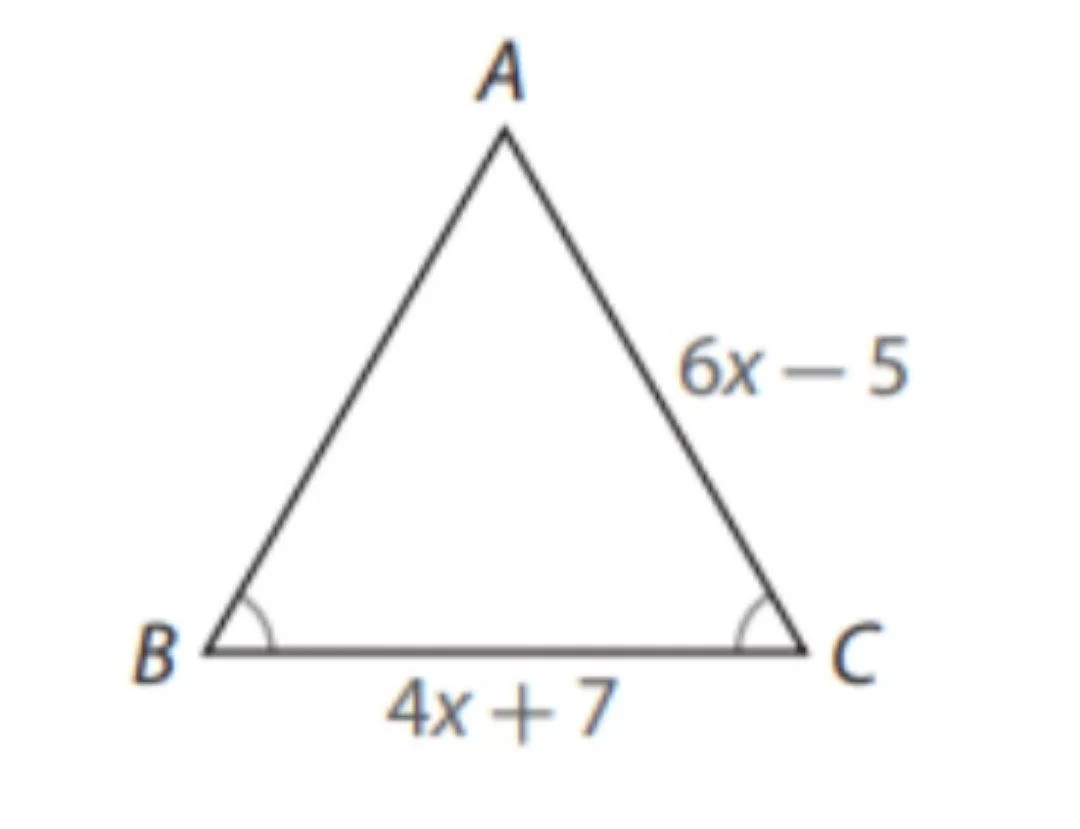
Based on the provided answer key, the sides AC and BC are treated as equal. Setting 6x - 5 = 4x + 7 gives 2x = 12, so x = 6. Substituting into the expression for BC: 4(6) + 7 = 31.
Question 5
5
Points: 1
Which of the following statements is NOT true if \(\Delta JKL\) is congruent to \(\Delta RST\)?
Explanation
In congruent triangles, corresponding parts must match based on the order of vertices. For \(\Delta JKL \cong \Delta RST\), K corresponds to S, so \(\angle K \cong \angle S\). Thus, \(\angle K \cong \angle T\) is false.
Here are more quizzes for الصف التاسع المتقدم by الفصل الثالث and subject رياضيات
This section is rendered only when the user reaches it while scrolling.
...
🍪
إشعار ملفات تعريف الارتباط
يستخدم هذا الموقع ملفات تعريف الارتباط لتحسين تجربة التصفح وقياس الأداء وعرض المحتوى بشكل أفضل.
باستخدامك للموقع فإنك توافق على استخدامنا لها وفق
سياسة الخصوصية.