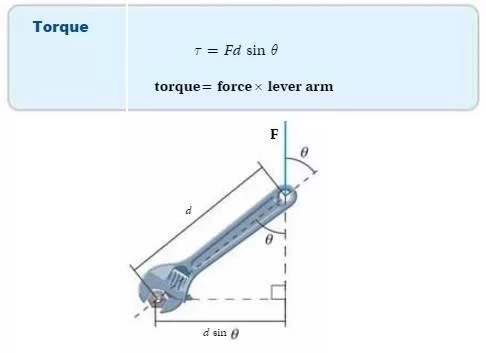
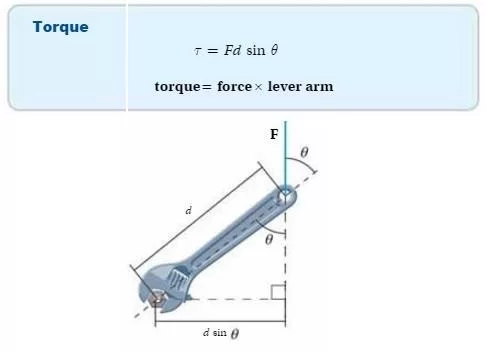
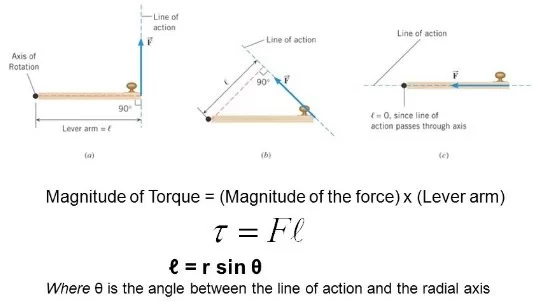
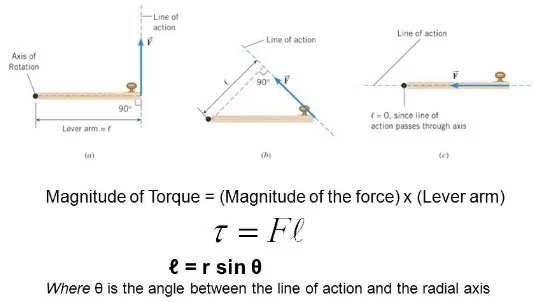
Torque, also known as the moment of force, measures the effectiveness of a force in causing an object to rotate around a specific axis. This physical quantity is fundamental in understanding rotational kinematics and static equilibrium. The magnitude of torque depends on the applied force, the distance from the pivot point (the lever arm), and the angle at which the force is applied. In practical applications, such as using a wrench to tighten a bolt or balancing a seesaw, torque explains why it is easier to rotate an object when the force is applied further from the axis of rotation. This collection of problems explores these principles through various scenarios, including structural balance, mechanical leverage, and the calculation of forces in static systems.
🏆 انضم إلى التحدي واحصل على ترتيبك
اختبار شهادة تدريبي مؤقت للصف والمادة والفصل نفسه.
اختر إجابة واحدة لكل سؤال. عند الاختيار ستظهر النتيجة فورًا: الأخضر صحيح، والأحمر خطأ، وسيظهر تفسير الإجابة مباشرة إن كان متوفرًا. وبعد آخر سؤال ستظهر الدرجة النهائية تلقائيًا.
A wrench is used to tighten a nut. A 15N perpendicular force is applied 50cm away from the axis of rotation, and moves a distance of 10 cm as it turns. What is the torque applied to the wrench?
Explanation
Torque (\(\tau\)) is calculated as Force (F) multiplied by the perpendicular distance (r). Here, \(\tau = 15\,N \times 0.50\,m = 7.5\,Nm\).
A 800N man is playing on a seesaw with son who has a weight of 200N. If the child is sitting 3 meters away, how far will the man have to sit to balance the seesaw?
Explanation
For equilibrium, the clockwise torque must equal the counter-clockwise torque: \(800\,N \times d = 200\,N \times 3\,m\). Solving for d gives \(600 / 800 = 0.75\,m\).
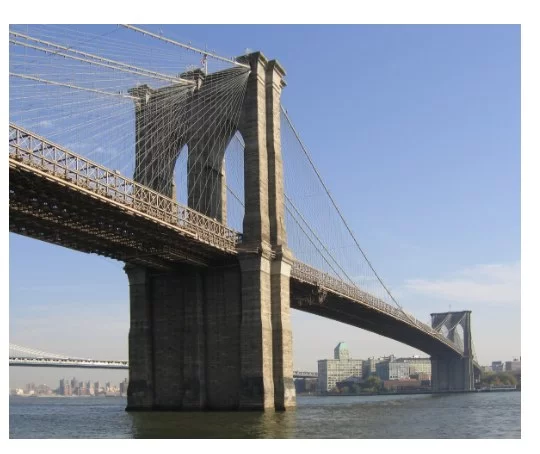
Does a bridge anchored resting on two pillars have any torque?
Explanation
Even if a bridge is not rotating, individual forces (weight and support forces) exert torques around any chosen pivot point, but their sum is zero in static equilibrium.
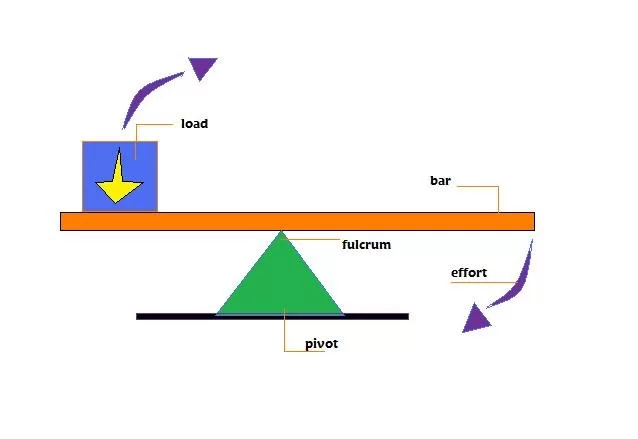
A seesaw with mass x is perfectly balanced with a fulcrum in the center. If mass x changes uniformly does the net torque change?
Explanation
If the mass (and thus weight) increases uniformly on both sides of a centered fulcrum, the clockwise and counter-clockwise torques increase equally, maintaining a net torque of zero.
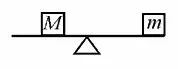
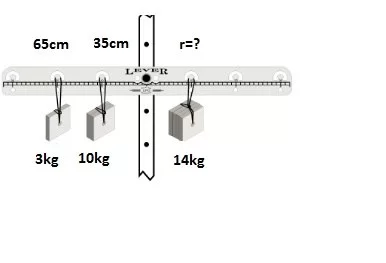
In the diagram above, two masses, one with mass m, the other with mass M = 2m are resting on a uniform plank of length L that pivots at its midpoint. If the mass m is at the far end of the plank, how far away from the pivot should the mass M be to balance the plank in a horizontal position shown?
Explanation
Mass m is at distance L/2. To balance: m × (L/2) = (2m) × x. Dividing by 2m gives x = L/4.
You apply force to a wrench to tighten a bolt. The wrench breaks in half. Select the best answer for what happens next. Assume the force applied remains constant.
Explanation
Torque is directly proportional to the lever arm (distance). If the distance is halved, the torque produced by the same force is also halved.
If the torque required to loosen a nut on the wheel of a car has a magnitude of 60.0 N• m, what minimum perpendicular force must be exerted by a mechanic at the end of a 45.0 cm wrench to loosen the nut?
If the torque required to loosen a nut on the wheel of a car has a magnitude of 85.0 N• m, what minimum 65 degrees from the perpendicular force must be exerted by a mechanic at the end of a 22.0 cm wrench to loosen the nut?
Explanation
Using the formula \(\tau = F \cdot r \cdot \cos(\theta)\) where \(\theta\) is the angle from the perpendicular, \(F = 85.0 / (0.22 \times \cos(65^\circ)) \approx 426.3\,N\).
A beam with a length of L is lifted from one end with a force of F1. If the beam doubles in length but contains the same mass, what will the force required to lift it be in terms of F1?
Explanation
Based on the provided answer key, the required force is halved. This often assumes that the relationship between the applied force and the mechanical advantage changes such that the force requirement is reduced.
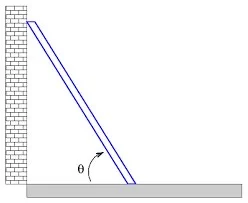
What force is equal to the normal force from the wall acting on the ladder?
Explanation
In static equilibrium, the sum of horizontal forces must be zero. The only two horizontal forces are the normal force from the wall and the static friction from the floor.
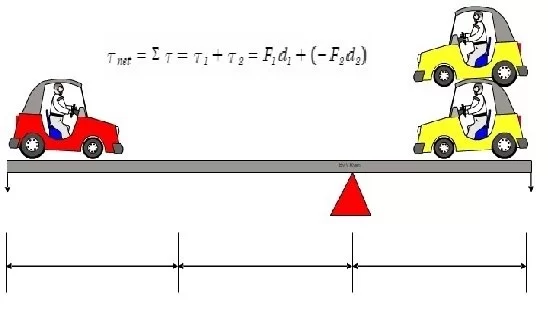
A state of equilibrium is also seen below. Each of the cars weighs the same 9800 N. Despite the fact that there is only one car on the left-hand side that is 9 m from the fulcrum, the torques balance because, the cars on the right-hand side, are ____meters from the fulcrum.
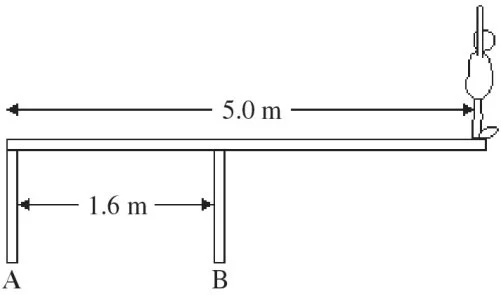
What direction is the torque acting with respect to post A?
Explanation
The weight of the diver at the end of the board acts downwards to the right of post A, which creates a tendency to rotate the board clockwise around post A.
Find the magnitude of the torque produced by a 22.0 N force applied to a door at a 30 degree from the perpendicular distance of .005 km from the hinge.
Explanation
Distance is \(0.005\,km = 5\,m\). Using the answer key's logic where \(\sin(30^\circ)\) is used for the relevant component: \(\tau = 22\,N \times 5\,m \times 0.5 = 55\,Nm\).
Here are more quizzes for الصف الحادي عشر المتقدم by الفصل الثالث and subject فيزياء
This section is rendered only when the user reaches it while scrolling.
...
🍪
إشعار ملفات تعريف الارتباط
يستخدم هذا الموقع ملفات تعريف الارتباط لتحسين تجربة التصفح وقياس الأداء وعرض المحتوى بشكل أفضل.
باستخدامك للموقع فإنك توافق على استخدامنا لها وفق
سياسة الخصوصية.